
Rottweiler Training and Socialization: 5 Proven Steps
Rottweiler training tips built around this breed's real needs: 5 proven steps for structured obedience and confident, calm socialisation.

Rottweiler training tips that focus only on obedience commands miss the bigger picture. This is a large, powerful, protective breed, and how well a Rottweiler is socialised matters just as much as how well they respond to “sit” and “stay” — arguably more, since a well-socialised Rottweiler is calm by default, not just compliant on command.
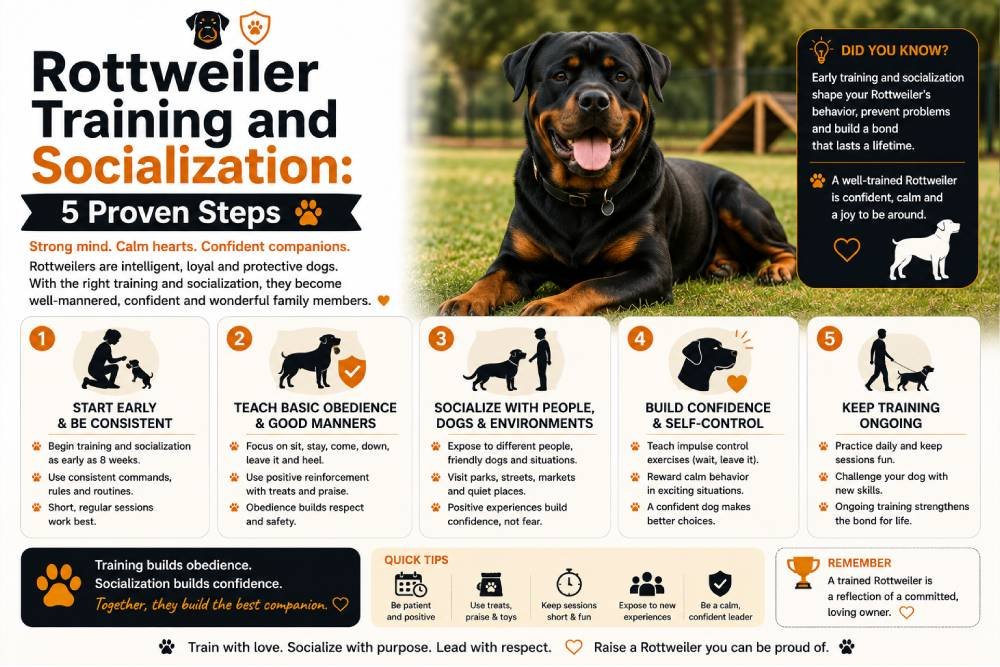
Rottweiler Training Tips: Five proven rottweiler training steps
- Start socialisation immediately and keep it consistent. Early, positive exposure to a wide range of people, dogs and situations shapes this breed’s adult temperament more than almost any other factor.
- Establish calm, consistent leadership from puppyhood, not through dominance-based methods, but through predictable rules and reward-based structure this breed responds well to. Consistency is especially important because dogs can behave differently depending on their environment, routine and the people around them. Learn why dogs behave differently at home.
- Prioritise impulse control exercises — wait-before-eating, controlled greetings — since a Rottweiler’s size and strength make impulse control genuinely important, not just a nice-to-have.
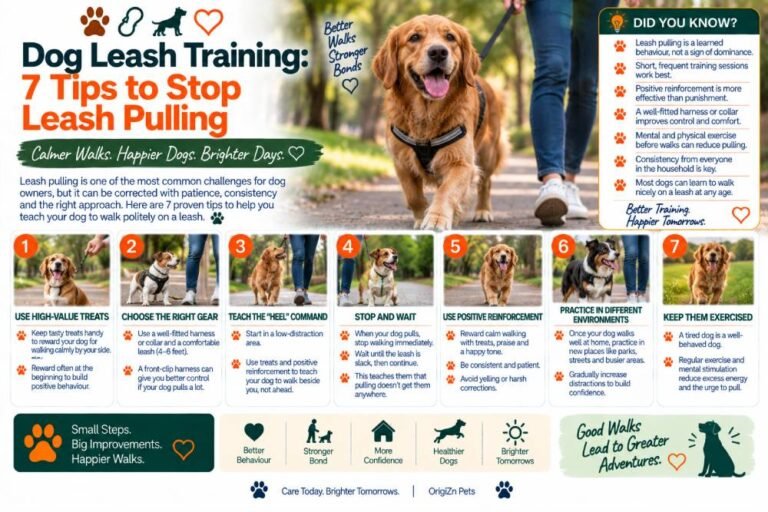
- Never skip leash training. A large, strong adult dog that pulls is a genuine handling challenge for anyone, not just a minor inconvenience, and this is far easier to prevent than correct later. For practical guidance, see our guide on how to stop a dog from pulling on the leash.
- Give this breed a job or structured task. Rottweilers were bred as working and guardian dogs, and unstructured energy tends to surface as guarding behaviour that’s harder to manage than a dog with a clear routine.
A Rottweiler’s protective instinct isn’t something to train out — it’s something to shape through structure, so it shows up as calm confidence rather than reactivity.
Why early socialisation carries outsized weight for this breed
The American Veterinary Society of Animal Behavior’s position statement on humane training notes that reward-based methods carry the lowest welfare risk and produce the most reliable long-term behaviour — directly relevant for a breed where poor training approaches have historically leaned on outdated dominance theory that current behaviour science doesn’t support, and that risks worsening exactly the reactivity such methods claim to prevent.
Understanding body language is also important when socialising a Rottweiler, particularly during walks and interactions with unfamiliar dogs. Our guide to reading your dog’s body language on a walk explains the signals owners should watch for before behaviour escalates.
What responsible Rottweiler ownership actually requires
This breed’s size and strength mean training isn’t optional the way it might be for a smaller dog where poor habits are more manageable. A Rottweiler that pulls, jumps, or reacts poorly to strangers is a genuinely different problem than the same behaviour in a ten-kilogram dog, which is exactly why consistent training from puppyhood matters so much here.
Building confidence, not just compliance
A Rottweiler that’s confident rather than anxious around new situations is far less likely to react defensively. Confidence comes from consistent, positive exposure over time — rushing socialisation or skipping it because a puppy “seems fine” tends to surface as wariness or reactivity months later, once the window for easy socialisation has mostly closed.
Our training and walking services build structured, breed-appropriate training for Rottweilers from puppyhood through adulthood. Book a free demo to start with a trainer experienced in this breed’s specific needs.
What owners commonly get wrong with this breed
Assuming natural protectiveness means guard training is unnecessary, or conversely assuming a Rottweiler needs harsh handling to stay “in control,” are both common mistakes. Neither reflects current behaviour science — this breed does best with clear structure delivered through reward-based methods, the same as any other dog, just with more consistency given their size and strength. A calm, well-socialised Rottweiler is a far more effective deterrent than an anxious or over-corrected one.
Exercise needs that support good behaviour
Rottweilers need substantial daily physical activity paired with mental engagement — obedience drills, structured games — to stay settled indoors. A Rottweiler that’s under-exercised tends to channel that energy into guarding behaviour or general restlessness that’s far more manageable with adequate outlets built into the daily routine, and consistency here matters more than any single long session.