Reading your dog’s body language on a walk
Tail position, ear angle and pace tell you more than barking ever will.

Quick answer
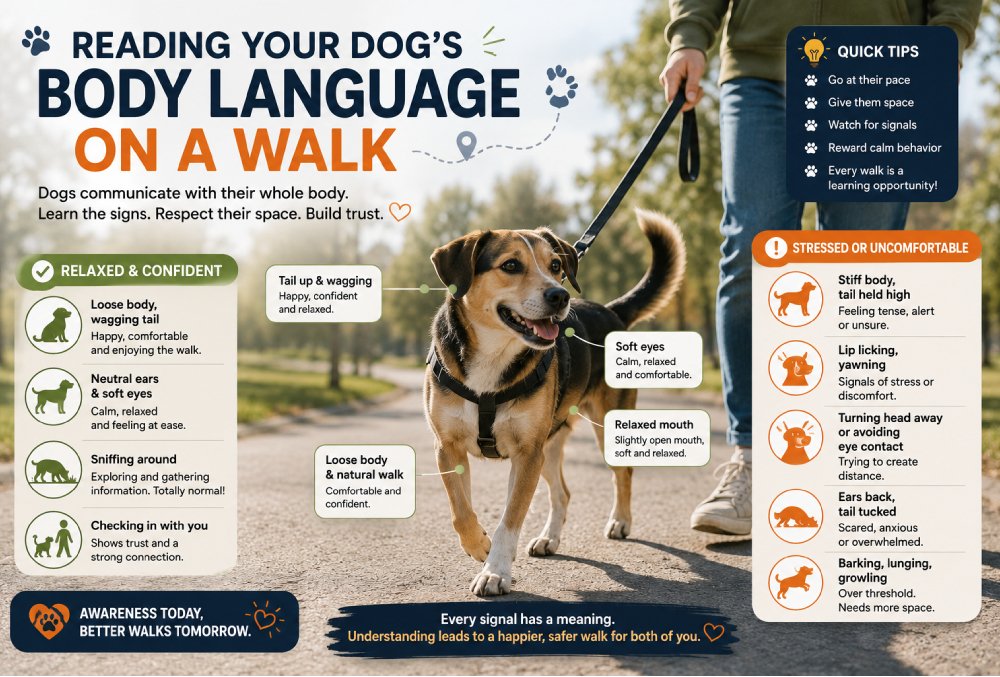
Barking is usually a dog's last signal. Before it, most dogs show quieter signs: a stiff body, a fixed stare, closed mouth, ears forward or pinned back, a slowed walk or a raised paw. Spotting these early lets you create distance before your dog reacts.
Dog body language tells you what your dog is about to do long before the bark. Barking is the last signal, not the first. By the time a dog barks at another dog across the road, it has usually given three or four quieter signals that were easy to miss. Learning to read those signals early is what turns a tense walk into an uneventful one.
Dog body language starts with the tail and back
Tail height tells you arousal, not mood. A high, stiff tail with short wags is a dog on alert. A low, loose tail swinging with the whole back end is a relaxed dog. A tail tucked flat under the belly is fear, and fear is where most leash reactivity starts.
Then the head and pace
Ears forward and a hard stare mean your dog has locked on to something. A quick lip lick, a yawn out of nowhere or a sudden sniff at the ground are displacement signals: the dog is uncomfortable and trying to defuse.
A dog that slows down and stiffens is asking for space. Give it before you have to ask for calm.
What to do with the information
- Add distance early. Crossing the road at 20 metres is easier than managing at 5.
- Change direction while your dog can still hear you.
- Reward the moment your dog looks back at you, not after it has settled.
Our walkers log these moments in the walk report, so patterns show up over a week instead of getting lost in one bad evening.
Dog body language: calming signals most owners miss
Calming signals are the quiet part of dog body language: small, quick gestures that say a dog is uncomfortable. They often last less than a second:
- Lip licking when there is no food around
- Yawning in the middle of an exciting walk
- Turning the head away from another dog or person
- Whale eye, where the whites of the eyes show
- Freezing or moving very slowly
- Shaking off as if wet, right after a tense moment
Signs your dog is relaxed and enjoying the walk
Relaxed dog body language looks like a soft, slightly open mouth, loose body, ears in their natural position and lots of sniffing are all good signs. Sniffing is not wasted time: it lowers stress and tires the brain. Let your dog sniff for part of every walk.
Dog body language around other dogs
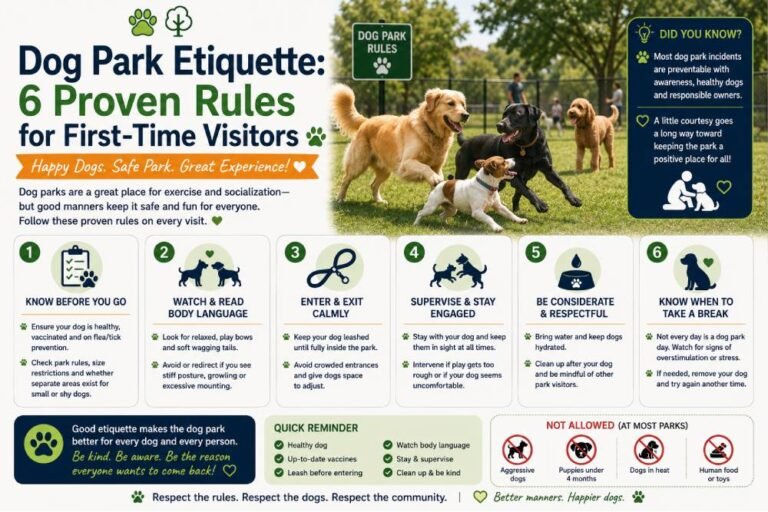
A play bow, curved approach and bouncy movement usually mean friendly intent. A straight, fast approach, stiff legs and a raised tail often mean tension. If you see raised hackles, it signals high arousal, not always aggression, but it is a good moment to add distance. For tips on shared spaces, read our dog park etiquette guide.
Using dog body language to stop pulling and reactivity
Most pulling and lunging starts with a hard stare. If you change direction the moment your dog locks on, you prevent the explosion instead of managing it. Pair this with loose leash training and a reliable recall for calmer walks on busy Delhi NCR streets.
12 dog body language signs to watch on every walk
When reading dog body language, look at the whole dog, not one body part. A single sign means little; three or four together tell you how your dog really feels. Here are the 12 signs our trainers look for, roughly in the order they appear as tension builds:
- Sniffing slows or stops. A dog that was happily sniffing and suddenly lifts its head has noticed something.
- Ears change position. Ears pricked forward mean focus; ears pinned back mean worry.
- The mouth closes. A relaxed dog walks with a soft, slightly open mouth. A tight, closed mouth is an early sign of tension.
- The tail rises and stiffens. High and still, or high with short, fast wags, means arousal.
- Weight shifts forward. The dog leans towards the trigger, often with one paw lifted.
- A hard stare. The eyes lock on and the dog stops responding to its name.
- Lip licking or yawning. Quick calming signals that say “I am not comfortable”.
- Whale eye. The whites of the eyes show as the dog keeps watching something while turning its head away.
- Raised hackles. Fur stands up along the shoulders or back, a sign of high arousal (fear, excitement or both).
- Freezing. The dog goes completely still for a second or two.
- Low growl or whine. The first sound, often missed on a noisy road.
- Lunging or barking. The final stage, when the dog feels it has no other option.
The earlier you act on dog body language, the easier the walk. Most families only notice signs 11 and 12, which is why reactivity feels sudden. It almost never is.
Reading dog body language in common Delhi NCR situations
Street dogs at the society gate. Many pet dogs stiffen and stare at community dogs, especially near their territory. Cross early, keep moving and reward your dog for looking back at you.
Scooters and auto-rickshaws. A dog that tucks its tail and walks close to your legs near traffic is anxious, not stubborn. Choose quieter lanes until confidence builds.
Children running up to pet your dog. Watch for head turns, lip licks and whale eye. These are polite requests for space. Step between your dog and the child and say a friendly “not today”.
The lift and the lobby. Tight spaces make dogs feel trapped. A dog that freezes or stares at the lift door needs distance, so wait for the next lift if needed.
How to practise reading dog body language
Like any skill, reading dog body language improves with practice. Try this for one week:
- Film 30 seconds of your dog on each walk and watch it back at slow speed. You will spot signals you missed live.
- Keep a simple note of what triggered tension, where, and how far away it was.
- Watch dogs in the park from a distance and guess what each one is feeling before it acts.
The American Kennel Club has a helpful illustrated guide on how to read dog body language that is worth bookmarking alongside this one.
What not to do when you see warning signs
- Do not punish a growl. A growl is information. Punish it and your dog may skip the warning next time.
- Do not force a greeting. Pulling a worried dog towards another dog or person makes fear worse.
- Do not tighten the leash. Tension travels down the leash and confirms to your dog that something is wrong. Keep it loose and change direction calmly.
Want a walker who reads these signals for you? Book a trainer for a single session, or run a growth package over a few weeks. Book your pet’s first visit: a free demo session, at your home, no card required.
Also read: Leash Reactivity in Dogs: 6 Steps to Calmer Walks
Need a hand? Our force-free trainers visit homes across Delhi NCR, including dog training in West Delhi and at-home dog training in South Delhi. The first session is a free demo, so you can see how your dog responds.
Frequently Asked Questions
What does it mean when my dog stares at another dog?
A fixed, hard stare usually means your dog is focused and possibly tense. Calmly add distance or change direction before it escalates.
Is a wagging tail always a happy dog?
No. A high, stiff, fast wag can signal arousal or tension. Look at the whole body, not just the tail.
Why does my dog yawn on walks?
Yawning out of context is often a calming signal that your dog feels a little stressed or unsure.
What is the most important part of dog body language to watch?
Watch the whole dog, but start with the mouth and eyes. A closed mouth and a hard stare are two of the earliest and most reliable signs of rising tension.
Do raised hackles mean my dog is aggressive?
Not always. Raised hackles show high arousal, which can be fear, excitement or uncertainty. Look at the rest of the body and add distance either way.
Can dog body language be different between breeds?
Yes. Dogs with docked tails, heavy coats or flat faces can be harder to read, so rely more on posture, eyes, mouth and how they move.