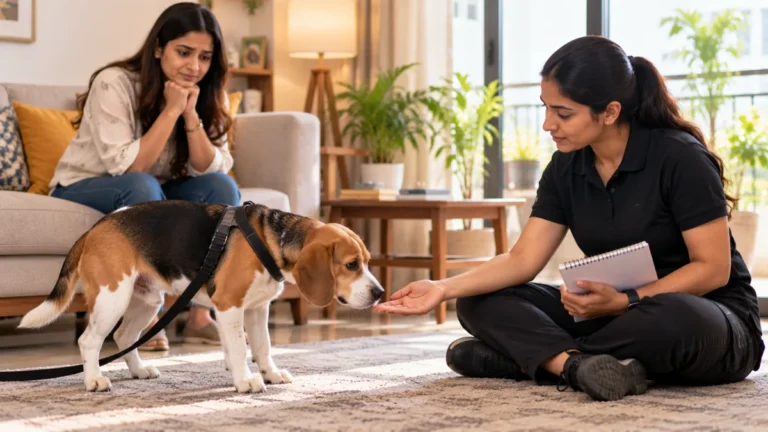
Dog Aggression: 6 Types, Causes and Proven Ways to Train Safely

Quick answer
Dog aggression is usually driven by fear, pain, guarding resources, territory or frustration on the leash. Identify the trigger, rule out pain with a vet, manage situations to keep everyone safe and use gradual, reward-based training. Never punish growling.
Dog aggression can be a very stressful and difficult time for pet parents. Understanding what causes your dog to react aggressively (e.g., barking at strangers, growling at other dogs, lunging on walks, showing aggressive behaviour around food/toys) is the first step in improving their behaviour. Many dogs can learn to manage their reactions and behave more calmly in everyday situations through proper approach, professional guidance, and consistent training.
Aggressive dog training is about understanding why a dog reacts aggressively, identifying its triggers, and teaching the dog more appropriate/safer ways to react. It is not about punishing a dog or forcing it into submission. Effective training involves behaviour assessment, positive reinforcement, environmental management, and a structured training plan developed specifically for the individual dog.
This guide provides information on common causes of aggression, practical training methods, warning signs, prevention strategies, and the benefits of working with an experienced dog trainer.
What Is Dog Aggression?
Aggressive dog training is a structured method of managing and modifying behaviours such as growling, snapping, biting, lunging, and aggressive barking. The goal is to minimize the risk of injury, help dogs feel safer, and teach them alternative behaviours when they encounter situations that make them uncomfortable.
Dog aggression is not always an indication that a dog is inherently dangerous. Aggressive reactions can develop due to fear, anxiety, pain, frustration, territorial instincts, previous negative experiences, or resource guarding.
For example, a dog that growls when another dog approaches its food bowl may be protecting a valuable resource. Similarly, a dog that lunges at unfamiliar people may be fearful rather than attempting to dominate them.
By understanding the reason behind the behaviour, trainers can develop a more effective and humane training plan.
Types of Dog Aggression
Before beginning an dog aggression training program, it is important to determine the type of behaviour your dog displays.
1. Fear-Based Aggression
Fear-based aggression occurs when a dog feels threatened or trapped. The dog may bark, growl, snap, or attempt to bite in order to create distance from the perceived threat.
Common triggers include unfamiliar people, sudden movements, loud noises, unfamiliar environments, and approaching dogs.
Training approach: Help the dog feel safe, maintain an appropriate distance from triggers, and slowly build positive associations through carefully controlled exposure. Never force a fearful dog to interact with something it is afraid of.
2. Dog-to-Dog Aggression
Some dogs react aggressively when they encounter other dogs. They may pull on the leash, bark, growl, or lunge during walks.
Possible contributing factors include fear, frustration, previous conflicts, limited positive social experiences, and sensitivity to close interactions.
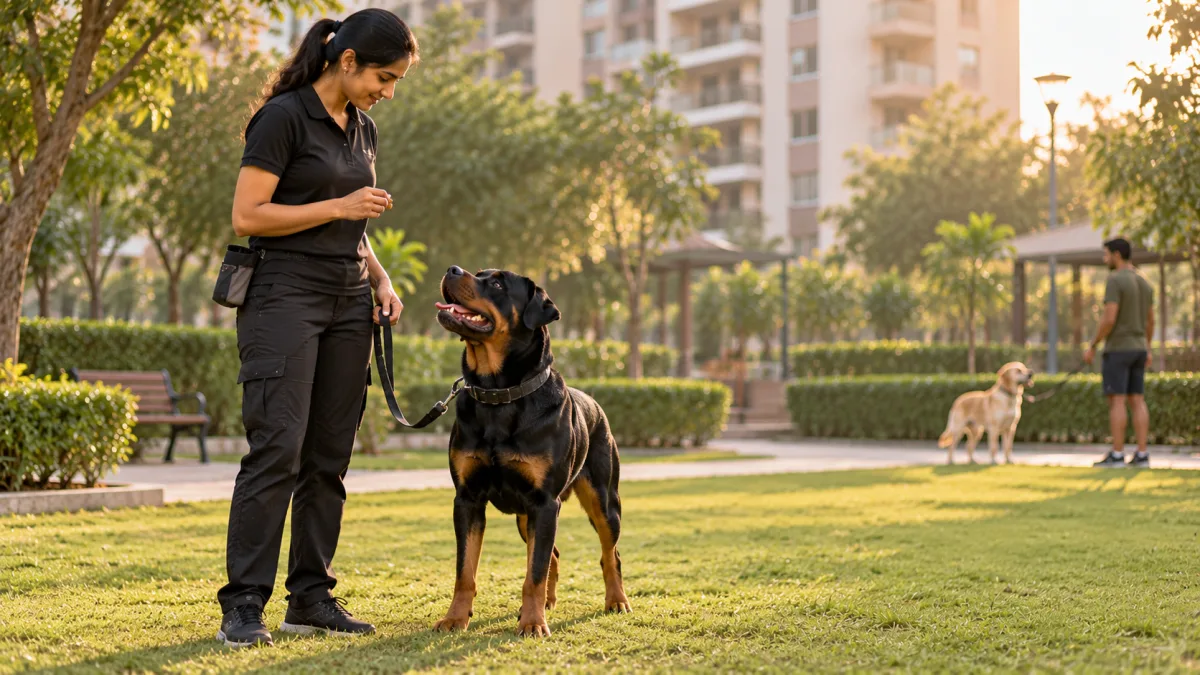
Training approach: Start at a distance where the dog can remain relatively calm. Reward the dog for noticing another dog without reacting and for redirecting attention back to you. Avoid forced greetings and crowded dog parks during the initial training stages.
3. Territorial Aggression
Territorial behaviour may occur when unfamiliar people or animals approach a dog’s home, garden, vehicle, or other perceived territory.
The dog may bark at visitors, rush toward gates, or react strongly when someone approaches the entrance.
Training approach: Use secure barriers, prevent uncontrolled access to visitors, and teach alternative behaviours such as going to a designated resting area. Reward calm behaviour while maintaining enough distance to prevent escalation.
4. Resource Guarding
Resource guarding occurs when a dog attempts to protect something valuable such as food, toys, sleeping areas, or stolen objects.
Warning signs can include stiff body posture, freezing, hard staring, growling, and snapping when someone approaches.
Training approach: Avoid grabbing the guarded item or confronting the dog. A qualified professional can develop a gradual desensitization and counterconditioning plan. Teach safe exchanges only when appropriate, and keep children away from a dog that guards resources.
5. Leash Reactivity
Leash reactivity occurs when a dog barks, lunges, or pulls toward other dogs, people, vehicles, or environmental triggers while on a lead.
Although leash reactivity does not always involve an intention to bite, it can create dangerous situations if the dog becomes difficult to control.
Training approach: Choose quieter walking routes, maintain a safe distance from triggers, use suitable walking equipment, and reward calm attention. Avoid tightening the leash unnecessarily or dragging the dog toward the trigger.
6. Pain-Related or Sudden Aggression
A dog that suddenly starts growling, snapping, or resisting handling may be experiencing pain or an underlying medical problem.
Dental issues, joint pain, injuries, and other illnesses can make ordinary interactions uncomfortable.
Training approach: Arrange a veterinary examination before assuming the problem is purely behavioural. Medical issues should be addressed before or alongside a professionally guided behaviour plan.
What Causes Aggression in Dogs?
There is rarely one explanation for every aggressive dog. Behaviour can result from several interacting factors.
Fear and Anxiety
Dogs may react aggressively when they believe they cannot escape a frightening situation. Punishing the warning signs can increase anxiety and make the behaviour less predictable.
Lack of Appropriate Social Experiences
Limited or negative experiences with people, dogs, handling, and unfamiliar environments may contribute to reactivity. However, socialization does not mean forcing a dog to meet everyone. Positive, controlled experiences are more useful than overwhelming exposure.
Previous Negative Experiences
A dog that has experienced frightening encounters, rough handling, or repeated conflicts may become defensive in similar situations.
Genetics and Individual Temperament
Some dogs may have inherited behavioural tendencies or individual sensitivities that influence their responses. Breed alone cannot reliably predict whether a particular dog will behave aggressively.
Resource Competition
Dogs may guard food, toys, sleeping spaces, or attention when they perceive a threat to something valuable.
Frustration and Overstimulation
A dog that cannot reach another dog, is repeatedly restrained, or is exposed to too much activity may become increasingly frustrated. This can result in barking, lunging, and snapping.
Identifying the specific triggers is essential for developing a suitable dog aggression training program.
How to Train an Aggressive Dog Safely
Training an aggressive dog requires patience, consistency, and a strong focus on safety. The following steps can help pet parents understand the process.
Step 1: Identify the Triggers
Observe when the aggressive behaviour occurs. Record what happened immediately before the reaction, the distance from the trigger, the dog’s body language, and how long it takes to settle.
For example, your dog may react only when another dog approaches within a few meters, when a stranger enters the home, or when someone touches its food bowl.
Do not deliberately provoke a reaction to test your dog. Gather information from naturally occurring situations while keeping everyone safe.
Step 2: Manage the Environment
Management prevents repeated incidents while training progresses.
Useful measures may include:
- Walking at quieter times.
- Maintaining distance from unfamiliar dogs and people.
- Using secure gates or barriers at home.
- Keeping food and high-value toys away from situations that trigger guarding.
- Preventing unsupervised interactions with children.
- Using a secure leash and properly fitted walking equipment.
A basket muzzle may also help reduce bite risk when introduced gradually using rewards. It should allow comfortable panting and drinking, and it must never be used as a substitute for supervision or safe handling.
Step 3: Teach Basic Skills in a Calm Environment
Before working around difficult triggers, practice simple behaviours in a familiar setting.
Useful skills include responding to the dog’s name, turning toward the handler, moving away on cue, settling on a mat, and following a handler away from a distraction.
Reward successful responses with suitable treats, praise, or other rewards your dog enjoys. Keep sessions short and end before the dog becomes overwhelmed.
Step 4: Use Desensitization and Counterconditioning
Desensitization means exposing a dog to a trigger at a low enough intensity that it can remain comfortable. Counterconditioning means changing the dog’s emotional association with that trigger.
For example, if your dog reacts to other dogs, you might begin at a distance where your dog can notice another dog without barking or lunging. The appearance of the other dog is paired with a high-value reward.
Over time, and only while the dog remains comfortable, the process may gradually reduce the distance. If the dog becomes tense, stops taking treats, growls, or lunges, increase the distance and make the next session easier.
Progress should be based on the dog’s behaviour rather than a fixed timetable. Some cases require weeks or months of structured work.
Step 5: Reward Calm and Alternative Behaviours
Positive reinforcement encourages behaviours that are safer and more useful than reacting aggressively.
For example, reward your dog for looking at a trigger and then turning back toward you, moving away calmly, settling behind a barrier, or remaining relaxed when a visitor is at a safe distance.
Do not punish growling. Growling is a warning signal that the dog is uncomfortable. Suppressing that signal without addressing the underlying emotion may make future incidents harder to predict.
Step 6: Monitor Progress and Adjust the Plan
Keep a record of your dog’s reactions, recovery time, and ability to remain comfortable around triggers.
Look for improvements such as reduced intensity, increased distance tolerance, quicker recovery, and more frequent attention toward the handler.
If reactions become more intense or incidents continue, consult a qualified behaviour professional and review the management plan.
Why Punishment Is Not the Right Solution
Shouting, hitting, leash jerking, intimidation, and other aversive methods can increase fear and stress. They may also suppress visible warning signals without resolving the reason for the behaviour.
For instance, a dog that is punished for growling at a visitor may learn to stop growling while remaining frightened. This does not necessarily mean the dog is comfortable or safe around visitors.
Humane behaviour modification focuses on identifying the cause, reducing exposure to overwhelming situations, teaching alternative behaviours, and reinforcing positive associations.
The goal is not to force obedience at any cost. It is to improve safety and help the dog cope more successfully with its environment.
When Should You Hire a Professional Dog Trainer?
Professional help is especially important when a dog has bitten someone, attempted to bite, repeatedly lunges at people or dogs, guards resources intensely, or displays unpredictable aggressive behaviour.
Consider seeking help if:
- Your dog has caused an injury or made repeated attempts to bite.
- Aggression has appeared suddenly or is becoming more severe.
- You cannot safely walk or handle your dog.
- Your dog reacts aggressively around children or vulnerable people.
- Previous training attempts have not improved the situation.
- Aggression occurs during grooming, veterinary visits, or routine handling.
Start with a veterinarian to rule out pain or medical causes. For serious or complex cases, seek a veterinary behaviorist where available, or a qualified canine behaviour professional experienced in aggression cases.
Ask the professional about their qualifications, experience with similar cases, use of humane methods, safety protocols, and how they measure progress. Avoid anyone who guarantees a complete cure or relies on intimidation and punishment.
Benefits of Professional Dog Aggression Training
A properly designed behaviour modification program offers several potential benefits.
Improved Safety
Management strategies, careful handling, and appropriate training can reduce opportunities for dangerous incidents.
Better Behaviour Around Triggers
Dogs can learn alternative responses to people, other animals, handling, and unfamiliar environments.
Greater Confidence
For fear-related cases, gradual exposure and positive associations can help dogs feel more comfortable in situations they previously found threatening.
Better Communication
Pet parents learn to recognize early signs of stress, understand their dog’s limits, and respond before a situation escalates.
A Structured Training Plan
A professional can identify realistic goals, recommend appropriate equipment, and adjust the plan according to the dog’s progress.
Results vary depending on the underlying cause, severity, environment, medical factors, and consistency of management. Some dogs need lifelong precautions even after substantial improvement.
How Long Does Dog Aggression Training Take?
There is no single timeline for every dog.
Mild reactivity may improve with consistent management and structured training over several weeks. More serious aggression, a history of biting, or multiple triggers may require several months or longer.
Training progress can also vary from one environment to another. A dog that behaves calmly on a quiet street may still struggle in a crowded park.
The most important indicators of progress are improved safety, reduced reaction intensity, quicker recovery, and a greater ability to respond calmly around triggers.
Avoid trainers who promise to eliminate all aggression in a fixed number of sessions.
Can an Aggressive Dog Be Trained at Home?
Some mild behaviour concerns can be addressed at home with professional guidance, safe management, and reward-based training. However, aggression involving biting, children, serious resource guarding, or unpredictable reactions should not be managed through trial and error.
Pet parents should avoid deliberately exposing their dog to triggers, attempting physical restraint during an aggressive episode, or forcing interactions with strangers and other animals.
A professional assessment can help determine whether home training is appropriate and what precautions are necessary.
Dog Aggression Training Cost in India
The cost of dog aggression training in India varies according to the city, trainer’s experience, severity of the behaviour, travel requirements, and whether the service includes home visits or a structured behaviour modification program.
At OrigiZnPets, every aggression case starts with a free at-home assessment visit. Single sessions start at ₹799, and our structured Canine Behaviour programme is ₹40,200, depending on what your dog needs.
A basic obedience package may not be suitable for a dog with serious aggression. Ask for an assessment-based quote that explains what is included, how safety will be managed, how progress will be measured, and whether follow-up sessions are available.
When comparing dog training services, prioritize experience with aggression and humane training methods rather than choosing solely on price.
How to Prevent Aggressive Behaviour in Dogs
Although not every case of aggression can be prevented, responsible care can reduce some risk factors.
- Provide positive, age-appropriate social experiences without forcing interactions.
- Teach basic handling and cooperative care gradually.
- Respect your dog’s need for space, rest, and predictable routines.
- Avoid taking food or toys away by force.
- Supervise interactions between dogs and children.
- Use reward-based training from an early age.
- Seek veterinary advice about sudden changes in behaviour.
- Address early signs of fear, discomfort, and reactivity before they escalate.
Remember that every dog has individual needs. Prevention is about creating safe experiences and responding to discomfort early, not expecting every dog to enjoy every person, animal, or environment.
Help With Dog Aggression in Delhi NCR
OrigiZnPets trainers work with reactive and aggressive dogs at home, where the triggers actually happen, in dog training in Noida, dog training in Greater Noida, dog training in Gurgaon, dog training in Ghaziabad, dog training in Faridabad, dog training in South Delhi, dog training in East Delhi, dog training in West Delhi and dog training in North Delhi. For bites that break skin or sudden aggression, please see a vet first.
OrigiZnPets trainers come to your home across Delhi NCR. The first visit is a free demo session where the trainer assesses your dog and shows you where to start, with no card required. Single sessions start at ₹799, and structured programmes such as Core Training (₹8,699) are listed on our packages page. Every trainer is background-checked and uses reward-based methods only. Read our step-by-step guide to aggressive dog training too.
For background on the different forms and causes, see this overview of dog aggression.
Frequently Asked Questions About Dog Aggression Training
1. Can aggression in dogs be corrected?
Many aggressive behaviours can be reduced or managed through veterinary assessment, environmental management, and structured behaviour modification. The outcome depends on the underlying cause, severity, history, and consistency of training. Some dogs will continue to need lifelong safety precautions.
2. What is the best training method for an aggressive dog?
Reward-based training combined with desensitization, counterconditioning, and careful management is generally preferred. The plan should be tailored to the individual dog’s triggers and risk level.
3. Should I punish my dog for biting or growling?
No. Punishment may increase fear and stress or suppress warning signals without resolving the underlying problem. Focus on safety, identify the trigger, and seek qualified professional guidance.
4. Can an aggressive dog live with other dogs?
Some dogs can live safely with other dogs after careful assessment and management, while others may require permanent separation. Do not force introductions. A qualified professional can assess compatibility and recommend suitable precautions.
5. At what age should dog aggression training begin?
Behaviour concerns can occur at any age. Early support is valuable, but adult and senior dogs can also benefit from appropriate behaviour modification. Sudden aggression should prompt a veterinary examination.
6. How do I stop my dog from attacking other dogs during walks?
Maintain a safe distance, avoid forced greetings, use secure walking equipment, and reward calm behaviour around other dogs. If your dog has attempted to bite or is difficult to control, work with a qualified professional rather than attempting close-range training on your own.
7. Is professional dog aggression training worth it?
Professional guidance can be particularly valuable when aggression creates safety risks or does not improve with basic training. An experienced professional can assess triggers, create a practical plan, and teach pet parents how to manage situations safely.
8. Is aggression always caused by poor training?
No. Aggression may be associated with fear, pain, genetics, previous experiences, frustration, resource guarding, or other factors. Blaming the owner or dog without assessing the cause does not solve the problem.
Conclusion: Take the Right Step Toward Better Dog Behaviour
Aggressive dog behaviour can be challenging, but it should not be addressed through fear, force, or punishment. Understanding your dog’s triggers, prioritizing safety, and using structured behaviour modification can help improve communication and reduce the risk of aggressive incidents.
Whether your dog displays fear-based aggression, leash reactivity, territorial behaviour, or resource guarding, the right plan should address the underlying cause rather than simply suppressing visible reactions.
If your dog shows signs of aggression, begin with a veterinary assessment when appropriate and consult an experienced canine behaviour professional. With realistic expectations, consistent management, and humane training, many dogs can learn safer ways to respond to challenging situations.
Looking for professional dog aggression training? Choose a dog training service that offers individual assessment, practical guidance, humane training methods, and a plan tailored to your dog’s behaviour and safety needs.
Want expert help at home? Book a trainer for a single session from ₹799, or start with a free demo session at your home, no card required.
Related reading: Aggressive Dog Training · Leash Reactivity in Dogs · Muzzle Training for Dogs