
Why your dog behaves differently at home
Commands rarely fail because a dog forgot them. The environment, the audience and the routine around the cue matter far more.

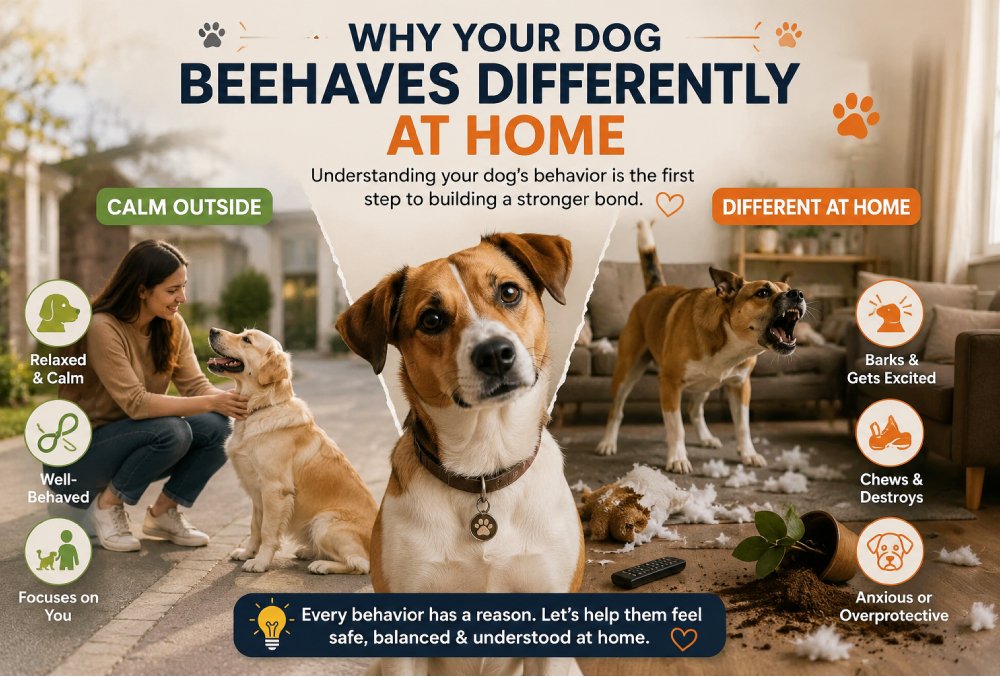
Most owners describe the same thing. The dog sits perfectly in class, listens to the trainer, walks calmly on a loose leash. Back home, the same dog ignores a recall, jumps on guests and pulls the moment the door opens. Nothing was forgotten. The context changed.
Behaviour is learned in context
A dog does not learn the word “sit”. It learns the whole picture around it: the room, the surface underfoot, who is holding the treat, how the hand moves. Change enough of that picture and the cue stops looking familiar. Trainers call this generalisation, and it is the step most home training skips.
If a cue only works in one room, your dog has learned the room, not the cue.
What to change this week
You do not need longer sessions. You need the same short session in more places.
- Run the same two cues in four different rooms, one minute each.
- Practise with a second person in the room before you practise with guests.
- Move rewards out of your hand and into a pocket, so the cue is not the treat.
- End every session while your dog is still interested, not when it stops responding.
When to bring in help
If the behaviour is tied to fear rather than habit, repetition can make it worse. Growling at the door, guarding food or freezing on walks are signals to slow down and get a trainer into the house, where the behaviour actually happens.
That is the reason our sessions run at home. The living room is where the problem lives.