
Muzzle Training for Dogs: A Safety Tool, Not a Last Resort
Muzzle training for dogs isn't punishment — it's a safety habit any dog can learn calmly with the right pacing. Here's how to start.

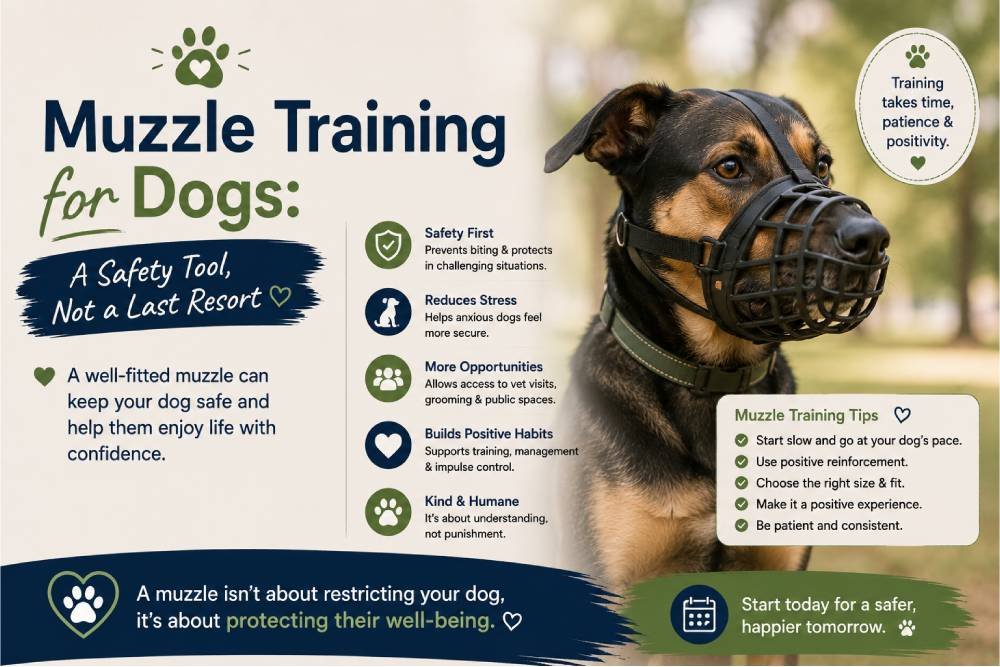
Muzzle training for dogs gets treated as a last resort — something you do after a bite, not before one. That order of operations is backwards. Muzzle training for dogs works best as a routine safety habit taught calmly, long before it’s ever actually needed, the same way you’d teach a dog to accept a leash or tolerate nail trims.
Why muzzle training for dogs is a safety tool, not a punishment
A muzzle restricts biting, not breathing, when it’s fitted and introduced correctly. Vets, groomers and trainers use muzzles routinely on dogs that are anxious rather than aggressive — a stressed dog at the vet is a bite risk regardless of temperament, and muzzle training for dogs protects the dog from an outcome (being labelled dangerous after a stress-bite) as much as it protects the people around them.
Basket vs. sleeve: which muzzle training for dogs starts with
A basket-style muzzle, which still allows panting, drinking and treats through the gaps, is almost always the right starting point. A sleeve-style muzzle that holds the mouth shut is appropriate only for very brief, closely supervised moments and isn’t suitable for the kind of gradual muzzle training for dogs this article covers.
The muzzle training for dogs timeline that actually works
- Muzzle as a treat dispenser, not a restraint. For the first several days, the muzzle only appears paired with high-value treats, and never gets buckled. Let your dog push their nose in voluntarily to reach the treat.
- Add duration before you add the buckle. Once your dog pushes in eagerly, extend how long the nose stays in before the treat, still with no strap fastened.
- Buckle it for seconds, then remove it. The first fastened wear should last only a few seconds, followed immediately by removal and a reward, well before any sign of stress appears.
- Extend duration gradually across sessions. Build toward normal-length wear only after several sessions of calm, unbothered short wears, ideally practiced during a relaxed moment rather than right before a stressful one.
A dog that associates the muzzle with treats will offer their nose for it. A dog that’s had one forced on will fight it every time.
Signs muzzle training for dogs is moving too fast
Pawing at the muzzle, trying to back away, or refusing the treat entirely all mean you’ve extended duration or added the buckle before the previous step was solid. Muzzle training for dogs should never involve holding the muzzle on against resistance — that’s the fastest way to build the exact fear response you’re trying to avoid in the first place.
Practicing muzzle training for dogs in low-stress moments
Once your dog tolerates a full-length wear calmly at home, practice brief wears during an easy, familiar walk before you ever need it for a vet visit or a genuinely stressful situation. A muzzle that only ever appears during emergencies gets associated with the emergency itself, undoing much of the earlier conditioning.
When muzzle training for dogs is worth prioritising
Dogs that are reactive to other dogs or unfamiliar people, dogs with a bite history, and dogs who visibly struggle at the vet or groomer all benefit from having this skill in place before it’s needed in a stressful moment. The Muzzle Up! Project, a resource dedicated specifically to this training, notes that a well-conditioned muzzle can actually expand a dog’s freedom — allowing supervised park visits or routine vet care that might otherwise be off-limits for a dog with a bite risk.
Our training and walking services include muzzle conditioning as part of behaviour work for reactive or anxious dogs, paced at whatever speed your dog needs. Book a free demo to start the process with a trainer in your own home.