
Recall Training: 6 Proven Steps to Teach Your Dog to Come When Called

You call your dog's name in the society park. They look at you, think about it, and then run the other way to sniff a lamp post. Sound familiar?
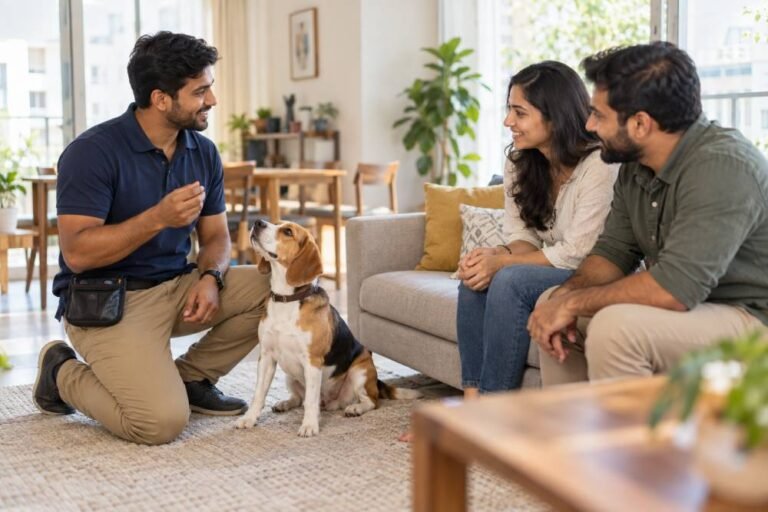
Below, you will learn how to teach your dog to come when called with short, reward-based sessions, following the same principles as the American Kennel Club’s recall guide. It is the most important safety skill your dog can learn, and any family can learn to teach your dog to come when called.
A reliable recall, meaning your dog comes to you when called, is one of the most important skills you can teach. It's not just about convenience. It can keep your dog safe near roads, stray dogs, open gates and busy markets.
The good news is that recall is a skill, not a personality trait. Any dog can learn to come back more reliably with the right approach. Here are six proven steps.
Why Doesn't My Dog Come When Called?
Most recall problems come from one of these:
- Coming back isn't rewarding enough. A squirrel, a smell or another dog is simply more interesting.
- "Come" has been linked to bad things. Being called only to go home, get a bath or be told off teaches a dog to avoid you.
- The cue has been overused. Repeating "come, come, COME!" without follow-through teaches the dog it's optional.
- Too hard, too soon. Practising in a busy park before the dog understands the cue at home.
Fixing recall means fixing all four.
1. Choose a Fresh, Special Recall Cue
If you've been calling "come" for months without success, that word may be "poisoned". Start fresh with a new cue, like "here", a whistle, or even a word in Hindi you don't use elsewhere. Short, happy sessions are the fastest way to teach your dog to come when called.
Rules for your new cue:
- Say it once, clearly and happily.
- Only use it when you're fairly sure your dog will respond (at first).
- Never use it for something your dog dislikes.
2. Charge the Cue at Home
Before asking your dog to do anything, make the cue itself exciting:
- Stand near your dog indoors.
- Say your cue once.
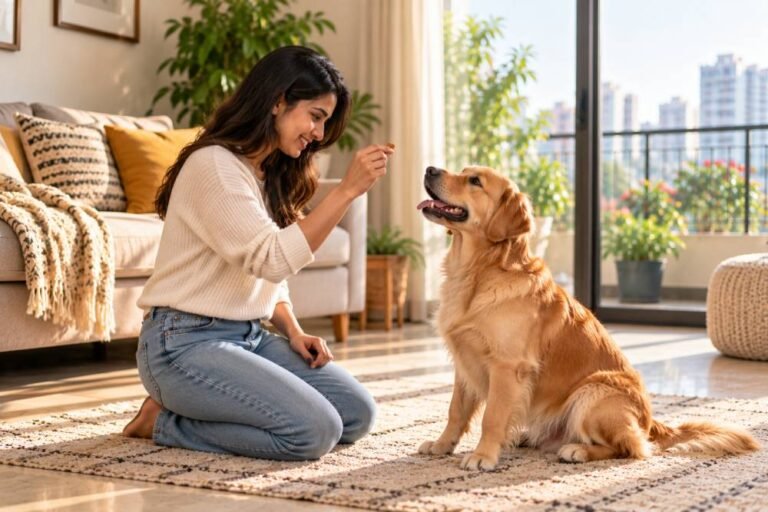
- Immediately give a high-value treat, like a small piece of boiled chicken or paneer.
- Repeat 5–10 times, a few sessions a day.
Your dog learns: that sound means something amazing is about to happen. This is the foundation of every strong recall.
3. Build Distance Indoors, Then Outdoors
Now start asking for movement:
- Call from across the room, reward generously when they arrive.
- Call from another room.
- Play "ping-pong recall" with a family member: take turns calling the dog back and forth between you.
When your dog is responding quickly indoors, move to a quiet outdoor space, such as an empty terrace, a quiet corner of the society or an early-morning park. Always use a long line (5–10 metres) outdoors so your dog can't practise ignoring you.
4. Make Coming to You the Best Thing Ever
Your reward has to compete with the environment. Rules for great recall rewards:
- Use the best treats you have. Save these only for recall.
- Celebrate. Praise, a short game of tug, or a quick chase.
- Touch the collar before rewarding. This prevents "fly-by" recalls where the dog grabs a treat and runs off.
- Let them go back to playing. If every recall ends fun, your dog will stop coming. Call, reward, release them back to sniffing. This is the single most powerful recall trick.
5. Add Distractions Gradually
Recall around distractions is where most training falls apart. Build up slowly:
| Level | Example environment |
|---|---|
| 1 | Living room, no distractions |
| 2 | Home with family moving around |
| 3 | Quiet society lawn, early morning |
| 4 | Park with people at a distance |
| 5 | Park with dogs playing at a distance |
| 6 | Closer to other dogs (on long line) |
If your dog fails twice in a row, go back a level. That's not failure; it's information.
6. Never Punish Your Dog for Coming Back
No matter how long it took, no matter how frustrated you are, when your dog reaches you, reward them. If you scold a dog who finally comes, they learn that coming back leads to trouble, and next time they'll take even longer.
Also avoid:
- Chasing your dog (it becomes a game)
- Calling them only at the end of the walk
- Calling repeatedly when you know they won't respond
If your dog is ignoring you, go closer, get their attention with a squeaky sound, run away from them (dogs love to chase), and reward when they catch up.
Common Recall Training Mistakes
- Letting your dog off-leash too early. Every ignored recall weakens the cue.
- Using boring rewards. Dry kibble can't compete with a street dog across the road.
- Using recall only to end fun. Mix it into the whole walk.
- Inconsistent family cues. One person says "come", another says "idhar aa", a third whistles. Pick one.
- Skipping practice once it "works". Recall needs lifelong maintenance.
Recall Training Safety in Delhi NCR
Off-leash walking is risky in most parts of Delhi NCR due to heavy traffic, stray dog territories and open drains. Even with good recall:
- Keep your dog on a leash near roads and in unfenced areas.
- Use long lines in open parks.
- Only practise off-leash in fully fenced, safe spaces.
- Check your society and local park rules on off-leash dogs.
For more on staying safe during walks, see Dog Walking Tips for Busy Streets and Dog Park Etiquette.
When Should You Consider Professional Training?
Consider a trainer if:
- Your dog has bolted out of a gate or into traffic
- Your breed has a strong chase or scent drive (Beagles, Huskies, sighthounds)
- Recall is fine at home but completely falls apart outside
- Your dog comes back but then runs off before you can clip the leash
A trainer can work with you in your actual park or society, which is where recall matters most.
How Long Does Recall Training Take?
A basic indoor recall can be taught in 1–2 weeks. A reliable recall around real-world distractions typically takes 2–4 months of regular practice. Scent hounds and high-drive breeds may take longer. Recall is a skill you keep practising for life.
Also read: Basic Dog Commands: Sit, Stay, Come and More
Final Thoughts: Teach Your Dog to Come When Called
When you teach your dog to come when called with rewards and patience, recall becomes a habit that keeps your dog safe for life. Our trainers can also help you teach your dog to come when called during home sessions across Delhi NCR.
A strong recall is built on one idea: coming to you should always be the best choice your dog can make. Start fresh, reward generously, build difficulty slowly and never punish a returning dog. The time you put in now could one day keep your dog safe.
Want a reliable recall? Book a trainer for a single session, or run a growth package over a few weeks. Book your pet's first visit: a free demo session, at your home, no card required.
Have more questions about how to teach your dog to come when called? Here are quick answers.
Frequently Asked Questions
At what age should I start recall training?
As soon as your puppy comes home. Puppies naturally follow you, which is a perfect time to build the habit.
What's the best treat for recall training?
Something your dog loves and rarely gets: boiled chicken, paneer, or a special dog treat. Keep pieces small.
Can I use a whistle for recall?
Yes. Whistles are consistent, carry over distance and sound the same no matter who blows them.
My dog comes back but won't let me catch them. What do I do?
Practise collar grabs at home with treats, and always touch the collar before rewarding. Release them back to play often so being caught doesn't mean the fun ends.
Is it safe to let my dog off-leash in Delhi NCR parks?
Only in fully fenced areas and where rules allow. Use a long line elsewhere, even if your dog's recall is good.
Why is my Beagle so bad at recall?
Scent hounds are bred to follow their nose. They can learn good recall, but need higher-value rewards and more practice. See Beagle Behavior: 5 Proven Fixes.
Related reading: Dog Leash Training: 7 Tips to Stop Leash Pulling · Puppy Socialization Tips · German Shepherd Training Basics