
Puppy Training Schedule by Age: What to Teach From 8 Weeks to 6 Months

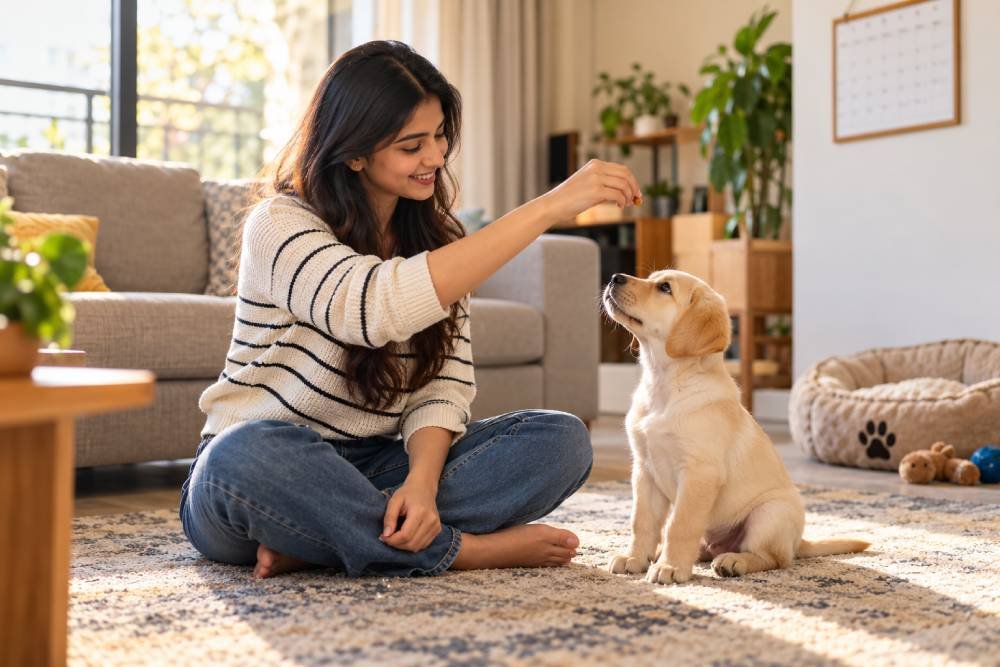
Bringing a puppy home is exciting, and a little overwhelming. There is so much to teach: toilet habits, their name, sit, gentle mouths, walking on a leash, staying calm when the doorbell rings. The secret is not to teach everything at once. Puppies learn best when skills are introduced in the right order, in short sessions, at the right age.
A puppy training schedule keeps lessons short and matched to your puppy’s age, so learning stays fun. The American Kennel Club’s puppy training timeline follows a similar week-by-week approach. Use this puppy training schedule alongside your vet’s vaccination plan.
This puppy training schedule breaks the first six months into simple stages, with a sample daily routine you can follow at home.
Before You Start: How Puppies Learn
- Short sessions win. Young puppies focus for 2–5 minutes at a time. Three or four tiny sessions a day beat one long one.
- Reward what you like. Small, soft treats, praise and play teach faster than correcting mistakes.
- Routine is training. Regular meals, toilet breaks and naps teach your puppy what to expect, which makes everything else easier.
- Sleep matters. Puppies need 16–18 hours of sleep a day. An overtired puppy bites more and listens less.
8–10 Weeks: Settling In
Your puppy's first weeks at home are about safety, trust and routine, not obedience. Short sessions of a few minutes fit into any puppy training schedule.
Focus on:
- Name recognition. Say their name once in a happy voice, and reward the moment they look at you.
- Toilet training. Take them out after sleeping, eating, playing and every 1–2 hours while awake. Our guide to house training a puppy has a full plan, and puppy pee training in an apartment covers flat life.
- Crate or bed comfort. Make their resting place a happy spot with meals and chews inside. See crate training a puppy.
- Gentle handling. Touch paws, ears and mouth for a second, then treat. This makes grooming and vet visits easier later.
- Gentle socialisation. Let your puppy see and hear new things from a safe distance: the pressure cooker, the doorbell, the lift.
10–12 Weeks: First Real Lessons
Now your puppy is ready for simple cues.
Focus on:
- Sit. Lure with a treat over the head, reward when the bottom touches the floor.
- Come. Call happily from a few steps away indoors and reward big.
- Bite inhibition. Puppies explore with their mouths. Redirect to a toy and pause play when teeth touch skin. Read how to stop puppy biting.
- Collar and leash at home. Let them wear a light collar and drag a short leash indoors under supervision.
- Socialisation. Calm, positive experiences with new people, surfaces and sounds. Our puppy socialization tips explain what to do before vaccinations are complete.
12–16 Weeks: Building Good Habits
This is a busy, important stage. Your puppy is curious, confident and learning fast.
Focus on:
- Down and wait. Add "down," and practise "wait" before meals and doors.
- Leave it. A great safety cue for Indian streets, where chicken bones and rubbish are common.
- Loose-leash basics. Once your vet says outdoor walks are safe, start short walks and reward your puppy for walking next to you.
- Alone time. Practise short separations of a few minutes so your puppy learns that you always come back. This helps prevent separation anxiety.
- Grooming routine. Brush for one minute a day and touch their nails. Our guide on how to brush a dog's coat shows how.
4–6 Months: Teenage Testing
Around four months, many puppies start to ignore cues they "knew" last week. This is normal. Their brain and body are changing fast, and the world outside is suddenly very interesting.
Focus on:
- Practising cues in new places. Living room first, then balcony, lift lobby and society park.
- Recall with distractions. Use a long line outdoors. See our dog recall training guide.
- Polite greetings. Teach sit-to-greet so your puppy doesn't grow into a dog that jumps on everyone. Read how to stop a dog jumping on people.
- Settle on a mat. Reward calm lying down while the family eats or watches TV.
- Chewing management. Teething peaks around this age. Offer safe chews and puppy-proof your home.
Sample Daily Routine for a 3-Month-Old Puppy
| Time | Activity |
|---|---|
| 6:30 am | Toilet break, short play |
| 7:00 am | Breakfast, then toilet |
| 7:30 am | 3-minute training session (sit, name) |
| 8:00 am – 10:30 am | Nap in crate or bed |
| 10:30 am | Toilet, short socialisation outing or balcony time |
| 11:00 am | Chew toy or lick mat |
| 12:00 pm | Lunch, toilet, nap |
| 3:00 pm | Toilet, 3-minute training session (come, leave it) |
| 3:30 pm | Play, then nap |
| 6:30 pm | Dinner, toilet |
| 7:30 pm | Short walk or calm play, handling practice |
| 9:00 pm | Quiet time, last training game |
| 10:30 pm | Final toilet break, bedtime |
Adjust it around your family's day. What matters most is consistency. For older dogs, see our guide to building a daily routine for dogs.
Common Puppy Training Mistakes
- Doing too much too soon. Long sessions and crowded outings overwhelm young puppies.
- Punishing accidents. It teaches your puppy to hide when they need the toilet.
- Skipping socialisation. The window for easy socialisation closes early, so start gently from day one.
- Different rules from different people. If one person allows the sofa and another doesn't, your puppy gets confused.
- Only training when there's a problem. Practise good behaviour every day, not just after mistakes.
When to Get Help From a Trainer
A trainer can save you weeks of trial and error, especially if:
- You are a first-time dog parent
- Your puppy bites hard or guards food and toys
- Toilet training isn't improving after a few weeks
- Your puppy is very fearful of people, noises or other dogs
- Everyone at home is giving different instructions
Final Thoughts on Your Puppy Training Schedule
Treat this puppy training schedule as a guide, not a test: every puppy learns at its own pace, so adjust it to your pup.
You don't need a perfect puppy by six months. You need a puppy who trusts you, understands the basics and has good daily habits. Keep sessions short, reward often, and follow a routine that suits your home. The effort you put in now makes the next ten years much easier.
Want a trainer to set up your puppy's plan? Book a trainer for a single session, or run a growth package over a few weeks. We offer at-home puppy training across Noida, Gurgaon, Ghaziabad, South Delhi and the rest of Delhi NCR. Book your pet's first visit: a free demo session, at your home, no card required.
Here are quick answers to common questions about a puppy training schedule.
Frequently Asked Questions
When should I start training my puppy?
From the day they come home, usually around 8 weeks. Start with name games, toilet routines and gentle handling, then add cues like sit and come.
How long should puppy training sessions be?
Two to five minutes for puppies under four months, three or four times a day. Older puppies can manage five to ten minutes.
Can I train my puppy before vaccinations are complete?
Yes. Training at home can start straight away. For outdoor walks and meeting other dogs, follow your vet's advice on vaccination timing.
At what age is a puppy fully trained?
Most puppies know the basics by six months, but reliability around distractions usually takes until 12–18 months of age.
Why has my 5-month-old puppy stopped listening?
This is the "teenage" phase. Go back to easier settings, use higher-value rewards and keep practising. It passes with consistency.
Related reading: Basic Dog Commands · Rescue Dog's First 30 Days · How to Stop Dog Barking in Apartments