
Dog Walking Tips for Busy Streets: 5 Proven Rules to Avoid Dangerous Mistakes
Dog walking tips for busy streets: 5 proven rules that prevent the most dangerous mistakes pet parents make on NCR's traffic-heavy roads.

Dog walking tips for busy streets tend to focus on leash length and traffic awareness, which matter, but miss the bigger issue: most incidents happen not from a single dangerous moment, but from a pattern of small habits that compound over weeks of the same route.
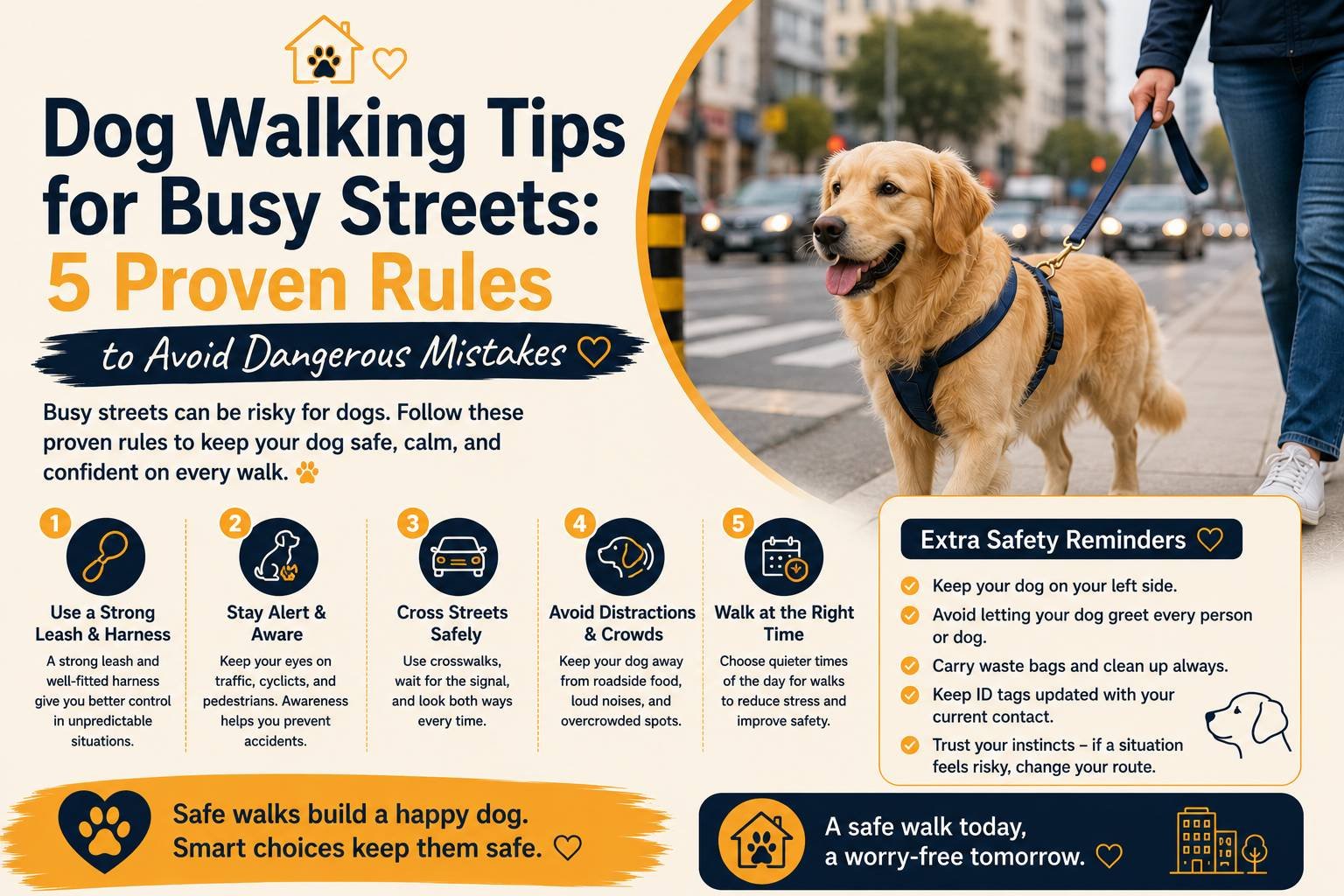
Five proven dog walking tips for busy streets
- Keep the leash short near intersections, not just held tight — a shorter physical length gives you control before a reaction happens, not after.
- Walk against traffic where pavements are shared with vehicles, so you see what’s approaching rather than being surprised from behind.
- Check pavement temperature by hand before hot-weather walks. If it’s too hot for the back of your hand for seven seconds, it’s too hot for your dog’s paws.
- Avoid peak-traffic timing where possible — early morning and after-dark walks are calmer for both traffic exposure and heat.
- Train a solid “leave it” before you need it on the street, since roadside food waste and other animals are common, sudden distractions in busy NCR neighbourhoods.
Most close calls on busy streets aren’t caused by one bad moment — they’re caused by a habit that’s worked fine ninety-nine times before it doesn’t.
Why pavement heat deserves more attention than it gets
Asphalt can run far hotter than the surrounding air temperature, and dogs don’t reliably show discomfort until damage has already occurred. The University of Georgia College of Veterinary Medicine’s guidance on summer pet safety recommends the same simple test before any hot-weather walk: if the pavement is too hot for your hand, it’s too hot for your dog’s paws, and grass or shaded trails are the safer choice.
Building a safer route, not just safer habits
Where possible, scout an alternate route with fewer road crossings and more shaded stretches, even if it’s slightly longer. A predictable, lower-traffic route reduces the number of split-second decisions you need to make correctly on every single walk.
What to carry on busy-street walks
A well-fitted harness (harder for a startled dog to slip out of than a collar), a phone, and a small water supply for longer walks in warm weather cover most of what a busy-street walk actually needs beyond attentiveness itself.
Our training and walking services include street-specific leash work, practiced on your actual route rather than a quiet park. Book a free demo to have a trainer walk your route with you.
Reading your dog’s reaction to traffic, not just managing it
A dog that flinches or freezes near loud traffic is telling you something different from a dog that simply wants to investigate every passing vehicle — the first needs a calmer route and a slower desensitisation plan, while the second usually just needs firmer loose-leash fundamentals. Treating both the same way tends to make the anxious dog’s reaction worse over time.
Gear worth reconsidering for busy-street walks
Retractable leashes give up exactly the control busy streets demand, since the sudden length changes make split-second reactions harder to execute. A fixed-length leash, four to six feet, gives you consistent control whether you’re passing another dog, crossing at a signal, or reacting to something unexpected underfoot.
Timing a walk around your specific street, not just the clock
Two streets with the same traffic volume can behave very differently depending on school pickup times, market hours, or a nearby construction site. Walking your actual route once at a few different times of day, without your dog, is often the fastest way to identify which window is genuinely calmest, and it’s worth doing before assuming any single time of day is automatically the safest one for your street specifically.