

Beagle Behavior: 5 Proven Fixes for a Breed Built to Escape
Beagle behavior tips that actually work: 5 proven fixes for the scent-driven escaping and vocalising this breed is famous for.

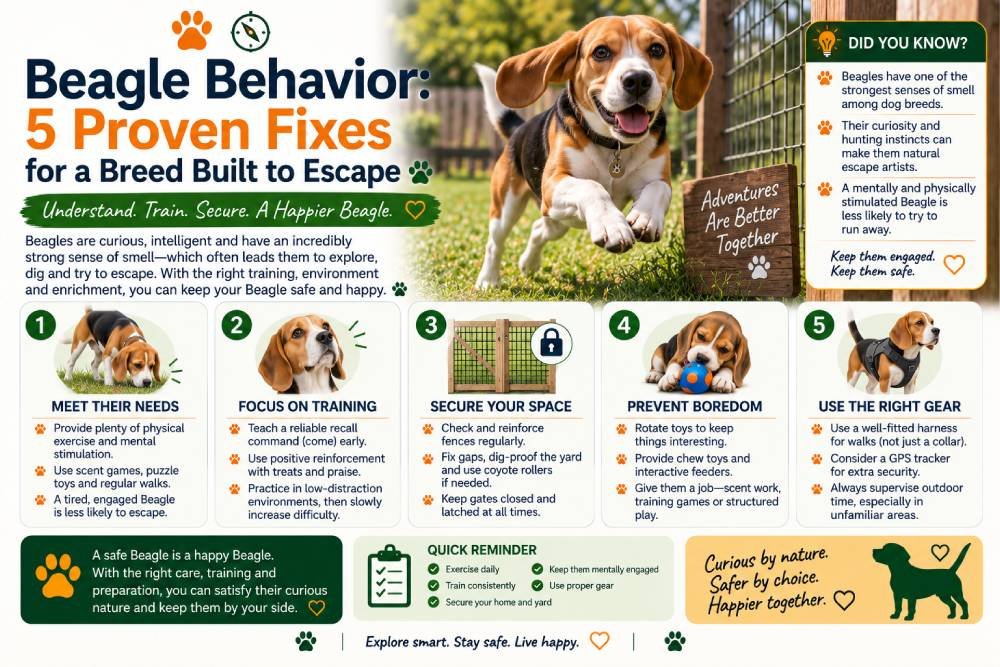
Beagle behavior tips that ignore this breed’s nose miss the entire point. Beagles were bred as scent hounds, and once they lock onto an interesting smell, almost every other instinct — recall, boundaries, even hunger — takes a back seat. Understanding that single fact explains most of what makes this breed both charming and genuinely challenging.
Beagle Behavior Tips
- Never trust an off-leash beagle near an open gate or unfenced area. A scent trail can override recall entirely, regardless of how well-trained the dog is otherwise.
- Use scent games as structured enrichment — hiding treats around the house or garden gives their nose a job in a way that’s safe and satisfying, rather than trying to suppress the instinct entirely.
- Expect and plan for vocalisation. Beagles were bred to bay loudly while trailing, and this instinct doesn’t disappear just because they’re a house pet now.
- Secure the home and yard specifically against escape — beagles are notorious diggers and gap-finders when a scent pulls them toward the outside.
- Train recall with extremely high-value rewards, since competing against a strong scent requires a genuinely compelling reason to turn back.
A beagle that “won’t listen” outdoors usually isn’t being stubborn — their nose has simply out-competed every other instruction you’ve given.
Why beagle behavior looks different from other breeds
The American Kennel Club’s Beagle breed profile notes their history as pack-hunting scent hounds bred specifically for stamina and independence while trailing — traits that made them excellent hunting companions but also explain why they’re consistently ranked among the more independent-minded breeds to train.
Managing the vocalisation realistically
Rather than trying to eliminate baying entirely, which rarely succeeds, most owners get better results redirecting it — a consistent “quiet” cue paired with a reward for calm silence, practiced regularly rather than only when the barking has already started. Building this into short daily practice sessions, not just reactive corrections in the moment, produces far more reliable results over time.
What apartment living changes for this breed
Beagles can do well in apartments with enough mental stimulation, but a beagle without scent-based enrichment tends to find its own outlet — often destructive chewing or persistent vocalising aimed at getting attention. Structured scent games aren’t optional extras for this breed; they’re closer to a core need, and skipping them tends to show up as behaviour problems within weeks rather than months.
Our training and walking services build beagle-specific recall and enrichment routines that work with this breed’s nose instead of fighting it. Book a free demo to get started.
A note on food motivation
Beagles are as food-driven as they are scent-driven, which is genuinely useful for training if you use it deliberately — high-value treats specifically reserved for recall practice tend to outcompete environmental distractions better than treats used generically throughout the day.
Exercise needs beyond the daily walk
A beagle’s stamina as a scent hound means a single short walk rarely satisfies them fully. Longer walks with opportunities to sniff freely — rather than a brisk, purposeful pace — actually tire this breed out more effectively, since the mental work of tracking scents is as tiring for them as the physical distance covered.
Living with a beagle’s independent streak
New owners sometimes mistake this breed’s independence for stubbornness or low intelligence, when it’s closer to the opposite — beagles are perfectly capable of learning quickly, they simply weigh whether following an instruction is worth it against whatever their nose is telling them in the moment. Training that acknowledges this, rather than fighting it, tends to succeed faster and builds a much better working relationship over time. Short, rewarding sessions with consistent cues help keep their attention focused and make learning more enjoyable for both owner and dog.