

Leash Reactivity in Dogs: 6 Steps to Calmer Walks

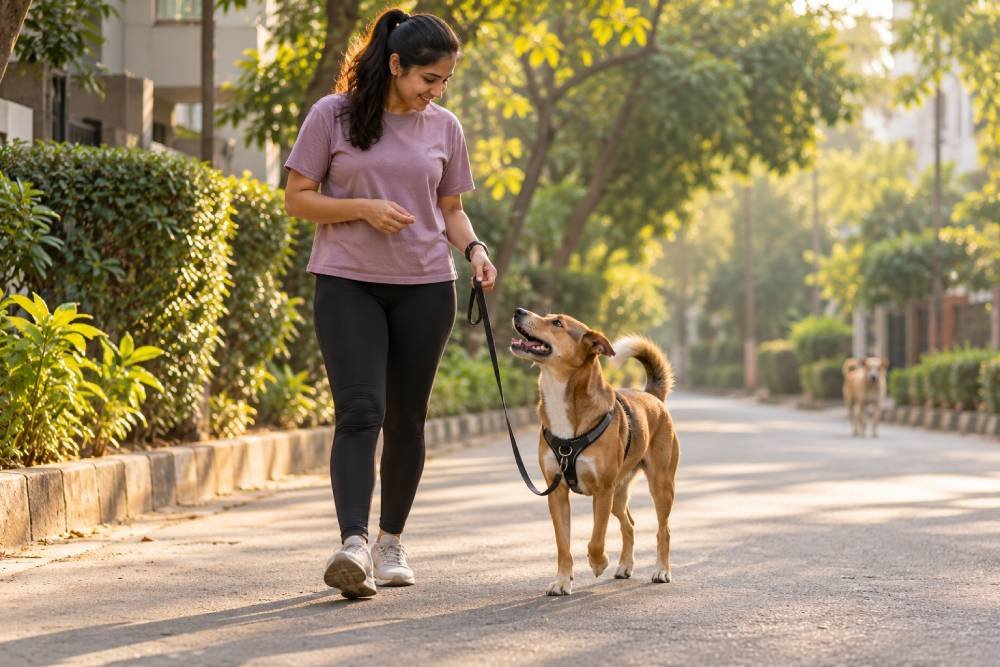
Your dog is lovely at home. Then another dog appears across the road and suddenly there is barking, lunging, spinning and a leash that feels like it might snap. Neighbours stare, you feel embarrassed, and walks start to feel like a battle.
Leash reactivity in dogs is common in busy Indian neighbourhoods, and it improves with patient, reward-based practice. The RSPCA’s dog training advice supports the same calm, positive approach. Leash reactivity in dogs usually comes from fear, frustration or over-excitement rather than true aggression.
This is called leash reactivity, and it's one of the most common problems we see in dogs across Noida, Gurgaon and Delhi NCR. The good news: reactivity is very trainable. It needs patience and a plan, not punishment.
What Is Leash Reactivity?
Leash reactivity is an over-the-top reaction, such as barking, growling, lunging or whining, to a trigger while your dog is on a leash. Common triggers include:
- Other dogs, including street dogs
- Bikes, scooters and autos
- People, especially children running or joggers
- Cats and birds
Many reactive dogs are perfectly friendly off-leash or at home. The leash itself is part of the problem.
Why Do Dogs Become Reactive on Leash?
- Fear or frustration. Some dogs are worried and want the trigger to go away. Others are desperate to say hello and frustrated they can't.
- Feeling trapped. On a leash, a dog can't choose to move away, so they may try to make the trigger leave instead.
- Past bad experiences. A scare from a street dog or a rough dog in the society park can leave a lasting worry.
- Too little socialisation. Dogs who missed calm, positive exposure as puppies often find the world overwhelming.
- Leash tension. When you tighten the leash as a trigger appears, your dog feels it and learns that something bad is coming.
- Pain. Sudden reactivity in an adult dog can be linked to discomfort, so a vet check is always sensible.
1. Find Your Dog's Threshold
Every reactive dog has a distance at which they notice a trigger but can still think, take treats and respond to you. That's called being "under threshold." Every dog is different, so note what triggers leash reactivity in dogs like yours.
Watch your dog's body language: stiffening, a hard stare, ears forward, a closed mouth. Our guide to reading your dog's body language on a walk shows the early warning signs. Training only works when your dog is under threshold, so start far away. It might be 30 metres or more.
2. Change the Emotion: "Dog Appears, Treats Rain Down"
This is the core of reactivity training, known as counter-conditioning:
- The moment your dog notices another dog at a safe distance, start feeding high-value treats, like small pieces of boiled chicken or paneer.
- Keep feeding while the trigger is visible.
- When the trigger disappears, the treats stop.
Over time, your dog learns that other dogs predict good things, and the worried or frustrated feeling is replaced with anticipation.
3. Teach a "Look at That" or "Let's Go" Cue
Give your dog something useful to do instead of reacting:
- "Look at that": your dog glances at the trigger, you mark ("yes!") and reward. This teaches calm observation.
- "Let's go": a happy U-turn cue. Practise at home until your dog spins around with you every time, then use it to exit tricky situations early.
Both work best when practised hundreds of times in easy settings before you need them.
4. Manage Walks to Avoid Blow-Ups
Every reaction your dog rehearses makes the habit stronger. While you're training:
- Walk at quieter times, early morning or late evening.
- Choose wider roads and less crowded parts of your society.
- Cross the road, step behind a parked car or turn around before your dog reacts.
- Avoid narrow lanes where dogs are forced to pass close.
- Skip crowded dog parks for now. See our dog park etiquette guide for when to return.
5. Keep the Leash Loose and Use the Right Gear
A tight leash adds tension to every encounter. Practise loose leash walking away from triggers first.
A well-fitted, front-clip harness gives you more control without pressure on the neck. Avoid choke chains, prong collars and shock collars. They add pain and fear, which usually makes reactivity worse.
If your dog could hurt another dog or person, muzzle training done kindly is a smart safety step, not a punishment.
6. Build Up Slowly and Celebrate Small Wins
Reduce the distance only when your dog is relaxed at the current one. Progress might look like:
- Week 1–2: calm at 30 metres, taking treats
- Week 3–4: calm at 20 metres, responding to "let's go"
- Month 2: walking past a dog across the road with a glance and a check-in
- Month 3+: passing calmer dogs on the same side of the road
A bad day is normal. Go back a step, lower the difficulty and keep going.
Street Dogs and Delhi NCR Walks
Walking a reactive dog in Indian cities has an extra challenge: street dogs guard their territory and can approach suddenly. A few tips:
- Learn where local dogs rest and plan routes around them.
- Keep your dog moving calmly. Stopping to stare can invite a confrontation.
- Carry treats and use "let's go" early.
- Never let your dog lunge at or chase street dogs. It puts both at risk.
Our guide on dog walking tips for busy streets covers route planning in more detail.
Common Mistakes With Reactive Dogs
- Punishing the barking. It may stop the noise briefly but increases the fear or frustration underneath.
- Forcing greetings to "get them used to it."
- Working too close to triggers too soon.
- Only training on bad days. Practise calm skills at home every day.
- Expecting a quick fix. Reactivity improves in months, not days.
When Should You Get Professional Help?
Bring in a trainer if your dog:
- Has bitten or tried to bite another dog or person
- Reacts to many different triggers, or at very long distances
- Takes a long time to calm down after reacting
- Is getting worse despite consistent practice
A trainer can walk your real routes with you, spot triggers early and set up controlled practice with calm helper dogs.
How Long Does It Take?
Mild reactivity often improves noticeably within 4–8 weeks. More intense or fear-based reactivity may take 3–6 months or longer. Many dogs never become social butterflies, and that's okay. The goal is a dog who can walk calmly past triggers and enjoy their walks again.
Final Thoughts on Leash Reactivity in Dogs
Leash reactivity in dogs improves with distance, patience and rewards. Progress is gradual, so celebrate the small wins. For stubborn cases, working with a trainer on leash reactivity in dogs keeps sessions safe and structured.
Leash reactivity is not bad behaviour. It's your dog telling you they're worried or overwhelmed. Give them distance, change how they feel about triggers, teach them a better option and protect them from repeated blow-ups. With consistency, walks can become calm and enjoyable again.
Struggling with a reactive dog? Book a trainer for a single session, or run a growth package over a few weeks. We offer at-home training across Noida, Gurgaon, Greater Noida and Faridabad. Book your pet's first visit: a free demo session, at your home, no card required.
Below are quick answers to common questions about leash reactivity in dogs.
Frequently Asked Questions
Is leash reactivity the same as aggression?
Not necessarily. Many reactive dogs are frightened or frustrated rather than aggressive. However, reactivity can escalate, so it's worth addressing early.
Will neutering fix leash reactivity?
Neutering alone rarely fixes it. Training and management are what change the behaviour. Discuss neutering decisions with your vet.
Should I pick up my small dog when another dog approaches?
Occasionally, for safety, yes. But regularly lifting your dog can increase their worry. Creating distance early is usually better.
Can I let my reactive dog meet other dogs to fix it?
Forced meetings usually make things worse. Controlled, distant exposure with rewards works far better.
Why is my dog only reactive on leash, not off leash?
On a leash, dogs can't move away or greet naturally. That feeling of restriction often triggers the barking and lunging.
Related reading: How to Stop Dog Barking in Apartments · Dog Recall Training · Puppy Socialization Tips