
Crate Training a Puppy: 6 Gentle Steps to a Happy, Settled Pup

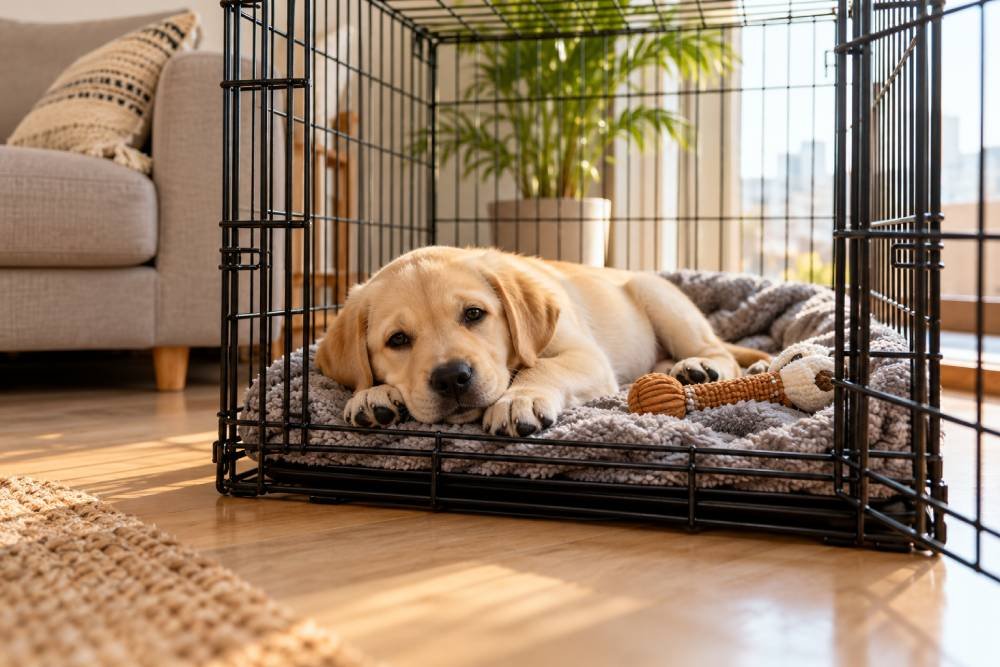
A crate can be one of the most useful tools for a new puppy, or one of the most stressful, depending on how it is introduced. Done well, crate training gives your puppy a safe, quiet den to rest in, speeds up house training and protects your home (and your puppy) from chewing accidents while you can't supervise.
Crate training a puppy works best when the crate feels like a cosy den and never a punishment, a point the Humane World for Animals crate training guide also makes. Done well, crate training a puppy also helps with toilet training and keeps your pup safe when you cannot watch.
Done badly, it becomes a place your puppy dreads. The difference is almost always how gradually the crate is introduced. Here is a gentle, step-by-step way to crate train a puppy so they actually choose to go in.
Why Crate Training Helps Puppies
Dogs naturally look for small, enclosed spaces to rest. A crate taps into that instinct and helps with:
- House training. Most puppies avoid soiling the place they sleep, so a crate helps them learn to hold it between toilet breaks.
- Safe rest. Young puppies need 16–18 hours of sleep a day. A crate gives them somewhere calm to switch off, away from children, visitors and household noise.
- Chew-proofing. Charger wires, shoes and furniture legs are tempting. A crate keeps your puppy safe when you can't watch them.
- Travel and vet visits. A crate-trained dog is far calmer in cars and at the vet.
A crate should never be used as punishment, and it is not a place to leave a dog for a whole working day.
Choosing the Right Crate
- Size: Your puppy should be able to stand up, turn around and lie stretched out. Too big, and they may use one end as a toilet. Many wire crates come with a divider you can move as your puppy grows.
- Type: Wire crates are airy, which suits Indian summers, and easy to clean. Plastic travel crates feel more den-like and are useful for car journeys.
- Placement: Put the crate in a room where the family spends time, not in an isolated corner. At night, keep it near your bed for the first few weeks.
- Comfort: Add a washable mat or bed, a safe chew toy and, in hot weather, a spill-proof water bowl. Keep it away from direct sunlight and AC vents blowing straight in.
1. Make the Crate a Great Place to Be
Leave the crate door open and let your puppy explore in their own time. Toss a few treats inside, near the entrance at first, then further in. Praise any interest. Patience matters more than speed when crate training a puppy.
Never push or carry your puppy in at this stage. The goal is simple: the crate means good things happen.
2. Feed Meals in the Crate
Once your puppy happily steps inside for treats, start placing meals in the crate. Begin with the bowl near the door, then gradually move it to the back.
When your puppy is eating calmly inside, gently close the door while they eat, and open it as soon as they finish. Over several meals, leave the door closed for a minute or two after eating.
3. Add a Cue and Short Stays
Choose a cue such as "crate" or "bed". Say it, toss a treat inside, and praise when your puppy goes in. Close the door, sit nearby for a few minutes, then let them out calmly.
Build up slowly: 5 minutes, 10 minutes, 20 minutes, while you are still in the room. Give a stuffed chew toy or lick mat so the time is rewarding.
4. Practise Short Absences
When your puppy can rest quietly for 20–30 minutes with you nearby, start leaving the room for a few minutes, then return calmly. Keep departures and arrivals low-key. No big goodbyes or excited hellos.
This also lays the foundation for preventing separation anxiety later.
5. Crate Training at Night
Nights are where most families struggle. What helps:
- A last toilet break right before bed.
- Crate beside your bed, so your puppy can hear and smell you.
- A calm, dim room and a familiar-smelling blanket.
- For young puppies, one or two quiet toilet trips during the night. Carry them out, let them go, and return them to the crate with no play.
As a rough guide, puppies can hold their bladder for about one hour per month of age, plus one. Our guide on puppy pee training in an apartment has a full schedule.
6. Gradually Build Longer Crate Time
Increase crate time in small steps over several weeks. A few guidelines:
| Puppy age | Maximum daytime crate stretch |
|---|---|
| 8–10 weeks | 30–60 minutes |
| 11–14 weeks | 1–3 hours |
| 15–16 weeks | 3–4 hours |
| Adult dogs | No more than 4–5 hours during the day |
Always follow crate time with a toilet break, play and attention. A puppy who gets enough exercise and mental stimulation will settle far more easily. See our guide to building a daily routine for dogs.
Common Crate Training Mistakes
- Rushing. Shutting the door on day one often creates a lifelong dislike of the crate.
- Using the crate as punishment. Your puppy will learn to fear it.
- Letting out a whining puppy. If you open the door every time they cry, they learn crying works. Wait for a few seconds of quiet, unless you think they need the toilet.
- Too many hours inside. Long stretches cause stress, accidents and frustration.
- A hot or badly placed crate. In Delhi NCR summers, make sure the crate is shaded, ventilated and never in direct sun.
When Should You Get Help?
Speak to a trainer if your puppy:
- Panics in the crate: drooling, heavy panting, trying to break out
- Still screams in the crate after two to three weeks of gradual training
- Has frequent accidents inside the crate
- Shows distress whenever you leave, even outside the crate
A trainer can check whether the problem is the crate itself, the routine, or early separation-related stress.
How Long Does Crate Training Take?
Some puppies accept the crate in a few days. Most take one to three weeks of short, positive sessions before they settle happily for naps and nights. Rescue or older dogs may need longer, especially if they have had a bad crate experience before.
Final Thoughts on Crate Training a Puppy
Crate training a puppy takes a few weeks of short, positive sessions, but it gives your pup a safe place to rest for life. If your pup protests, a trainer can tailor crate training a puppy to your home and routine.
The best crate is one your puppy walks into on their own. Go slowly, make it rewarding, keep crate time reasonable and pair it with plenty of exercise and attention. In a few weeks, you'll have a puppy who naps happily, sleeps through the night sooner and is much easier to house train.
Need help with your new puppy? Book a trainer for a single session, or run a growth package over a few weeks. Book your pet's first visit: a free demo session, at your home, no card required.
Here are answers to the questions pet parents ask most about crate training a puppy.
Frequently Asked Questions
Is crate training cruel?
No, when done gradually and kindly. A crate becomes a safe resting space. It only becomes unkind if it's used as punishment or for very long hours.
Should I cover my puppy's crate?
A light cover over part of the crate can make it feel more den-like and calm. Leave enough gaps for airflow, especially in hot weather.
Should I put water in the crate?
For short naps it's not always needed. For longer periods or hot days, use a spill-proof bowl or a clip-on bottle.
My puppy cries in the crate at night. What should I do?
Keep the crate beside your bed, make sure they have been to the toilet, and respond calmly. A few quiet words can help, but avoid taking them out to play.
Can I crate train an older or rescue dog?
Yes. Go even more slowly, keep the door open longer at first and let the dog set the pace. Read our guide on a rescue dog's first 30 days.
When can I stop using the crate?
Once your dog is reliably house trained and doesn't chew things when unsupervised, you can leave the crate door open as a bed or phase it out.
Related reading: House Training a Puppy · How to Stop Puppy Biting · Puppy Socialization Tips