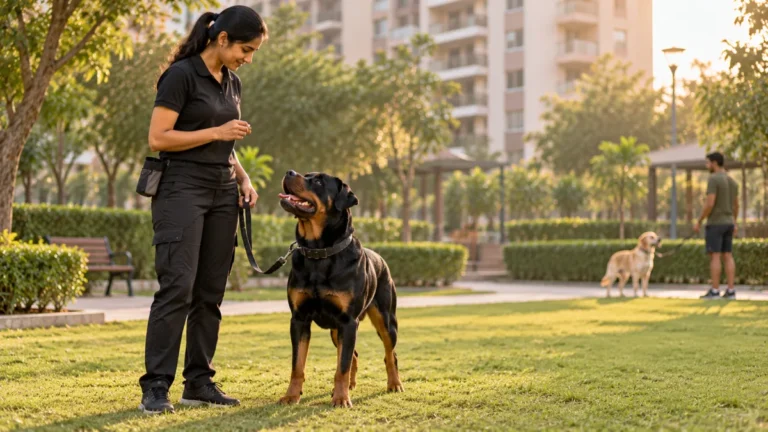
Puppy pee training that works in an apartment
Timers beat signals, one spot beats five, and correction is what makes it take longer.

Quick answer
Puppy pee training in an apartment works when you prevent accidents instead of correcting them. Take your puppy out after waking, eating and play, use a pee pad or balcony spot for urgent moments, reward every success, and clean accidents with an enzyme cleaner.
Puppy pee training in a flat is very doable, even on the 15th floor. House training stalls for the same two reasons in most apartments: the puppy cannot get outside fast enough, and accidents are being corrected instead of prevented.
Puppy pee training works on the clock, not on signals
A young puppy needs a trip out after waking, after eating, after play and every hour in between. Waiting for a signal means you are already late. Set a timer for the first two weeks.
One spot, one word, one reward
- Carry the puppy to the same spot every time.
- Say one short cue while it goes, not before.
- Reward within two seconds of finishing, outside, not back indoors.
A reward given at the door rewards coming back in, not going outside.
Accidents
Clean with an enzyme cleaner, never ammonia. Do not scold: a puppy that learns you dislike pee will simply go behind the sofa. If accidents increase after a clean run of good days, ask a vet to rule out a urinary infection before adding more training.
Overnight
Most puppies can hold roughly one hour per month of age at night. Water stays available in hot weather; move the last meal earlier instead of restricting water.
A sample potty schedule for an 8–12 week puppy
| Time | What to do |
|---|---|
| On waking | Straight to the potty spot |
| 15–20 minutes after each meal | Potty break |
| After play or training | Potty break |
| Every 45–60 minutes while awake | Potty break |
| Last thing at night | Potty break, then bed |
Pee pads, balcony or downstairs?
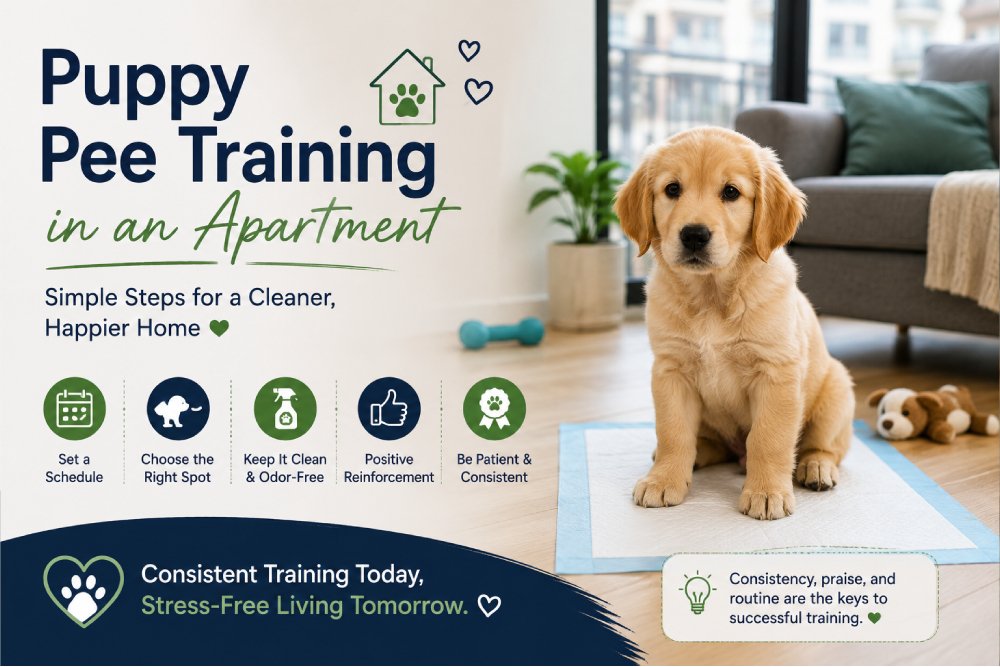
In high-rise flats, getting a puppy downstairs in time is hard, especially before vaccinations are complete. Many families use a pee pad or a grass patch on the balcony at first. That is fine, as long as you keep it in one fixed place. Once your puppy is vaccinated and holding longer, gradually move the routine outdoors.
Common mistakes that slow puppy pee training
- Giving the puppy free run of the whole flat too early
- Moving the pee pad around the house
- Rewarding late, back inside the door
- Scolding accidents, which teaches the puppy to hide
- Skipping the night-time break too soon
For a full plan, including crate use, read our house training a puppy guide. A steady daily routine and early puppy socialization also help your puppy settle faster. If your puppy is mouthing everything too, see how to stop puppy biting.
7 proven steps for puppy pee training in an apartment
- Pick one toilet spot and keep it there: a pee pad in a corner, a grass tray on the balcony, or one patch downstairs once your vet says it is safe.
- Set a timer. Take your puppy to the spot on waking, after meals, after play and every 45–60 minutes in between.
- Use a small, safe area when you cannot watch. A playpen or one puppy-proofed room stops accidents from happening all over the flat.
- Add a cue word like “go potty” while your puppy is going, so you can later ask for it before the lift ride.
- Reward within two seconds of finishing, at the spot, with a small treat and calm praise.
- Clean accidents with an enzyme cleaner so the smell does not invite a repeat.
- Grow freedom slowly. Add one room at a time after a full week with no accidents.
Spotting the signs your puppy needs to go
Once the schedule is running, you will start to notice your puppy’s own signals. Take your puppy to the spot straight away if you see:
- Sudden sniffing at the floor, especially in circles
- Walking away from play or leaving the room
- Whining or scratching at the balcony or main door
- Squatting or a sudden pause mid-play
These signs are a bonus, not a replacement for the timer. Young puppies often give them only seconds before they go.
Making the move from pee pads to outdoors
If you start with pee pads, plan the switch from the beginning. Move the pad a little closer to the main door every few days. Then take the used pad (or a few drops on a tissue) downstairs and place it on the grass, so the smell tells your puppy this is the right place. Reward heavily for the first outdoor successes, and keep one pad indoors for a week or two as a backup at night.
Lift rides are a challenge in high-rise flats. Carry very young puppies down for the first few weeks so they cannot squat in the lift, and go straight to the toilet spot before any play.
Puppy pee training when you work long hours
A young puppy cannot hold it for a full working day. If everyone is out, set up a playpen with a bed at one end and a pee pad at the other, and arrange a midday visit from a family member, neighbour or dog walker. Expect some pad use during the day while outdoor training continues mornings and evenings.
For a detailed, vet-reviewed overview of the process, the American Kennel Club’s guide on how to potty train a puppy is a good companion to this apartment-focused plan.
When accidents are a health issue
Talk to your vet if your puppy suddenly has more accidents after doing well, pees very often in small amounts, strains, or has blood in the urine. Urinary infections are common in puppies and are easily treated, but no amount of training will fix them.
Struggling with house training? Book a trainer for a single session, or run a growth package over a few weeks. Book your pet’s first visit: a free demo session, at your home, no card required.
Also read: Crate Training a Puppy: 6 Gentle Steps
Need a hand? Our force-free trainers visit homes across Delhi NCR, including dog training in East Delhi and at-home dog training in West Delhi. The first session is a free demo, so you can see how your dog responds.
Frequently Asked Questions
How long does it take to pee train a puppy in an apartment?
Most puppies get the hang of it in two to four weeks with a consistent schedule, and are reliable by four to six months old.
Should I use pee pads or train outside?
Pee pads or a balcony grass patch work well before vaccinations. Move to outdoor toilet trips gradually once your vet gives the all-clear.
Why does my puppy pee right after coming inside?
Usually because the outdoor trip was too short or too exciting. Stay outside longer, stay boring, and reward the moment your puppy goes.
At what age can I start puppy pee training?
Start the day your puppy comes home, usually at 8 weeks. Young puppies learn routines quickly, even though they cannot hold it for long yet.
How do I stop my puppy peeing on the bed or sofa?
Block access to soft furniture until training is solid, clean any accidents with an enzyme cleaner, and take your puppy to the spot more often, especially after waking.
Is it okay to use newspaper instead of pee pads?
It can work, but pee pads absorb better and hold the scent more clearly, which helps your puppy find the right spot every time.