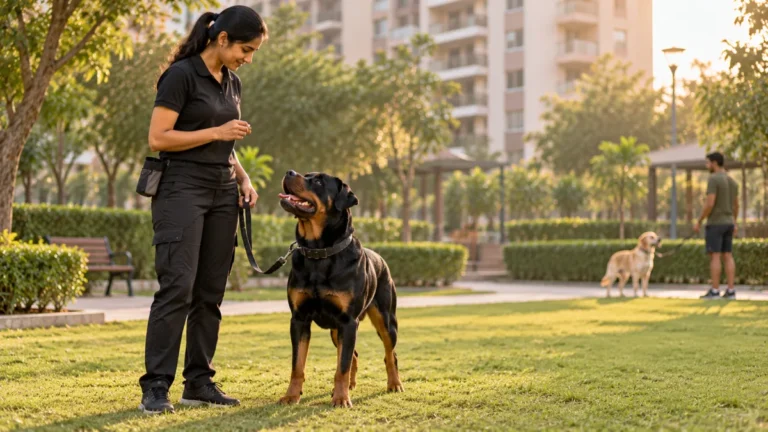
How to Train a Dog: A Step-by-Step Guide for Beginners

Quick answer
To train a dog, use short daily sessions of 5–10 minutes, reward the behaviour you want with a small treat or praise the moment it happens, and teach one cue at a time: name, sit, down, come and leave it. Be consistent as a family, practise in real places, and never punish. Most dogs learn the basics in 2–4 weeks.
Whether you have just brought home a puppy or adopted an adult Indie, learning how to train a dog is the single best thing you can do for your life together. A trained dog is calmer, safer on busy Indian roads, easier to live with in an apartment and far happier, because it understands what you want.
The good news: you don’t need to be an expert. You need a clear plan, a pocket of treats and ten minutes a day. This guide walks you through the whole process step by step, the same way our trainers start with every new dog.
Quick answer: to learn how to train a dog, start with short 5–10 minute sessions, reward the behaviour you want the moment it happens, and teach one cue at a time: name, sit, down, come and leave it. Knowing how to train a dog is mostly about consistency, so everyone at home should use the same words.
How Dogs Actually Learn
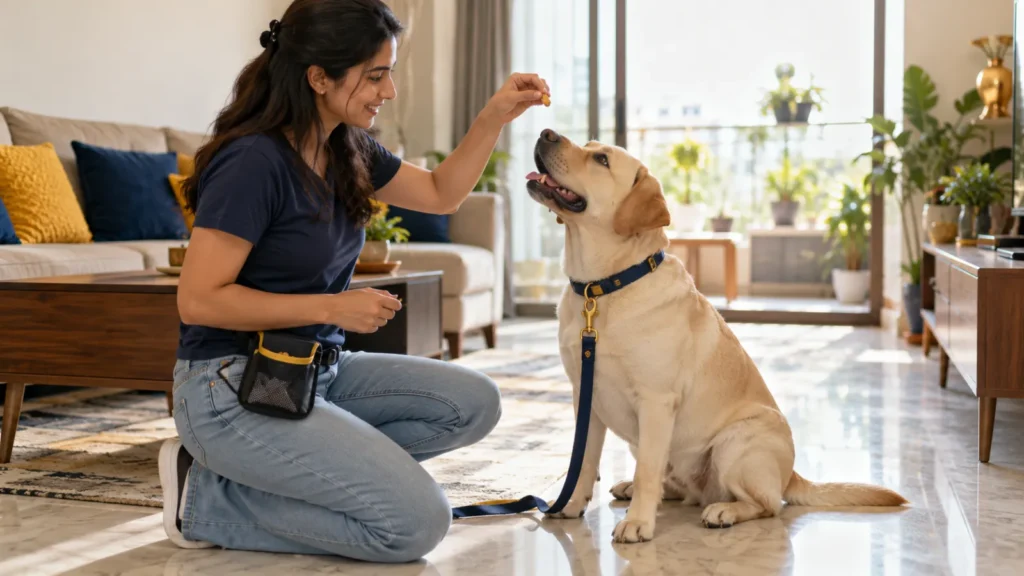
Dogs repeat what works for them. If sitting gets a treat, your dog will sit more. If jumping gets attention, your dog will jump more. This is called positive reinforcement, and it is the method behind modern, force-free dog training.
If you want a second source on how to train a dog with rewards, see the training advice from the American Kennel Club.
- Timing matters most. Reward within one or two seconds, or your dog won’t connect the reward with the action.
- Small rewards, often. Pea-sized treats keep your dog keen without filling them up. See our guide to the best dog training treats.
- Punishment backfires. Shouting, hitting or choke chains create fear and can lead to biting. Ignore or redirect unwanted behaviour instead.
How to Train a Dog: What You Need Before You Start
- Treats your dog loves, cut very small.
- A flat collar or harness and a 1.5–2 metre leash. Avoid retractable leashes for training.
- A quiet room for the first sessions, with no other pets or noise.
- A marker word such as “Yes!” said the instant your dog gets it right, followed by the treat. A clicker works too.
- One rulebook for the family. Agree on the words you will use (“down” means lie down, “off” means get off the sofa) so your dog isn’t confused.
How to Train a Dog: 8 Steps for Beginners
1. Teach your dog’s name
Say your dog’s name once in a happy voice. The moment they look at you, mark “Yes!” and treat. Repeat 10 times a session. A dog that turns to its name is a dog you can talk to, and it is the base for everything else.
2. Teach “sit”
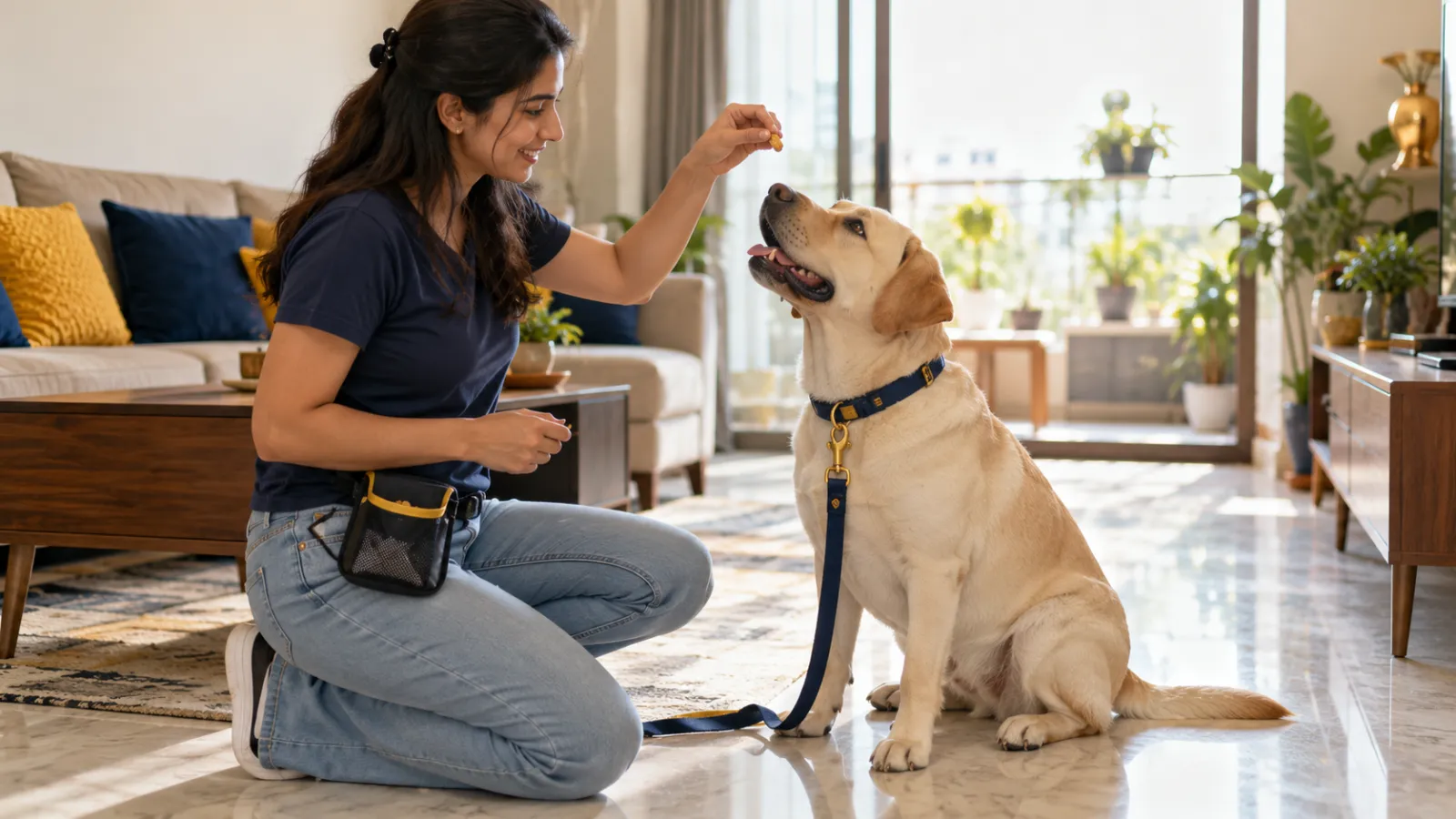
Hold a treat at your dog’s nose and slowly move it up and back over their head. As the head goes up, the bottom goes down. Mark and reward the moment they sit. After a few days, add the word “sit” just before you move your hand, then slowly fade the hand movement.
3. Teach “down”
From a sit, bring a treat from the nose straight down to the floor, then slowly out along the floor. When the elbows touch the ground, mark and reward. “Down” is the most useful calm position for guests, cafés and the vet’s waiting room.
4. Teach “come” (recall)
Start indoors, two steps away. Say “come” happily, step back, and reward with something extra special when your dog reaches you. Never call your dog to something unpleasant like a bath. Our full guide shows how to teach your dog to come when called in the park too.
5. Teach “leave it”
Close a treat in your fist. Your dog will sniff and lick. The moment they pull away, mark and reward from your other hand. On Indian streets, where food, plastic and bones lie everywhere, “leave it” can save your dog’s life.
6. Potty training
Take your dog out first thing in the morning, after every meal, after play and after naps. Reward the moment they finish outside. For a full plan for puppies and adult dogs, read how to potty train a dog.
7. Loose-leash walking
Stand still whenever the leash goes tight, and move forward the moment it loosens. Reward your dog for walking next to you. It is slow at first, but it works. If your dog lunges at other dogs, see our guide to leash reactivity.
8. Settle and alone time
Teach your dog to relax on a mat while you sit nearby, rewarding calm. Then practise short absences: step out for a few seconds, come back calmly, and build up. This prevents separation anxiety, which is common in apartment dogs.
How to Train a Dog in 4 Weeks: A Simple Plan
| Week | Focus | Daily practice |
|---|---|---|
| Week 1 | Name, sit, potty routine | 3 sessions of 5 minutes at home |
| Week 2 | Down, “leave it”, short leash walks | 3 sessions at home, 1 in the corridor or lobby |
| Week 3 | Come, loose-leash walking, settle on a mat | Practise in the society park at quiet times |
| Week 4 | All cues with mild distractions, alone time | Use cues during walks, meals and when guests visit |
Common Mistakes When Learning How to Train a Dog
- Sessions that are too long. Stop while your dog is still keen. Five good minutes beat thirty frustrated ones.
- Repeating the cue. Saying “sit, sit, sit” teaches your dog that the first “sit” doesn’t count. Say it once, then help.
- Only training indoors. Dogs don’t generalise well. Practise in the lift, lobby, park and on the street.
- Different rules from different people. If one person allows the sofa and another doesn’t, your dog can’t win.
- Waiting too long. Puppies can start learning from the day they come home, around 8 weeks old. Our puppy training schedule shows what to teach at each age.
How to Train a Dog at Any Age: Puppy vs Adult
Puppies learn fast but have short attention spans, so keep sessions to 2–5 minutes and focus on socialisation, potty training and biting. Adult and rescue dogs can focus for longer but may have old habits to unlearn. Both can learn at any age. Older dogs simply need patience and a few more repetitions.
Dog Training at Home in India: What Makes It Different
Most dogs in Indian cities live in apartments and walk on busy roads with street dogs, cows, scooters and food on the ground. That makes a few skills especially important: calm passing of other dogs, “leave it”, polite behaviour in lifts and lobbies, and staying settled in the summer heat. Train early in the morning or late evening in summer, keep sessions short, and carry water.
When to Get Help From a Trainer
Basic obedience is very doable on your own. Get help from a professional if your dog shows aggression, growls or bites, panics when left alone, or if you have tried for a few weeks without progress. A good trainer uses reward-based methods, explains the plan, and teaches the whole family. Read how to choose a dog trainer before you book.
Want a trainer to guide you? Our force-free trainers run dog training classes at your home across Delhi NCR, including dog training in Noida and Gurgaon dog trainers. Your first visit is free.
Frequently Asked Questions
How long does it take to train a dog?
Most dogs learn basic cues like sit, down and come in 2–4 weeks with short daily practice. Reliable behaviour around distractions, and fixing problems like reactivity or anxiety, usually takes 2–6 months.
What is the first thing to teach a dog?
Start with their name and a marker word like “Yes!”, then sit. These build attention and show your dog that listening to you pays off.
Can I train my dog myself?
Yes. Most basic training can be done at home with treats, patience and 10 minutes a day. A trainer helps if your dog has behaviour problems or you are not seeing progress.
How many times a day should I train my dog?
Two or three short sessions of 5–10 minutes each work better than one long session. Also use everyday moments, like asking for a sit before meals or walks.
Is it too late to train an older dog?
No. Dogs can learn at any age. Older and rescue dogs may need more repetition and patience, but they often focus better than puppies.
Should I use punishment to train my dog?
No. Punishment creates fear and can cause aggression. Reward the behaviour you want and calmly prevent or redirect the behaviour you don’t.
Related reading: Dog Training Guide: 6 Steps to a Happy, Well-Behaved Dog