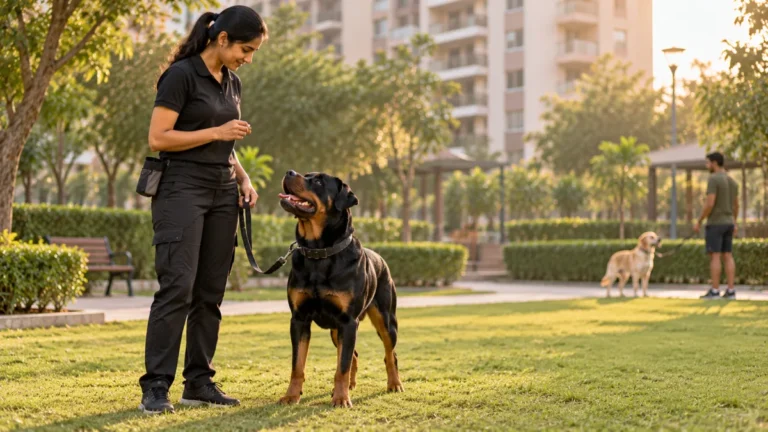
Puppy Training Near Me: 5 Simple Ways to Pick the Best Trainer


Quick answer
Good puppy training near me should be reward-based, start early (from 8 weeks), cover toilet training, biting, socialisation and simple cues, and teach the whole family. Home training is often easiest for puppies because they learn in the place where habits form.
Welcoming a new puppy into your home is an exciting time filled with joy, happiness, and many memorable moments. However, owning a puppy also brings some responsibilities. From potty training and basic obedience to leash walking and socialization, each puppy requires proper guidance in order to develop good habits. If you have recently brought home a puppy, searching for puppy training near me is an excellent first step toward developing a healthy, happy, and well-behaved companion.
Professional puppy training will help your furry friend understand the rules of the house, communicate effectively, and learn essential commands from a young age. With the correct training approach, consistency, patience, and positive reinforcement, you can avoid common behavioural issues and make day-to-day life easier for both you and your pet.
Regardless of whether you have a playful Labrador, an energetic German Shepherd, a curious Golden Retriever, or a small-breed puppy, professional guidance can greatly help your puppy’s development.
What Is Puppy Training?
Puppy training is the process of teaching young dogs essential life skills, basic obedience, appropriate social behaviour, and healthy daily routines. It helps puppies understand how to behave around people, other animals, and different environments.
Unlike adult dog training, puppy training focuses on building good habits before unwanted behaviours are established. Young puppies are naturally curious and are constantly learning through their daily experiences. Early, structured training helps direct their energy into positive activities.
Professional puppy training may include:
- Basic obedience commands such as sit, stay, come, and down.
- Potty and toilet training.
- Leash walking and walking politely beside the owner.
- Crate training and settling comfortably at home.
- Socialization with people, friendly dogs, sounds, and environments.
- Bite inhibition and appropriate play behaviour.
- Reducing jumping, excessive barking, and destructive chewing.
- Teaching calm behaviour and impulse control.
A well-designed puppy training program takes into account your puppy’s age, breed, temperament, health, and individual learning needs.
Why Search for Puppy Training Near Me?
When you search online for “puppy training near me”, you are generally looking for a reliable professional who can help you train your puppy conveniently and effectively.
Choosing local puppy training near me provides several benefits.
Convenient Training Sessions
Puppy training near me allows you to easily schedule regular sessions without having to travel long distances. Consistency is crucial because puppies learn best through short, frequent practice sessions.
Depending on the provider, you may be able to choose home training, individual sessions, or group classes.
Training in Your Home Environment
Many puppy behaviour problems occur at home. Puppies may chew furniture, urinate indoors, bark at visitors, or struggle to settle down.
In-home puppy training enables a trainer to observe your living environment and suggest practical solutions that fit your daily routine.
Personalized Attention
Each puppy learns differently. Some puppies are confident and energetic, while others are shy, sensitive, or easily distracted.
A professional trainer can modify exercises to match your puppy’s temperament and learning speed rather than using a “one-size-fits-all” approach.
Guidance for Puppy Owners
Successful dog training is not just about teaching commands to your puppy. It also involves educating owners on how to communicate clearly, reward good behaviour, and maintain consistent rules.
A good trainer will explain how to practice between sessions so that your puppy can apply the behaviours learned in everyday situations.
Early Prevention of Behavioural Problems
Addressing unwanted behaviour early can make it much easier to manage. Training can help establish appropriate chewing habits, calm greetings, positive interactions, and reliable routines before problems become too difficult to change.
What Is the Best Age to Start Puppy Training?
One of the most frequently asked questions by puppy owners is when they should begin training.
Generally, puppies can start learning simple household rules and reward-based exercises as soon as they arrive home, typically at around eight weeks of age. Early socialization is particularly important during the first few months of life.
You do not need to wait until your puppy is six months old to start teaching basic commands.
Age-appropriate training can include:
8–10 weeks- Name recognition, gentle handling, toilet routines, and simple reward-based exercises.
10–12 weeks- Short recall exercises, sit, settling, and gradual exposure to everyday sounds and surfaces.
3–4 months- Leash introduction, polite greetings, improved recall, and supervised social experiences.
4–6 months- Strengthening obedience skills, improving impulse control, and practicing behaviours around distractions.
These are general guidelines and not strict milestones. Puppies grow and develop at different rates, and training should always be positive, safe, and tailored to their individual needs.
Before taking your puppy to public puppy classes or places where other dogs are present, consult your veterinarian regarding your puppy’s vaccination status and safe socialization. Socialization does not need to be delayed completely until vaccinations are completed; it should be planned carefully to balance learning opportunities with potential health risks.
Essential Puppy Training Services
When selecting a puppy training service near you, determine if the program includes the following essential skills.
Puppy Potty Training
Potty training is one of the first challenges faced by new puppy owners. Young puppies have limited bladder control and need frequent opportunities to eliminate in the correct location.
A structured toilet-training routine will help your puppy understand where to go.
Effective potty training generally includes:
- Taking your puppy to the designated toilet area as soon as they wake up.
- Providing toilet breaks after meals, playtime, and naps.
- Rewarding your puppy immediately after they successfully eliminate.
- Supervising your puppy indoors to prevent accidents.
- Cleaning accidents thoroughly to remove any lingering odors.
- Maintaining a consistent daily schedule.
Punishing a puppy for indoor accidents can cause fear and confusion. Instead, use supervision, predictable routines, and positive reinforcement.
With consistency, most puppies will eventually become more reliable, although the timeline varies based on age, health, routine, and individual development.
Basic Obedience Training
Basic obedience helps puppies learn to respond to simple cues and behave appropriately in various situations.
Common commands include:
Sit”- Encourages your puppy to settle before meals, greetings, or other activities.
Stay”-Teaches your puppy to remain in position for a short period of time until released.
Come”- Develops recall skills and enables your puppy to return to you when called.
Down”- Encourages your puppy to lie down and relax.
Leave it”- Teaches your puppy to ignore potentially unsafe or unwanted objects.
Drop it”- Allows your puppy to release an object when requested.
Training should begin in a quiet environment with minimal distractions. Once your puppy becomes more confident, you can gradually practice in different locations and situations.
Reward-based methods make learning more enjoyable and help build a stronger bond between puppies and their owners.
Puppy Socialization
Socialization helps puppies become comfortable with the people, animals, sounds, objects, and environments they may encounter throughout their lives.
Positive early experiences can help decrease the likelihood of fear-related behaviour later in life. However, socialization is not about forcing a puppy to interact with everyone or every dog.
An appropriate socialization program may introduce your puppy slowly to:
- Different types of people.
- Household sounds and everyday noises.
- Car trips and appropriate outdoor experiences.
- Different types of surfaces such as grass, tile, pavement, etc.
- Friendly, healthy, appropriately vaccinated dogs.
- Gentle handling of paws, ears, and body.
- Grooming equipment and routine veterinary care.
Allow your puppy to approach new experiences at their own pace. If your puppy appears frightened or overwhelmed, increase the distance or simplify the experience.
The goal is to create positive associations, not just expose the puppy to as many things as possible.
Leash Training and Walking Manners
Walking is an essential part of a puppy’s physical exercise, mental stimulation, and daily routine. However, puppies often pull on the leash, stop frequently, or become distracted by their surroundings.
Leash training teaches puppies to walk more comfortably with their owners.
A professional trainer can teach you how to:
- Introduce a comfortable, properly fitting harness or collar.
- Create positive associations with the leash.
- Reward your puppy for walking near you.
- Minimize pulling through consistent, reward-based techniques.
- Practice responding to their name while outdoors.
- Maintain safe distances from unfamiliar dogs and busy traffic.
Puppies have developing bodies, so exercise duration and intensity should be appropriate for their age, breed, and health.
Puppy Biting and Chewing
Puppies explore the world using their mouths. Mouthing and chewing are common behaviours, especially during play and teething.
While these behaviours are normal, puppies need to learn what is acceptable to bite and chew.
Helpful training techniques include providing safe chew toys, redirecting biting toward acceptable objects, briefly ending play when teeth touch skin, and rewarding calm interactions.
Avoid hitting your puppy, yelling aggressively, or using frightening methods to stop biting. These actions may increase fear or arousal and can damage trust.
If biting is intense, persistent, or accompanied by signs of fear or aggression, seek advice from a qualified, reward-based trainer and consult a veterinarian when necessary.
Crate Training and Settling at Home
A crate can provide a comfortable resting area when introduced slowly and positively. It should never be used as punishment or as a substitute for appropriate exercise, toilet breaks, and social interaction.
Successful crate training involves allowing your puppy to enter the crate voluntarily, rewarding calm behaviour, and gradually increasing the time spent inside.
Your puppy should also learn to relax outside the crate, settle on a mat, and remain calm during ordinary household activities.
Puppy Training Near Me: Home Sessions vs Group Classes
When searching for puppy training near me, you may find individual home sessions, group puppy classes, or a combination of both.
The ideal option depends on your puppy’s needs, your schedule, and the trainer’s qualifications.
Home Puppy Training
Home sessions can be particularly beneficial for toilet training, household manners, chewing, jumping on family members, and issues that occur in a specific environment.
Benefits include personalized guidance, convenience, and the ability to practice skills in the locations where they are most needed.
Group Puppy Training Classes
Well-run group classes offer opportunities to practice basic obedience in the presence of distractions and learn alongside other puppy owners.
They can help puppies build confidence in suitable social environments, provided that interactions are carefully monitored and puppies are not forced to interact with one another.
Which Option Should You Choose?
For many families, a combination of home training and structured group learning offers a good balance. Puppies can learn household routines at home and gradually practice their skills in other environments.
If your puppy is very fearful, easily overwhelmed, or exhibiting serious behaviour concerns, individual support may be a better starting point.
How to Choose the Best Puppy Training Near Me
Not all dog training services use the same methods or provide the same level of support. Before enrolling in a program, assess the trainer thoroughly.
Check Experience and Qualifications
Inquire about the trainer’s experience working with puppies, relevant education, professional certifications, and approach to canine behaviour.
A qualified professional should be able to clearly explain their methods and identify when veterinary or specialist behavioural support is necessary.
Look for Positive Reinforcement
Select a trainer who rewards desirable behaviour and uses humane, evidence-based methods.
Be cautious of trainers who rely on physical punishment, intimidation, fear, or pain, or who promise guaranteed results within an unrealistically short timeframe.
Ask About Personalized Training Plans
Your puppy’s training program should be tailored to their age, temperament, environment, and learning needs.
Inquire about how progress will be measured and how the trainer will help you practice between sessions.
Understand the Pricing and Package
Before registering, obtain clear information about session duration, total program cost, travel fees, cancellation policies, and what is included in the package.
Compare the quality and suitability of services rather than selecting based solely on the lowest price.
Read Genuine Customer Reviews
Customer reviews can provide insight into a trainer’s communication skills, punctuality, professionalism, and ability to support puppy owners.
Look for detailed, authentic feedback rather than relying only on star ratings or unsubstantiated claims.
How Long Does Puppy Training Take?
The duration of puppy training depends on the behaviour being taught, the puppy’s age, previous experiences, health, and the frequency of practice.
Some puppies learn simple cues in just a few short sessions, while toilet training, reliable recall, and calm behaviour in distracting environments may take significantly longer.
A typical training journey may include:
First few weeks: Establishing routines, learning the puppy’s name, and practicing basic cues.
First one to three months: Developing toilet habits, leash skills, appropriate play, and household manners.
Ongoing practice: Strengthening obedience, recall, settling, and behaviour in different environments.
These are broad examples and not guaranteed timelines. Training is an ongoing process, and puppies may temporarily struggle with previously learned behaviours as they mature.
Short, enjoyable sessions repeated regularly are generally more effective than long, exhausting training sessions.
Benefits of Professional Puppy Training Near Me
Investing in professional puppy training can make daily life more manageable for the entire family.
Better Communication
Training enables owners to understand their puppy’s body language and communicate expectations consistently.
Improved Household Behaviour
Appropriate training can help minimize jumping, destructive chewing, unwanted mouthing, and difficulties with daily routines.
Safer Everyday Experiences
Recall, leash skills, and impulse control can contribute to safer outings. However, training does not replace secure fencing, supervision, or leash use where required.
Stronger Bond Between You and Your Puppy
Positive, reward-based training establishes trust and provides puppies with opportunities to learn through successful experiences.
Greater Confidence for Puppy Owners
Professional guidance helps owners understand what constitutes normal puppy behaviour, how to respond to challenges, and when to seek additional support.
Puppy Training for Different Dog Breeds
All breeds have inherent characteristics, but individual temperament and upbringing are equally significant.
Labrador Retrievers: Typically benefit from recall, leash manners, polite greetings, and impulse-control exercises.
Golden Retrievers: Can benefit from socialization, calm greetings, recall, and appropriate chewing habits.
German Shepherds: Benefit from structured reward-based learning, confidence-building, socialization, and calm behaviour in distracting environments.
Beagles: Often require engaging exercises, scent-based enrichment, and consistent recall practice.
Pomeranians: Can benefit from polite greetings, confidence-building, appropriate barking management, and handling practice.
Shih Tzus: May benefit from household manners, gentle handling, recall, and calm social experiences.
These are general examples and not rigid breed rules. A good puppy trainer will customize the program to the individual dog rather than assuming every puppy of the same breed will behave identically.
Common Puppy Training Mistakes to Avoid
Even loving and responsible owners can make errors while raising a puppy. Identifying these errors can help you achieve better results.
Inconsistent rules: If family members respond differently to the same behaviour, your puppy may struggle to understand expectations. Agree on consistent cues and household rules.
Expecting instant results: Puppies are still developing physically and mentally. Allow them time to practice and learn.
Using punishment: Harsh corrections can lead to fear, stress, or defensive behaviour. Focus on teaching an appropriate alternative.
Skipping socialization: Limited exposure to suitable everyday experiences may make new situations more challenging. Arrange safe, positive, age-appropriate experiences.
Training for too long: Young puppies have short attention spans. Keep sessions short, engaging, and appropriate for their age.
Ignoring rest and enrichment: Puppies require sufficient sleep, appropriate play, exploration, and mental stimulation. Overtired puppies may become more excitable or mouthy.
Avoiding these errors and seeking professional guidance when needed can make training more productive and enjoyable.
Puppy Training Near Me in Delhi NCR
Looking for puppy training near me in Delhi NCR? OrigiZnPets trainers visit homes in puppy training in Noida, puppy training in Greater Noida, puppy training in Gurgaon, puppy training in Ghaziabad, puppy training in Faridabad, puppy training in South Delhi, puppy training in East Delhi, puppy training in West Delhi and puppy training in North Delhi.
OrigiZnPets trainers come to your home across Delhi NCR. The first visit is a free demo session where the trainer assesses your dog and shows you where to start, with no card required. Single sessions start at ₹799, and structured programmes such as Core Training (₹8,699) are listed on our packages page. Every trainer is background-checked and uses reward-based methods only.
Understanding normal dog behaviour makes it much easier to tell normal puppy play from a real problem.
Puppy Training Near Me: Frequently Asked Questions
Can I train my puppy at home?
Yes. Many foundational skills such as name recognition, toilet training, sit, recall, and calm settling can be practiced at home. Professional guidance can help you establish a suitable routine and address specific challenges.
When should I hire a professional puppy trainer?
You can contact a trainer as soon as your puppy arrives home. Early guidance is beneficial for establishing routines and preventing common behaviour problems. You do not need to wait until unwanted behaviours become serious.
Is puppy training suitable for all breeds?
Yes. Puppies of all breeds and mixed breeds can benefit from age-appropriate training. The exercises and expectations should be modified to meet the puppy’s individual needs, health, temperament, and physical development.
Can puppy training help with biting?
Training can help teach appropriate play, redirect chewing, and promote calmer interactions. Persistent, intense, or fear-related biting may require individual assessment and veterinary advice.
How many training sessions does my puppy need?
There is no single number that applies to every puppy. The number of sessions required depends on the puppy’s initial skills, training objectives, behaviour, and amount of practice provided at home. Ask the trainer for a personalized recommendation after an initial assessment.
Is home puppy training better than group training?
Home training is useful for household routines and individual concerns, while suitable group classes offer controlled opportunities to practice in distracting environments. The best choice depends on your puppy’s needs and the quality of the program.
How much does puppy training cost?
Prices vary depending on location, trainer experience, session length, and whether you choose individual sessions or a package. Request a clear quotation and confirm what is included before booking. At OrigiZnPets, single at-home sessions start at ₹799, and puppy programmes are listed on our packages page.
How can I find reliable puppy training near me?
Search for puppy training near me, read genuine reviews, inquire about qualifications and training methods, and discuss your puppy’s needs before committing to a program. Select a professional who communicates clearly and prioritizes your puppy’s welfare.
Book Professional Puppy Training for Your Furry Friend
Your puppy’s early experiences can greatly influence their behaviour, confidence, and relationship with your family. Establishing simple routines and using positive reinforcement can create a solid foundation for lifelong learning.
Whether you require help with potty training, basic obedience, leash walking, socialization, biting, or household manners, the appropriate professional guidance can ease the journey.
At OrigiZnPets, we believe that every puppy deserves patient guidance, appropriate training, and a positive learning experience. A personalized approach can help you understand your puppy’s needs and develop practical skills that align with your family’s routine.
If you are seeking puppy training near me, take the first step toward raising a happy, confident, and well-behaved dog.
Want expert help at home? Book a trainer for a single session from ₹799, or start with a free demo session at your home, no card required.
Related reading: Puppy Training: Complete Guide · Puppy Socialization Tips · House Training a Puppy