
How to Stop a Dog Jumping on People: 5 Proven Steps for Polite Greetings

You open the door and your dog launches at your guest: paws on their clothes, muddy prints on a kurta, an elderly relative stepping back nervously. Jumping up is one of the most common complaints from dog parents, especially in homes with frequent visitors, children and grandparents.
If you have been searching for how to stop a dog jumping on people, the good news is that this habit changes quickly with consistency. The ASPCA’s advice on common dog behaviour issues follows the same reward-first approach we use. Whether your dog is a puppy or an adult, the method for how to stop a dog jumping on people is the same.
Jumping is not bad manners in dog language. It's usually an excited, friendly greeting. But it can scare children, knock over older family members and ruin clothes. With the right approach, you can teach your dog a greeting everyone will love. Here are five proven steps.
Why Do Dogs Jump on People?
- To greet faces. Dogs greet each other nose-to-nose. Jumping gets them closer to your face.
- Excitement. Arrivals are the highlight of a dog's day.
- It's been rewarded. Petting, talking, even pushing the dog away all give attention.
- Puppy habit. Jumping was cute at 8 weeks. At 30 kg, not so much.
- Anxiety. Some dogs jump when unsure or overwhelmed by new people.
In most cases, the dog has simply learned that jumping gets attention, so the fix is changing what gets rewarded.
1. Stop Rewarding the Jump
Any attention can reward jumping, including: Remember, how to stop a dog jumping on people is mostly about what you reward.
- Saying "no" or "down" repeatedly
- Pushing the dog off with your hands or knee
- Making eye contact and laughing
Instead, when your dog jumps, turn away, fold your arms and stay silent. The moment all four paws are on the floor, calmly turn back and give attention or a treat. If they jump again, turn away again.
Your dog quickly learns: jumping makes people disappear; four paws on the floor makes them pay attention.
2. Teach an Incompatible Behaviour
A dog can't jump and sit at the same time. Teach a "sit to greet" or "go to mat" routine:
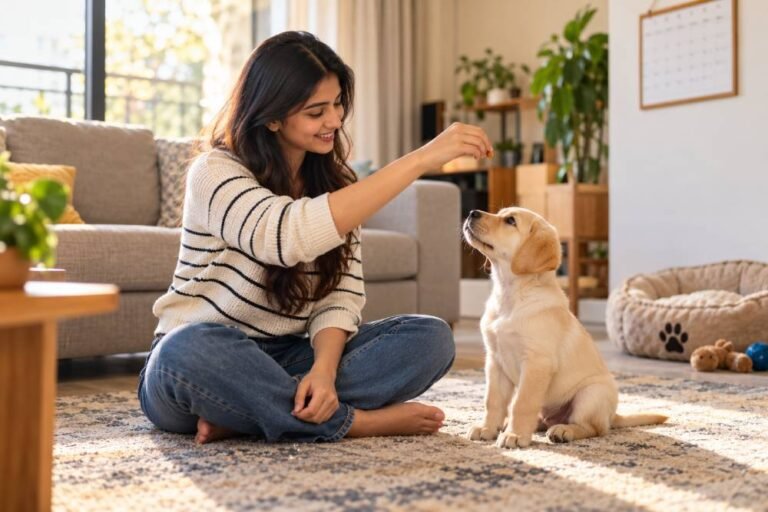
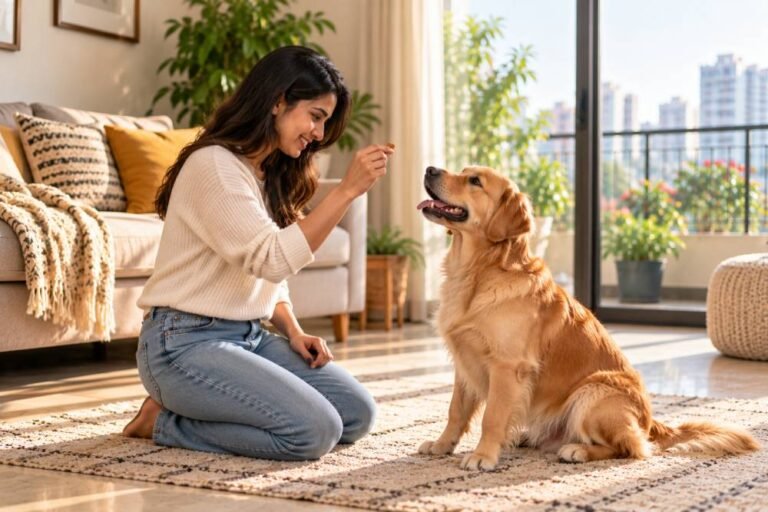
- Practise sit at home with treats until it's reliable.
- Walk into the room, ask for a sit, reward.
- Walk out and back in, repeat.
- Gradually add excitement: step outside, ring the bell, come back in.
For door greetings, a mat or bed a few metres from the door works well. Reward heavily for staying on it while the door opens.
3. Keep Arrivals Calm and Low-Key
Big, excited homecomings ("Who's my baby?!") pump up a dog's energy right at the moment you want calm. Try this:
- Walk in quietly and ignore your dog for 30–60 seconds.
- Put down your bags and take off your shoes first.
- Greet your dog only once they've settled and have four paws on the floor.
- Crouch down to greet so they don't need to jump to reach your face.
Calm arrivals are especially useful for dogs who struggle with separation. See Dog Separation Anxiety: 7 Signs and Proven Ways to Help.
4. Train With Real Visitors
Your dog may be perfect with family and forget everything when guests arrive. Set up practice sessions:
- Ask a friend or neighbour to act as a "training visitor".
- Keep your dog on a leash when the door opens so you can prevent jumping.
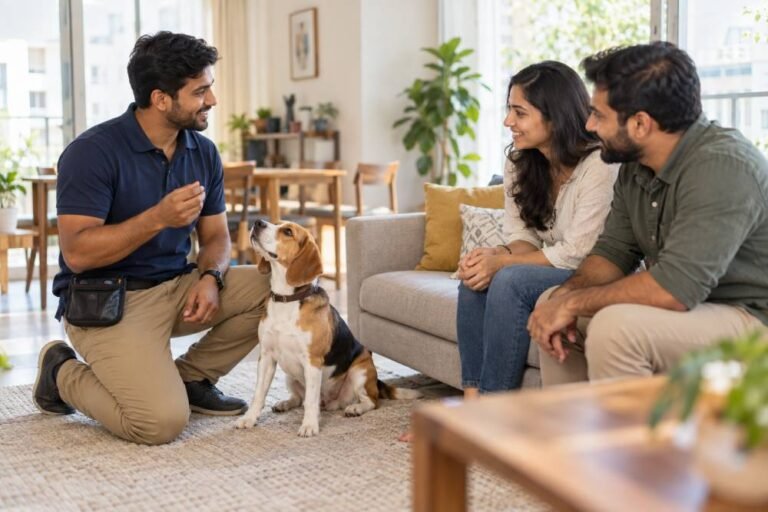
- Have the visitor ignore the dog until it sits, then greet calmly and give a treat.
- Repeat the entry several times in one session.
For real visits you're not ready to train through, like festivals, kitty parties or family functions, use management: a baby gate, a leash, or a quiet room with a chew toy.
5. Get Everyone Home on the Same Plan
In Indian households, visitors, house help, drivers, delivery staff and family members all come and go. If even one of them encourages jumping ("It's okay, I love dogs!"), your dog gets rewarded.
- Brief family members and regular visitors on the rule: no attention until four paws are down.
- Politely remind guests; most people are happy to help.
- Teach children to "be a tree": stand still, fold arms, look away.
Common Mistakes When Stopping Jumping
- Kneeing the dog in the chest or stepping on toes. It can cause injury and make dogs fearful of people.
- Shouting "down!" Many dogs hear it as excitement, and "down" often means lie down in training.
- Inconsistency. Allowing jumping in casual clothes but not when you're dressed for work confuses dogs.
- Only training at home. Practise at the society gate, in lifts and on walks too.
- Expecting instant results. Old habits need time and repetition.
Jumping Up in Delhi NCR Homes and Societies
Busy households and crowded societies create more jumping opportunities:
- Lifts: Ask for a sit before the doors open, reward when neighbours enter.
- Society walks: Children often run to pet dogs. Ask them to wait until your dog sits.
- Large breeds: Labradors, Golden Retrievers and German Shepherds can easily knock over children or elderly relatives, so start early.
Breed-specific guidance: Labrador Retriever Care · Golden Retriever Care Guide.
When Should You Consider Professional Training?
Consider a trainer if:
- Your dog is large and has injured or knocked someone over
- Jumping comes with mouthing, nipping or grabbing clothes
- Your dog is anxious or stiff around new people rather than happy
- Guests visit often and you need faster progress
A trainer can run real doorbell-and-visitor sessions in your home with your family.
How Long Does It Take to Stop a Dog Jumping?
With consistent practice from everyone at home, most dogs show clear improvement within 2–3 weeks. A polite greeting around exciting guests may take 1–2 months to become reliable.
Final Thoughts on How to Stop a Dog Jumping on People
The real answer to how to stop a dog jumping on people is consistency: everyone in the family rewards four paws on the floor, every time. If guests still get jumped on, a trainer can show you how to stop a dog jumping on people in real situations at home.
Your dog jumps because they're happy to see people, and that's something to celebrate, not punish. Stop rewarding the jump, teach a better greeting, keep arrivals calm and get the whole household consistent. Soon your dog's greeting will be as polite as it is enthusiastic.
Want help with greetings? Book a trainer for a single session, or run a growth package over a few weeks. Book your pet's first visit: a free demo session, at your home, no card required.
Below are quick answers to common questions about how to stop a dog jumping on people.
Frequently Asked Questions
Why does my dog only jump on certain people?
Usually those who've rewarded it with attention, or who are most exciting: children, frequent visitors or you after a long day.
Is it okay to let my dog jump on me if I invite it?
Yes, some families teach an "up" cue so jumping only happens when invited. Just be consistent, and teach "off" as well.
Will neutering stop my dog from jumping?
Jumping is a learned greeting behaviour, so neutering alone isn't likely to stop it. Training is what changes it.
My puppy jumps on kids and nips. What should I do?
Supervise closely, teach children to "be a tree", and see our guide on how to stop puppy biting.
Should I use a leash indoors?
Yes, a leash indoors during visitor training is a great way to prevent jumping while your dog learns.
What if my dog jumps on the delivery person?
Use a baby gate or put your dog in another room during deliveries until door training is solid.
Related reading: 5 Daily Habits That Improve Your Dog's Behaviour · Why Your Dog Behaves Differently at Home · Puppy Socialization Tips