
Dog Park Etiquette: 6 Proven Rules for First-Time Visitors
Dog park etiquette tips for first-time visitors: 6 proven rules that prevent the most common conflicts and keep every dog's visit safe.

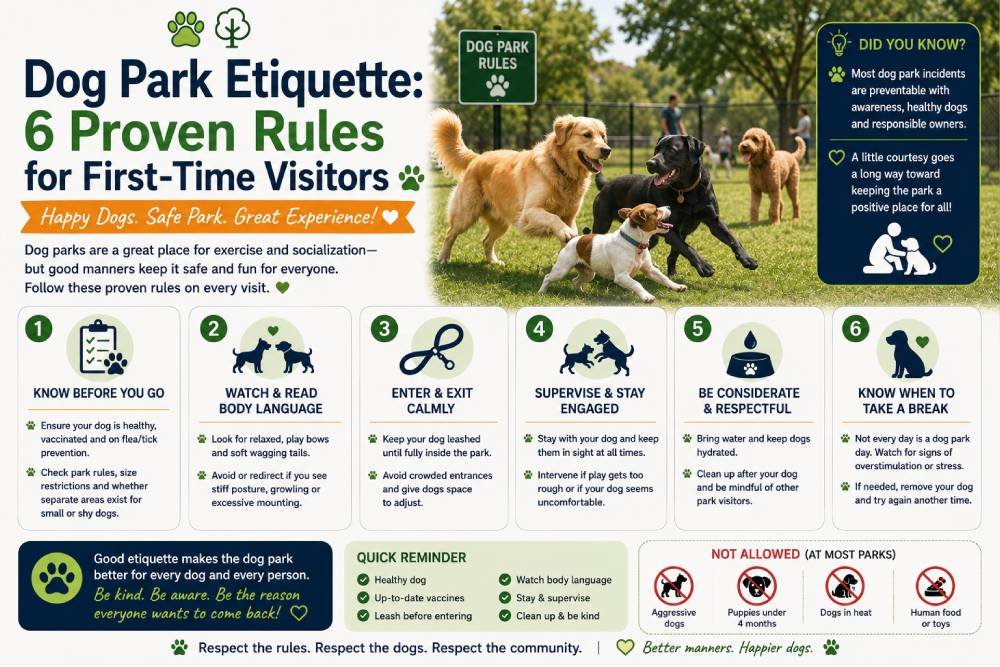
Dog park etiquette tips matter more than most first-time visitors expect, since a single overlooked rule can turn a relaxed outing into a genuine conflict between dogs — or owners. Most incidents at dog parks trace back to a small, predictable set of etiquette gaps.
Dog Park Etiquette Tips: Six proven dog park etiquette rules
- Know your dog’s play style before entering off-leash areas. A dog that plays rough with familiar dogs at home can overwhelm an unfamiliar dog that doesn’t share that style.
- Watch your dog continuously, not your phone. Most preventable conflicts get caught early by an owner who’s actually paying attention.
- Remove a dog immediately at the first sign of tension — stiff body language, prolonged staring, raised hackles — rather than waiting to see if it escalates.
- Clean up after your dog every time, without exception, regardless of how busy the park is or how tired you are.
- Keep puppies and small dogs in separate, appropriately sized areas if the park offers them, since size mismatches in rough play cause a disproportionate share of injuries.
- Ask before letting your dog approach another dog or person, especially if the other dog is leashed, since a leashed dog approached by a loose one is in a genuinely disadvantaged position and may react defensively as a result.
Most dog park conflicts aren’t caused by “bad dogs” — they’re caused by an owner who missed the early warning signs because they weren’t watching closely enough.
Reading body language before it becomes a problem
A tucked tail, whale eye (whites of the eyes visible), or a sudden freeze mid-play are all early signs of discomfort worth acting on immediately, well before growling or snapping. Dogs generally give several warning signs before an actual conflict, and most incidents are preventable if those signs are caught early rather than dismissed as normal excitement. The American Veterinary Society of Animal Behavior’s position statement on humane training emphasizes reading and responding to stress signals early, using calm redirection rather than punishment once a dog is already escalated — the same principle applies directly to managing tension between dogs at a park.
What to do if your dog isn’t enjoying the dog park
Not every dog is suited to off-leash group play, and that’s not a training failure — some dogs are simply more comfortable with structured one-on-one walks or smaller, controlled playdates. Forcing a dog park visit for a dog that finds it stressful does more harm than skipping it.
First-visit preparation that helps
Visiting during a quieter time first, rather than peak hours, lets both you and your dog get a feel for the space without the added pressure of a crowded environment. A calm first experience makes future visits far more likely to go well, and it’s worth ending the visit early on a good note rather than staying until either of you is tired or overwhelmed.
Our training and walking services can assess whether your dog is a good fit for off-leash group play before you try it. Book a free demo to get an honest read on your dog’s play style.
What to bring on a first dog park visit
Water for your dog, waste bags beyond what you think you’ll need, and a leash you can clip on quickly if a situation calls for immediate separation are the basics worth having every time, not just for a first visit. Being prepared to leave early if things aren’t going well matters more than sticking to a planned visit length.
Etiquette that applies to owners, not just dogs
Supervising your own dog’s interactions rather than assuming another owner will step in, and being willing to apologise and separate quickly if your dog is the one causing tension, keep the whole space functional for everyone. A dog park works only when every owner takes this responsibility seriously, not just the owners of dogs perceived as “difficult.”