

How to Brush a Dog’s Coat: 4 Proven Steps to Avoid Common Mistakes
How to brush a dog's coat properly: 4 proven steps that prevent matting and skin irritation, and the common mistakes to avoid.

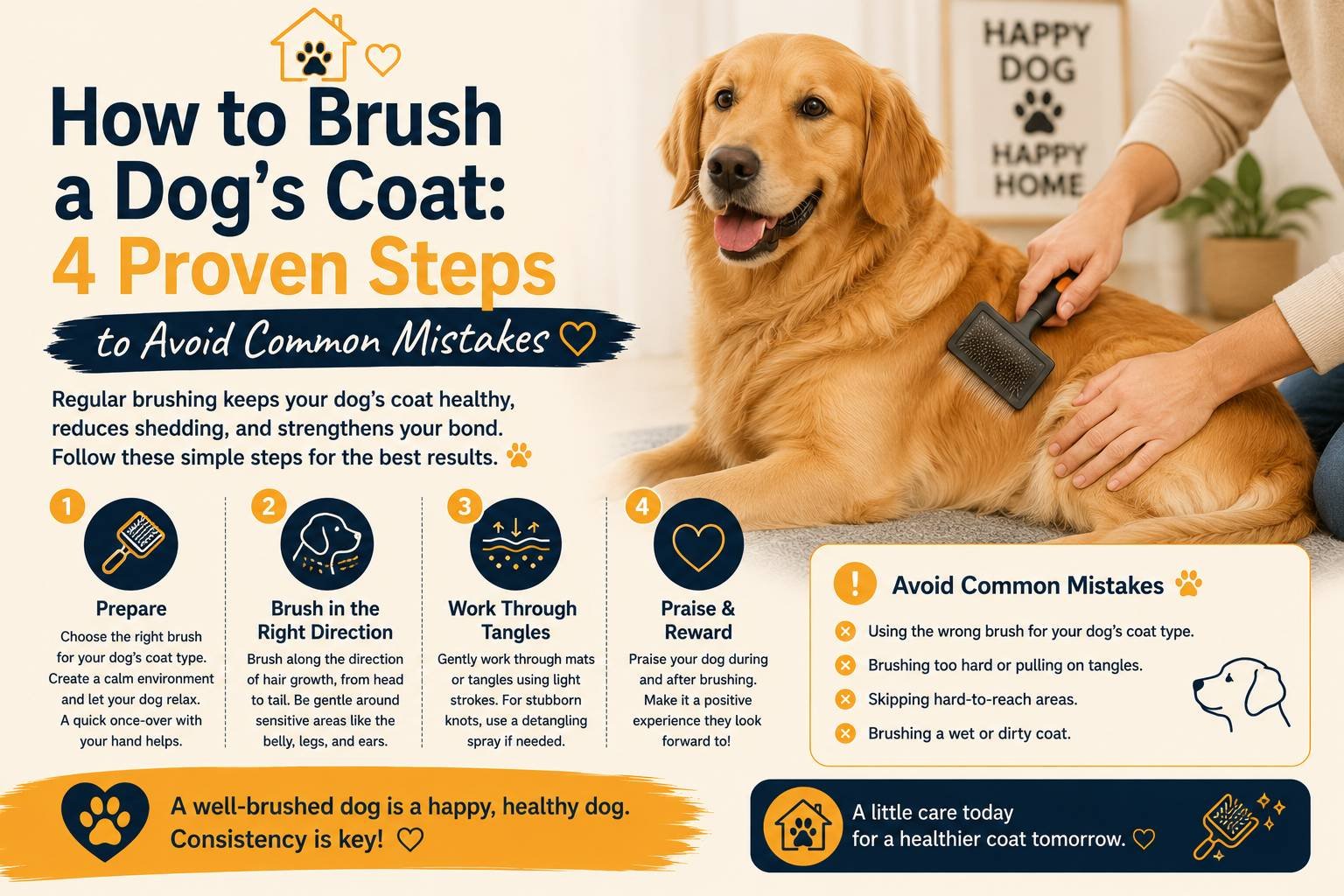
How to brush a dog’s coat sounds simple until the wrong tool or the wrong direction turns a routine task into something your dog actively avoids. The technique matters as much as the frequency, and getting it wrong early can make every future session harder than it needs to be.
Four proven steps for how to brush a dog’s coat
- Choose the right brush for the coat type. A slicker brush suits longer or double coats; a bristle brush suits short, smooth coats. Using the wrong one either does nothing useful or irritates the skin.
- Brush in the direction of hair growth first, working through tangles gently before attempting to brush against the grain for a deeper clean.
- Work in small sections, especially on longer coats, rather than dragging the brush across the whole body in long strokes that skip over hidden mats.
- Check problem areas separately — behind the ears, under the legs, and around the collar are where mats form first and get missed most often.
A dog that dreads brushing usually isn’t reacting to the brush itself — it’s reacting to a mat being pulled without warning.
How often, and why frequency depends on coat type
Short-coated dogs generally do well with a weekly brush; long or double-coated breeds often need several sessions a week to prevent matting before it starts. Learning how to brush a dog’s coat properly for your specific breed matters more than following a single generic schedule.
What a mat actually does to the skin underneath
A mat isn’t just cosmetic — tight matting pulls on the skin continuously, which can restrict blood flow and create a moist, irritated environment underneath that’s prone to infection. This is part of why the Cornell Riney Canine Health Center’s February 2026 grooming guidance frames regular brushing as a health measure, not just an appearance one, particularly for double-coated breeds.
Making brushing a positive routine, not a battle
Short sessions paired with treats, done before your dog is overtired or overstimulated, build tolerance far faster than one long session aimed at finishing everything at once. If your dog actively resists, stopping before frustration builds and trying again later beats pushing through in a single sitting.
Our at-home groomers can walk you through the right technique for your dog’s specific coat, and our care packages bundle grooming visits with training if brushing tolerance itself needs work. Book a free demo to get started.
Signs you’re brushing too hard
Flinching, repeated attempts to move away, or nipping at the brush all suggest too much pressure or pulling through a tangle too fast. Slowing down and holding the base of a tangled section (so the pull is on your hand, not the skin) usually resolves this immediately.
Building brushing into a broader coat-care routine
Pairing a weekly brush with the same monthly nail and ear check keeps grooming from becoming a single overwhelming session. Spreading these small tasks across the month, rather than batching them all into one long visit, tends to keep dogs calmer about the whole process long-term.
What changes with the seasons
Shedding breeds typically need more frequent brushing during seasonal coat changes, and a coat that mats faster than usual is often an early sign of a shedding cycle starting, not a sign your existing routine has stopped working. Adjusting frequency for a few weeks during a heavy shed, then easing back afterward, keeps the coat manageable without turning brushing into a daily chore year-round. A de-shedding tool used once or twice during peak shedding season can noticeably cut down on loose hair around the home during that window.