How to Choose a Dog Groomer: 10 Smart Questions to Ask First
How to choose a dog groomer you can trust: the qualities of a good dog groomer, 10 questions to ask a dog groomer and the groomer red flags to avoid.

Quick answer
To choose a dog groomer, check their experience with your dog’s breed and coat, ask how they handle nervous dogs, confirm hygiene, compare clear prices and read genuine reviews. Ask the right questions before booking and watch for groomer red flags such as rushing, rough handling or vague prices. A good dog groomer is patient, honest and happy to explain every step.
Handing your dog to a stranger with scissors and clippers takes trust. The right groomer leaves your dog clean, comfortable and relaxed. The wrong one can leave them scared of grooming for years.
This guide explains how to choose a dog groomer with confidence. You will find the qualities of a good dog groomer, the questions to ask a dog groomer before you book, the groomer red flags to avoid, and how to judge prices fairly. Whether you want grooming at home or in a salon, these checks help you find someone your dog can trust.
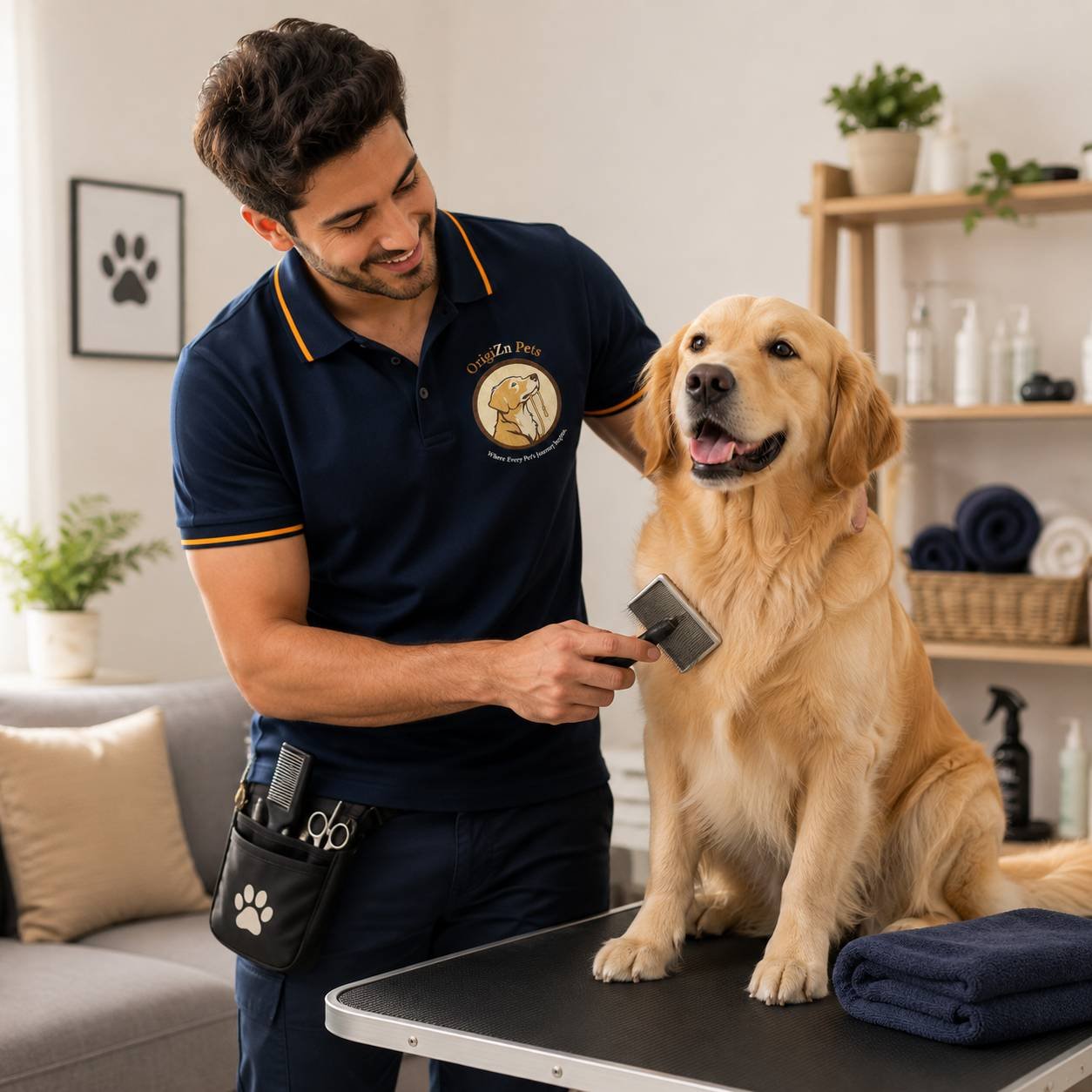
Why It Matters How You Choose a Dog Groomer
Grooming involves sharp tools, water, heat and handling of sensitive areas such as paws, ears and eyes. A skilled, calm groomer keeps all of that safe.
A good choice also protects your dog’s trust. Dogs remember how they were handled. A patient groomer can turn grooming into a calm routine, while a rough or rushed session can create fear that makes every future visit harder.
That is why it is worth spending a little time learning how to choose a dog groomer before you book.
Qualities of a Good Dog Groomer
Look for these signs when you meet or speak to a groomer.
1. Experience with your dog’s coat
A Shih Tzu, a Labrador and a Poodle need very different care. A good dog groomer knows which coats need clipping, which need de-shedding and which should never be shaved.
2. Calm, gentle handling
They speak softly, move slowly, use treats and allow breaks. They never hit, shout at or force a scared dog.
3. Clean tools and products
Brushes, combs, clippers and towels should be clean for every dog. Products should be made for dogs.
4. Clear communication
A good dog groomer asks about your dog’s health, fears and history, explains what they will do and tells you honestly about any problems they find, such as ticks, sores or lumps.
5. Honest, clear pricing
They tell you the price and what it includes before starting, and explain any extra charges, such as de-matting.
6. Respect for your dog’s limits
If a dog is too stressed, a good groomer stops and suggests a shorter session or a different approach, rather than finishing at any cost.
10 Questions to Ask a Dog Groomer
These questions to ask a dog groomer tell you a lot in a short call.
- How long have you been grooming, and which breeds do you groom most?
- What is included in the price? Bath, drying, brushing, haircut, nail clipping, ear cleaning?
- How do you handle nervous or older dogs? Listen for breaks, treats and patience.
- Which shampoos and products do you use? Are they suitable for sensitive skin?
- How do you dry the coat? Low heat and close supervision are safest.
- How do you clean your tools between dogs?
- What happens if you find a skin problem or a tick?
- Do you ever use sedation? Groomers should not sedate dogs. That is a vet’s decision.
- Can I stay and watch? At home, the answer should be yes.
- What is your cancellation and rescheduling policy?
Keep these questions to ask a dog groomer saved on your phone. A good dog groomer will be happy to answer all of them.
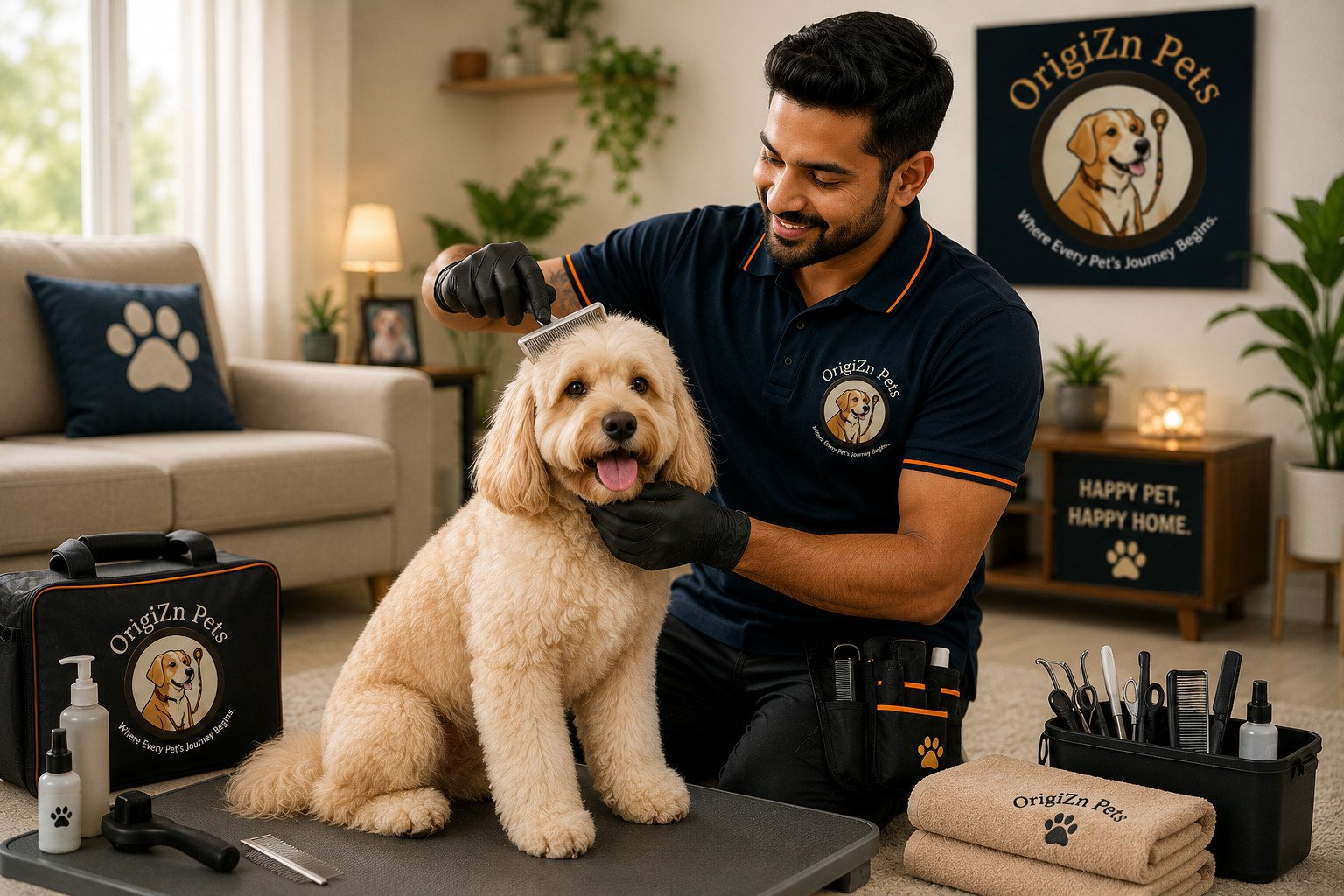
Groomer Red Flags to Avoid
Walk away if you notice any of these groomer red flags:
- Refusing to let you watch or giving vague answers about what happens during the session.
- Rough handling, shouting or holding a dog down to finish quickly.
- Dirty tools, shared towels or a smelly workspace.
- Using human shampoo or products with no label.
- Leaving dogs under hot dryers without anyone watching.
- Offering sedation to make a dog easier to groom.
- Prices that change after the session starts, with no warning.
- Returning your dog with cuts, razor burn or a damp coat, with no explanation.
- Rushing every appointment to fit in as many dogs as possible.
One groomer red flag may be a bad day. Several are a clear sign to look elsewhere.
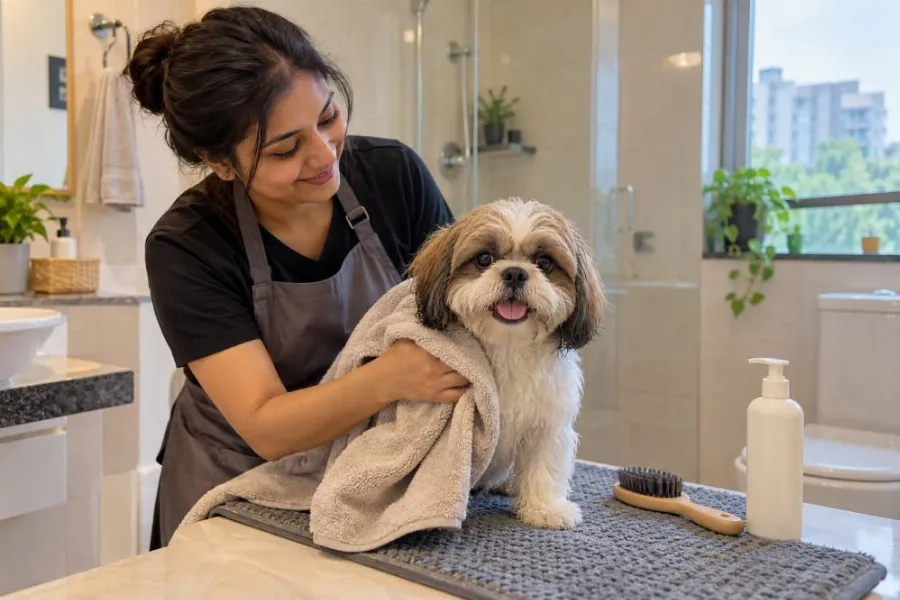
How to Judge Reviews
Reviews help, but read them carefully.
- Look for detailed reviews that mention patience, care and how nervous dogs were handled.
- Check for a pattern across many reviews, rather than trusting one glowing or angry comment.
- Notice how the groomer replies to complaints. A calm, helpful reply is a good sign.
- Ask friends, neighbours and your vet who they trust.
Comparing Grooming Prices Fairly
Price matters, but it is not the main way to choose a dog groomer. Compare like with like:
- Is the bath, drying and brushing included, or only the haircut?
- Is nail clipping and ear cleaning included?
- Is there a travel charge for grooming at home?
- Is there an extra fee for matted coats?
At OrigiZnPets, a home session costs ₹899 and includes a bath, brush, nail clipping and ear cleaning. Two sessions a month with breed-specific cuts cost ₹1,798, and six-month plans start at ₹5,394. See all plans on our pet care packages page.
Groomer at Home or Salon?
Once you know how to choose a dog groomer, decide where the grooming should happen.
Groomer at home
No car ride, no cage, no other barking dogs. Your dog stays in a familiar place and you can watch. This suits nervous, young and older dogs especially well.
Salon
Fixed equipment and a drop-off service. Some dogs cope well, but waiting in kennels can be stressful.
Our full comparison of dog grooming at home vs salon explains both in detail.
Book a Trial Session First
A short first visit is the best test of a good dog groomer. Book a simple bath and nail clip before trusting them with a full haircut.
Watch how your dog behaves afterwards. A relaxed, sleepy dog is a good sign. A dog that hides, trembles or avoids the groomer next time tells you something went wrong.
Help the first visit go well with our tips on how to get your dog used to the brush, water and dryer, and keep the coat tidy between visits with the tools in our dog grooming kit list.
Choosing a Groomer for Special Cases
Puppies
Choose someone who keeps the first sessions short and positive, and checks that your puppy’s vaccinations are suitable.
Senior dogs
Look for a groomer who offers shorter sessions, supports stiff joints and does not expect long standing times.
Nervous or rescue dogs
Choose grooming at home, with a patient groomer who uses treats and breaks. Severe fear may need help from a vet or behaviour professional first.
Long or curly coats
Ask to see examples of their breed cuts, and ask how they deal with mats.
Double coats
Make sure the groomer understands that double coats should usually be de-shedded, not shaved. Our Pomeranian grooming guide explains why.
What a Good Grooming Session Looks Like
Knowing what good looks like helps you judge any groomer, whether at home or in a salon.
- A short chat first. The groomer asks about your dog’s health, fears and the look you want, and checks the coat before starting.
- A calm start. They let your dog sniff them and the tools, and begin with easy areas such as the back.
- A thorough brush-out. Tangles are worked out gently before the bath.
- A careful bath. Lukewarm water, a dog shampoo and a long rinse, with water kept out of the eyes and ears.
- Complete drying. Towels and a low-heat dryer, with the groomer checking that the coat is dry to the skin.
- Neat trimming. Scissors and clippers used slowly around the face, paws and hygiene areas.
- Nails and ears. Nails clipped without cutting the quick, outer ears wiped clean.
- Honest feedback. The groomer tells you what they noticed, such as dry skin, ticks or a lump to show your vet.
Throughout the session, your dog should get breaks, praise and treats. If your dog gets very stressed, a good groomer stops and suggests another approach.
What to Expect After the First Visit
The first visit with a new groomer tells you a lot. Afterwards, check:
- The coat: clean, fully dry and free of knots, with an even trim.
- The skin: no cuts, nicks or red patches from clippers or a hot dryer.
- The nails: short, smooth and with no bleeding.
- The ears: clean outside, with no sign of irritation.
- Your dog’s mood: relaxed, sleepy or playful, not hiding or trembling.
Over the next few visits, your dog should become calmer, not more fearful. That is the clearest sign you have found the right person.
Checklist for a Groomer Who Comes Home
Grooming at home has its own checks. Before the first visit, confirm that the groomer:
- Brings their own tools, dog-safe shampoo, towels and a dryer.
- Tells you what space and water access they need.
- Arrives on time and lets you know if they are running late.
- Uses a mat or towels so your dog does not slip on tiles.
- Works calmly with other family members nearby.
- Cleans up the bathroom or balcony before leaving.
- Comes from a provider who checks the backgrounds of its groomers.
Having a stranger in your home also needs trust. Choosing a known provider with clear policies gives you more peace of mind than an unknown freelancer.
Building a Long-Term Relationship
Once you find a good dog groomer, keep them. Dogs settle best with a familiar face, and a regular groomer learns your dog’s quirks, favourite treats and sensitive spots.
- Book on a schedule. Regular visits keep the coat easy to manage and the routine predictable.
- Give feedback. Tell the groomer what you liked and what you would change. Good groomers welcome it.
- Share changes. New medicines, a skin problem or a recent scare can all affect the next session.
- Keep up home care. Brushing between visits makes every session shorter and kinder.
Price vs Quality: Finding the Balance
It is tempting to choose the lowest quote, but grooming is hands-on work with a living animal. Very cheap sessions are often rushed, with less drying time and less patience for a nervous dog. Very expensive sessions are not always better either.
Look for clear prices, a clear list of what is included and a groomer who does not rush. That balance usually gives the best value over time.
Grooming Certifications and Training
In India, there is no single licence that every groomer must hold. Some groomers have completed courses, while others learned on the job under experienced groomers. A certificate can be a good sign, but it does not replace hands-on skill and a gentle manner.
Instead of asking only about certificates, ask how long they have groomed, which breeds they know well and how they learned. Then judge them by how they handle your dog.
Questions Your Groomer Should Ask You
A careful groomer asks as many questions as you do. Expect to be asked about:
- Your dog’s age, breed, weight and vaccination status.
- Any skin conditions, allergies, injuries or medicines.
- How your dog behaves with strangers, water and dryers.
- Any history of snapping or biting during handling.
- The coat length and style you want.
If a groomer asks nothing and simply starts, that is one of the quieter groomer red flags.
Trust Your Dog’s Reaction
Your dog is the best judge of a groomer. Watch how they greet the groomer on the second and third visits. Tail wags, a relaxed body and willingness to approach are great signs. Hiding, trembling, lip licking or refusing treats tell you the experience was stressful. Dogs cannot explain what happened, but their behaviour does. Combine what you see with the checks in this guide, and you will know whether you have found the right person to care for your dog’s coat, skin and comfort for years to come.
When to Change Your Groomer
Even a groomer who started well may not stay the right fit. Consider a change if your dog becomes more fearful before each visit, if you notice cuts or red skin more than once, if prices keep changing without explanation, or if the groomer will not listen to your feedback. Your dog’s comfort matters more than loyalty. A new, patient groomer can often rebuild trust within a few gentle sessions.
How OrigiZnPets Chooses Its Groomers
We apply the same checks to our own team. OrigiZnPets groomers are background-checked, trained in calm, gentle handling, and visit your home with their own tools, dog-safe products and clean towels.
They work one-on-one with your dog, take breaks when needed and talk you through what they find. You can stay nearby throughout. Learn more on our dog grooming at home page.
We serve Noida, Greater Noida, Gurgaon, Ghaziabad, Faridabad and South, North, East and West Delhi, and the Chandigarh Tricity, including Mohali, Panchkula, Zirakpur and Kharar. For general dog welfare advice, see the ASPCA’s dog care guide.
How to Choose a Dog Groomer: FAQs
1. What should I look for in a good dog groomer?
Experience with your dog’s coat, calm handling, clean tools, clear prices and honest communication.
2. What are the most important questions to ask a dog groomer?
What is included, how they handle nervous dogs, which products they use and how they dry the coat.
3. What are the biggest groomer red flags?
Rough handling, dirty tools, refusing to let you watch, sedation and prices that change without warning.
4. Is the cheapest groomer a good choice?
Not always. A very low price can mean a rushed session. Compare what is included, not just the number.
5. Should I stay during the grooming session?
If your dog is calmer with you nearby, yes. With grooming at home, you can watch every step.
6. How do I know if my dog had a bad experience?
Signs include hiding, trembling, avoiding the groomer, or cuts and red skin after the session.
7. Do groomers need to check vaccinations?
Many do, especially for puppies. It is a sign of a careful groomer.
8. Can a groomer handle an aggressive dog?
Some can, with care. Always tell the groomer about any biting history, and seek a vet’s advice for severe cases.
9. How often should I use the same groomer?
Sticking with one good dog groomer helps your dog build trust and lets the groomer learn your dog’s needs.
10. How do I book a groomer with OrigiZnPets?
Visit our dog grooming page, choose a plan and pick a time.
Final Thoughts
Learning how to choose a dog groomer takes a little effort, but it pays off every visit. Ask the right questions, watch for groomer red flags, start with a short trial and pay attention to how your dog feels afterwards. The best groomer is the one your dog is happy to see again.
Related reading: Dog Grooming at Home vs Salon · How Often Should You Groom? · Dog Shampoo Guide