Dog Grooming Kit for Home: 10 Essentials Every Dog Owner Needs

Quick answer
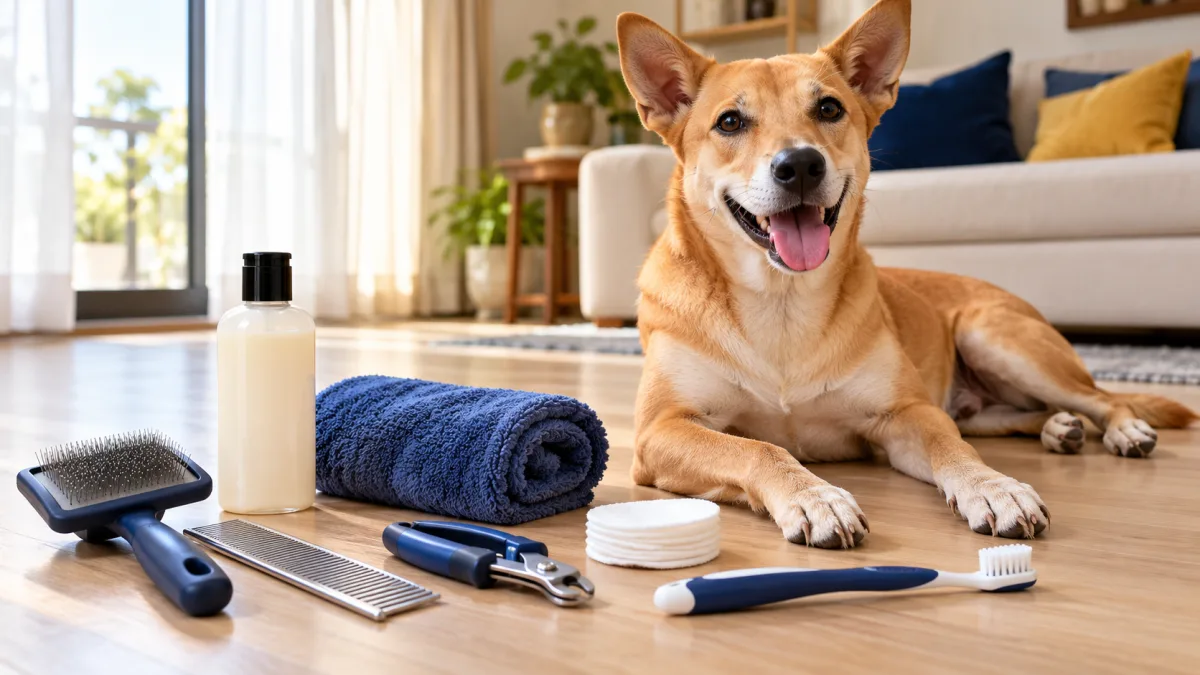
A basic dog grooming kit for home needs a brush that suits your dog’s coat, a metal comb, a dog shampoo, two towels, nail clippers with styptic powder, ear cleaner with cotton pads, a dog toothbrush and toothpaste, and a pet-safe paw balm. Add a deshedding tool for double-coated breeds and blunt-tip scissors for long-coated ones. Keep clippers and full haircuts for a professional groomer.
Regular grooming at home keeps your dog’s coat clean, cuts down on shedding and lets you spot ticks, lumps and skin problems early. But walk into a pet shop or open a shopping app and you’ll find hundreds of brushes, sprays and gadgets, and most of them you don’t need. This guide covers what should actually go into a grooming kit for dogs, how to choose each item for your dog’s coat, and which jobs are better left to a professional.
If you’d rather someone else did the hard part, our groomers offer dog grooming at home across Delhi NCR, and you can keep this kit for the weekly upkeep in between.
Why Every Dog Needs a Grooming Kit at Home
Even dogs who visit a groomer every month need a few minutes of care at home each week. Brushing removes loose hair before it lands on your sofa, spreads natural oils through the coat and stops small tangles from turning into mats. Weekly checks of nails, ears, teeth and paws catch problems while they’re still small. In Delhi NCR, where summers are hot, monsoons are humid and ticks are common for much of the year, these checks matter even more.
Grooming at home also gets your dog used to being handled. A dog who is comfortable having paws, ears and mouth touched is calmer at the vet and at a professional grooming session.
The 10 Essentials in a Dog Grooming Kit
1. A brush that matches your dog’s coat
This is the most important item, and the wrong brush can do more harm than good. Pick by coat type:
- Short, smooth coats (Labrador, Beagle, Pug, Indie dogs): a rubber curry brush or a bristle brush to lift loose hair and polish the coat.
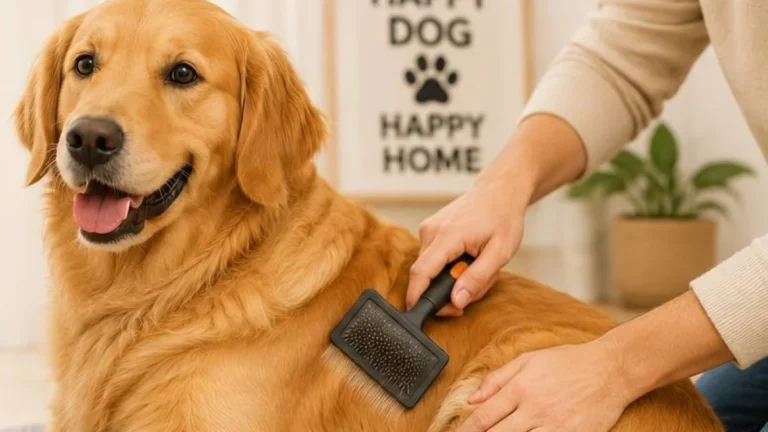
- Double coats (German Shepherd, Golden Retriever, Husky, Pomeranian): a slicker brush plus an undercoat rake.
- Long, silky coats (Shih Tzu, Lhasa Apso, Maltese): a pin brush for daily brushing and a slicker brush for small knots.
- Curly coats (Poodle and Poodle mixes): a slicker brush used gently, followed by a comb.
Our guide on how to brush a dog’s coat shows the right technique for each type.
2. A metal comb
A steel comb with wide and narrow teeth is the best way to check your brushing. If the comb glides through the coat right down to the skin, you’ve done a good job. If it catches, there’s a tangle the brush missed. It’s also handy for the fine hair around the face, ears and feet.
3. Dog shampoo (and conditioner for long coats)
Never use human shampoo or soap on your dog. Dog skin has a different pH, and human products can leave it dry and itchy. Choose a mild dog shampoo for regular baths, and ask your vet before using a medicated or anti-tick shampoo. Long-coated breeds benefit from a conditioner that makes brushing easier after the bath. Read our dog shampoo guide to pick the right one.
4. Two absorbent towels
Use one towel to soak up most of the water and a second, dry one to finish. Microfibre towels hold a lot of water and dry quickly. Damp fur trapped against the skin is a common cause of hot spots and fungal infections, especially during the monsoon, so drying properly matters as much as washing.
5. A pet dryer or a hair dryer on cool
For thick or long coats, towels alone won’t get the undercoat dry. A pet dryer is ideal. If you use a normal hair dryer, keep it on the cool or lowest warm setting, hold it at least a hand’s length away and keep it moving. Many dogs are scared of the noise at first, so start with short sessions and treats.
6. Nail clippers and styptic powder
Overgrown nails change the way a dog walks and can cause pain in the toes and joints. Scissor-style or guillotine clippers work for most dogs, and a nail grinder suits dogs who dislike clipping. Keep styptic powder in the kit: if you cut into the quick (the blood vessel inside the nail), a pinch of powder stops the bleeding quickly. Trim a little at a time, especially on dark nails where the quick is hard to see.
7. Ear cleaner and cotton pads
A vet-approved dog ear cleaner and cotton pads or balls are all you need. Never use cotton buds inside the ear canal. Dogs with floppy ears, like Cocker Spaniels and Labradors, are more prone to ear infections, so check their ears weekly. Our guide to preventing ear infections in dogs explains what’s normal and what needs a vet.
8. Dog toothbrush and toothpaste
Dental disease is one of the most common health problems in adult dogs. A finger brush or a soft dog toothbrush with dog toothpaste is enough. Never use human toothpaste: it often contains ingredients that are unsafe for dogs. Aim for a few times a week, building up slowly.
9. Tick comb or flea comb
A fine-toothed flea and tick comb helps you check for ticks, especially after walks in parks or grassy areas. Pay attention to the ears, neck, armpits and between the toes. If you find ticks regularly, talk to your vet about a prevention plan.
10. Paw balm and wipes
Hot roads in summer and wet streets in the monsoon are both hard on paw pads. A pet-safe paw balm keeps pads from cracking, and pet wipes are handy for a quick clean after walks when a full wash isn’t needed.
Extras Worth Adding for Some Dogs
- Deshedding tool: for heavy shedders like Labradors, Golden Retrievers and Huskies, used once or twice a week during shedding season. Don’t overuse it, as it can irritate the skin.
- Blunt-tip scissors: for trimming the hair around the eyes, paws and hygiene areas of long-coated dogs. Rounded tips are much safer if your dog moves suddenly.
- Detangling spray: makes brushing long or curly coats easier and less painful.
- Grooming table or non-slip mat: helps your dog feel steady and saves your back.
- Treats: the most underrated grooming tool. Small, frequent rewards turn grooming into something your dog looks forward to.
Grooming Kit by Coat Type: Quick Checklist
| Coat type | Example breeds | Brushes | Brushing |
|---|---|---|---|
| Short and smooth | Labrador, Beagle, Pug, Indie | Rubber curry brush, bristle brush | Once or twice a week |
| Double coat | German Shepherd, Golden Retriever, Pomeranian, Husky | Slicker brush, undercoat rake, deshedding tool | 2 to 3 times a week, daily while shedding |
| Long and silky | Shih Tzu, Lhasa Apso, Maltese | Pin brush, slicker brush, metal comb | Daily |
| Curly | Poodle and Poodle mixes | Slicker brush, metal comb | Every 1 to 2 days |
How to Use Your Dog Grooming Kit: A Simple Weekly Routine
- Brush first, always. Brush and comb before any bath. Water tightens tangles into mats that are much harder to remove.
- Check the body. Run your hands over your dog to feel for lumps, ticks, cuts or sore spots.
- Clean the ears. Wipe the visible part of the ear with cleaner on a cotton pad.
- Trim the nails. Take off a little from each nail, or do just one paw a day if your dog is nervous.
- Brush the teeth. Even 30 seconds helps.
- Bath when needed. Most dogs need a bath every 3 to 6 weeks, not every week. Rinse thoroughly and dry completely.
- Reward. Finish with a treat and a game so your dog remembers the good part.
How often your dog needs each of these depends on breed and lifestyle. Our guide on how often you should groom your dog goes into more detail.
Common Mistakes to Avoid
- Shaving a double-coated dog for summer. The undercoat protects against heat and sunburn, and it may not grow back properly. Regular deshedding works better.
- Bathing too often. Frequent baths strip natural oils and can leave the skin dry and itchy.
- Leaving the coat damp. This is a leading cause of hot spots and fungal infections, especially in the monsoon. See our monsoon grooming tips.
- Cutting out mats with sharp scissors. It’s very easy to cut the skin underneath. Use a detangling spray and a comb, or leave bad mats to a groomer.
- Forcing a scared dog. Short, positive sessions build trust. One bad experience can make every future grooming session a fight.
When to Call a Professional Groomer
A home grooming kit is perfect for weekly upkeep, but some jobs are safer and easier with a professional:
- Full haircuts and breed-specific trims, especially with electric clippers
- Heavily matted coats
- Dogs who are very anxious, aggressive or impossible to hold still for nail trims
- A deep deshed for heavy-coated breeds during shedding season
Not sure whether to go to a salon or have the groomer come to you? Read our comparison of dog grooming at home vs a salon. OrigiZnPets groomers bring their own tools and pet-safe products to your home, with sessions starting at ₹899. See dog grooming services and prices.
Frequently Asked Questions
What should be in a basic dog grooming kit?
A brush suited to your dog’s coat, a metal comb, dog shampoo, towels, nail clippers with styptic powder, ear cleaner with cotton pads, a dog toothbrush and toothpaste, and paw balm. Add a deshedding tool or blunt-tip scissors depending on the coat.
Which brush is best for my dog?
It depends on the coat. Short coats do well with a rubber curry or bristle brush, double coats need a slicker brush and an undercoat rake, and long or curly coats need a slicker or pin brush followed by a metal comb.
Can I use human shampoo on my dog?
No. Human shampoo is made for a different skin pH and can dry out and irritate a dog’s skin. Use a mild shampoo made for dogs.
How often should I brush my dog?
Short-coated dogs need brushing once or twice a week, double-coated dogs two or three times a week, and long or curly-coated dogs every day or every other day.
Is grooming my dog at home safe?
Yes, brushing, bathing, ear cleaning, teeth brushing and careful nail trims are safe to do at home with the right tools. Leave clipper haircuts, matted coats and very anxious dogs to a professional groomer.
How do I trim my dog’s nails without hurting them?
Take off a small amount at a time, stop before the pink quick on light nails, and trim even less on dark nails. Keep styptic powder nearby in case of bleeding, and reward your dog after each paw.
Related reading: Dog Grooming at Home vs Salon · How to Brush a Dog’s Coat · Dog Shampoo Guide · Pomeranian Grooming Tips