

Pomeranian Grooming: 6 Proven Steps for a Healthy Double Coat
Pomeranian grooming tips that actually prevent matting: 6 proven steps for this breed's dense double coat, built for Indian homes.

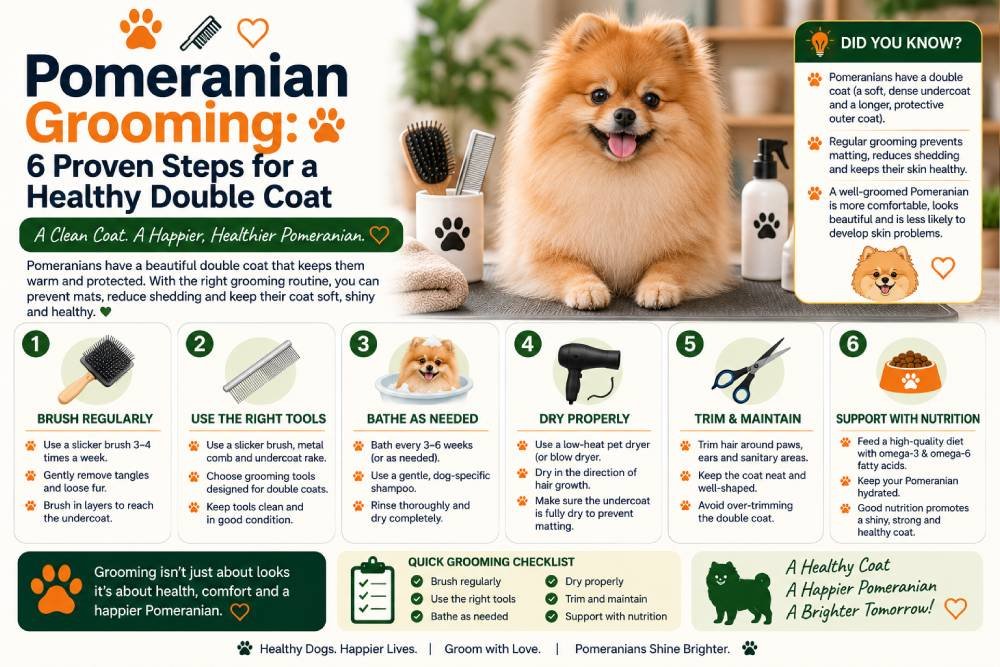
Pomeranian grooming tips aimed at a single weekly brush badly underestimate what this breed’s coat actually needs. Pomeranians carry a dense double coat — a soft, insulating undercoat beneath a longer, harsher outer coat — that mats quickly without a specific routine, especially in India’s humidity where the undercoat holds moisture far longer than it would in a drier climate.
Pomeranian Grooming Tips
- Brush at least three times a week, working down to the skin each time rather than just smoothing the surface layer.
- Use a slicker brush followed by a metal comb — the slicker loosens loose undercoat, the comb catches anything the brush missed.
- Never shave a Pomeranian’s coat to manage heat or shedding. Removing the double coat can permanently damage the follicles and regrowth pattern, and it removes the insulation that protects against both heat and sunburn.
- Bathe every three to four weeks, always followed by a full blow-dry rather than air-drying, since a damp undercoat left to dry naturally mats almost immediately.
- Check behind the ears and around the tail base weekly — these spots mat first and get missed most often in a quick brush.
- Trim paw fur and sanitary areas regularly, since this breed’s coat grows quickly in these spots and traps dirt if left untrimmed.
A Pomeranian’s coat isn’t optional maintenance — skip a week of brushing and the next session takes three times as long.
Why the “never shave” rule matters so much for this breed
The American Kennel Club’s Pomeranian breed profile describes their coat as a defining breed characteristic requiring regular brushing — and groomers widely caution against shaving double-coated breeds like this one specifically because the outer guard hairs may never regrow correctly afterward, leaving a patchy, permanently altered coat that can take a year or more to show any improvement.
What monsoon and summer change about the routine
Humidity makes matting form faster, so the three-times-weekly brushing schedule above isn’t negotiable during monsoon months the way it might be relaxed slightly in cooler, drier weather. A fully dried coat after every bath matters even more when ambient humidity is already working against you, and skipping even one bath’s proper dry-down can undo a week of otherwise consistent brushing.
Signs you need a professional groomer, not just more home brushing
Mats close to the skin that pull when touched, a coat that smells even after a bath, or matting that’s returned within days of a full groom are all signs the coat has gotten ahead of a home routine and needs professional de-matting rather than more brushing at home.
Our at-home groomers handle Pomeranian-specific coat care, including safe de-matting without resorting to a full shave. Our care packages bundle regular grooming visits so the coat never gets ahead of the routine. Book a free demo to get started.
Building brushing into a routine your Pomeranian tolerates well
Short, calm sessions with treats work far better than one long weekly ordeal, especially for a breed this size where restraint can feel overwhelming. Starting brushing sessions young, before matting becomes an issue, builds the tolerance that makes adult grooming sessions dramatically easier.
What changes as a Pomeranian ages
Older Pomeranians often develop more sensitive skin and may the tolerate brushing less patiently than they did as puppies, which makes a gentler brush and shorter, more frequent sessions worth switching to rather than pushing through with the same routine used for years. Watching for any new sensitivity around specific spots is also worth flagging to a vet, since skin changes in senior dogs sometimes signal something beyond ordinary aging and may require prompt attention, diagnosis, and appropriate treatment.