
How to Choose a Dog Trainer: 10 Questions to Ask Before You Book

Choosing a dog trainer is a bigger decision than it looks. A good trainer can transform your dog's behaviour and make daily life easier for the whole family. A poor one can waste your money or, worse, make problems like fear and aggression harder to fix.
Knowing how to choose a dog trainer protects your dog from harsh methods and saves you time and money. Humane World for Animals also shares advice on finding a good trainer or class. The ten questions below show you how to choose a dog trainer with confidence before you pay anything.
In Noida, Gurgaon and across Delhi NCR, there are many trainers to choose from, with very different methods, experience and prices. Here is how to tell them apart.
Why the Right Trainer Matters
Dog training is not regulated in India, so anyone can call themselves a trainer. That means the responsibility of checking is on you. The right trainer will:
- Use methods that are safe and humane
- Explain why your dog behaves the way it does
- Teach you, not just your dog
- Give you a clear plan and show measurable progress
10 Questions to Ask a Dog Trainer
1. What training methods do you use?
Look for words like positive reinforcement, reward-based or force-free. These methods use treats, toys and praise to teach good behaviour. Be cautious if a trainer talks about "dominance," "being the alpha" or "correcting" the dog. Asking these questions early is the simplest way to learn how to choose a dog trainer well.
2. Do you use choke chains, prong collars or shock collars?
The answer should be no. These tools work through pain or fear. They can suppress behaviour in the short term, but they often increase anxiety and aggression over time.
3. What experience do you have with problems like mine?
A trainer who is great with puppies may not be the right person for a reactive adult dog. Ask how many dogs with similar issues they have worked with, and what results looked like.
4. Will you train at my home?
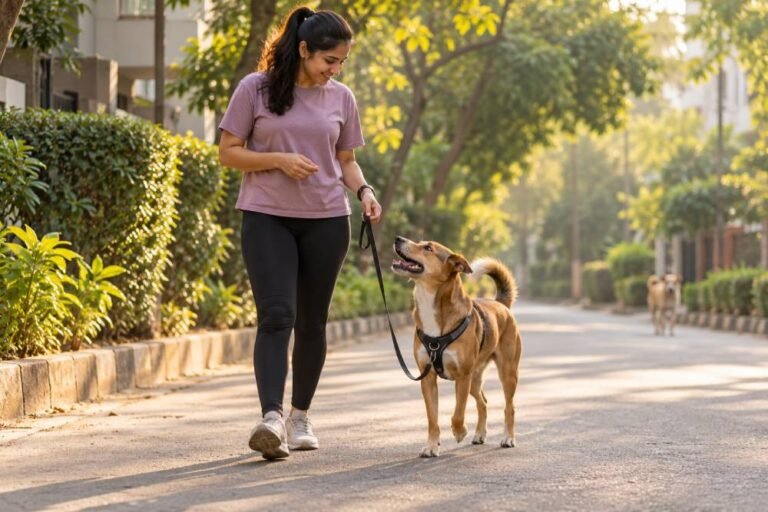
Many problems, such as barking at the door, pulling in the society lane or chewing furniture, happen at home. Training where the problem happens is usually faster and more practical than training somewhere else. Read about the benefits of professional dog training at home.
5. Will I be involved in the sessions?
You should be. Your dog spends far more time with you than with the trainer. If you don't learn the cues and routines, results won't last. Be wary of "drop your dog off and get a trained dog back" promises.
6. How do you assess my dog before starting?
A good trainer asks about your dog's history, routine, health and the exact problem, and watches your dog before suggesting a plan. A one-size-fits-all package without an assessment is a red flag.
7. How will we measure progress?
Ask what success looks like in two weeks, a month and three months. Clear goals, such as "walks past other dogs at 10 metres without barking," help you see whether training is working.
8. What does it cost, and what's included?
Ask for a clear price per session or package, the session length, and whether follow-up support is included. Our dog training cost guide for India explains typical prices.
9. Are you background-checked or verified?
Someone is coming into your home. Ask whether the trainer is employed through a company that verifies identity and background, or check references and reviews carefully.
10. Can I try a session first?
A demo or trial session lets you see how the trainer interacts with your dog, how clearly they explain things, and whether your dog is comfortable with them.
Red Flags to Watch Out For
- Guaranteed results. Dogs are living animals. Honest trainers talk about likely progress, not guarantees.
- Rushing aggressive or fearful dogs. Forcing a scared dog into situations can make things much worse.
- Harsh handling. Leash jerks, shouting, hitting or pinning a dog to the ground.
- No questions about health. Sudden behaviour changes can be linked to pain, so a good trainer may suggest a vet check.
- Vague answers. If a trainer can't explain their method simply, that's a warning sign.
What a Good First Session Looks Like
In a good first visit, your trainer will:
- Ask detailed questions about your dog and your goals
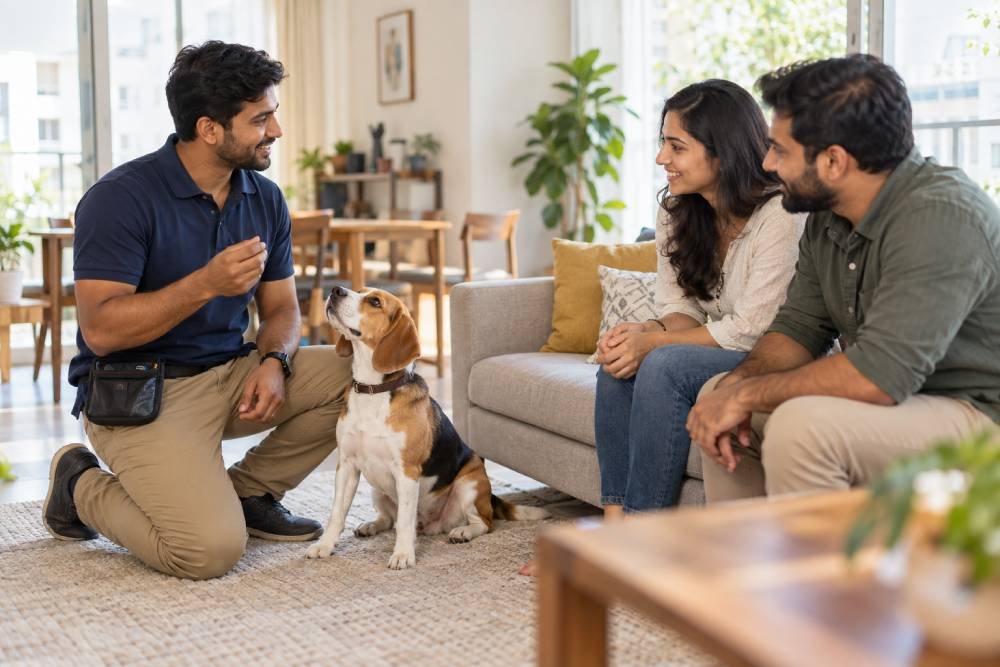
- Observe your dog in your home
- Explain what's driving the behaviour
- Show you one or two simple exercises to start immediately
- Suggest a realistic plan and number of sessions
You should leave feeling clearer and more confident, not confused or guilty.
Home Training vs Training Centres vs Board-and-Train
| Option | Best for | Things to consider |
|---|---|---|
| At-home training | Most behaviour problems, puppies, busy families | Training happens in real situations; you learn alongside your dog |
| Training centre or classes | Social dogs, basic obedience | Travel time; can be overwhelming for nervous dogs |
| Board-and-train | Specific skills when you can't be involved | You miss the learning; results may not transfer home |
For most families in Delhi NCR apartments and societies, at-home training is the most practical option.
How Long Before You See Results?
Simple skills like sit, down and name response often improve within a week or two. Leash manners and recall usually take four to eight weeks of regular practice. Fear, reactivity and aggression can take several months. Read about leash reactivity in dogs for an example of what a longer plan looks like.
Final Thoughts on How to Choose a Dog Trainer
Use these questions on how to choose a dog trainer to compare your options and pick someone who uses kind, proven methods. Whoever you hire, knowing how to choose a dog trainer means you can expect clear, honest answers to every question.
The best dog trainer for your family is kind, clear and honest, and leaves you feeling capable. Ask questions, watch how they treat your dog, and trust your instincts. If your dog seems stressed or the methods feel harsh, it's okay to stop and look for someone else.
Looking for a trainer who ticks these boxes? Our trainers are background-checked, use positive reinforcement only and train at your home. Book a trainer for a single session, or run a growth package over a few weeks. We offer at-home training across Noida, Gurgaon, Greater Noida, Faridabad, Ghaziabad and Delhi. Book your pet's first visit: a free demo session, at your home, no card required.
Here are quick answers to more questions on how to choose a dog trainer.
Frequently Asked Questions
How do I know if a dog trainer is good?
A good trainer uses reward-based methods, assesses your dog before starting, involves you in sessions, sets clear goals and explains everything in simple terms.
Is it better to train my dog at home or at a centre?
For most behaviour problems, home training works better because your dog learns in the place where the problem happens, and you learn the routine too.
Should a dog trainer use a shock collar?
No. Shock, prong and choke collars rely on pain or fear and can increase anxiety and aggression. Modern trainers don't need them.
How many training sessions does a dog need?
Basic manners often take 4–8 sessions. More complex issues like reactivity or anxiety usually need a longer plan with practice between sessions.
What should I ask in a demo session?
Ask about methods, tools, experience with your dog's problem, expected timeline, cost and what you need to practise between sessions.
Related reading: Basic Dog Commands · 5 Daily Habits That Improve Your Dog's Behaviour · Why Your Dog Behaves Differently at Home