

Senior Dog Care: 6 Essential Changes to Make After Age 7
Senior dog care tips for the changes that actually matter after age 7: mobility, diet, checkups, and reading pain your dog won't show.

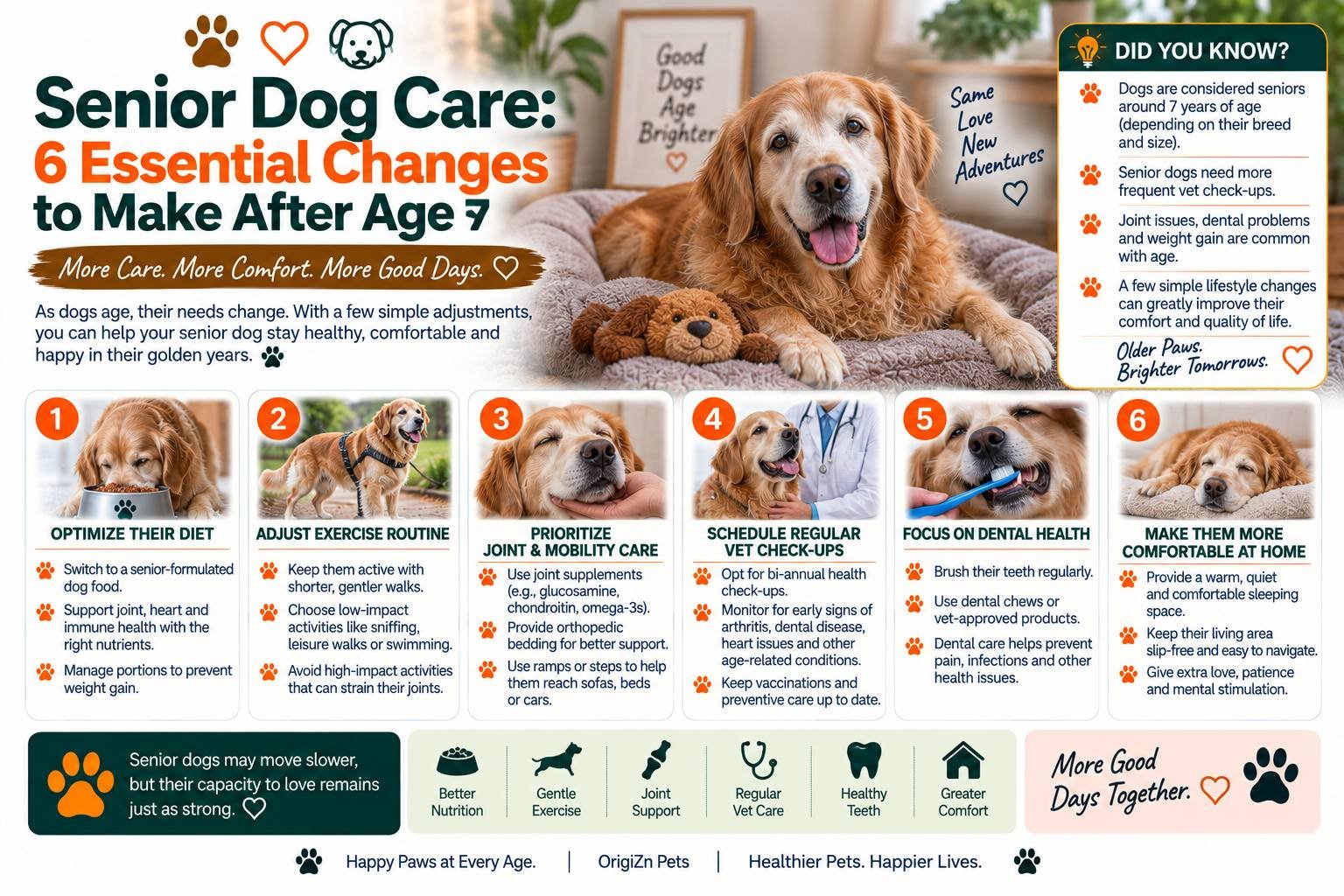
Senior dog care tips often get delayed because dogs age gradually, and it’s easy to miss the point where “getting a little slower” becomes something that needs an actual adjustment to routine. Most dogs cross into their senior years somewhere around age 7, earlier for large breeds, and six changes make the biggest difference once they do.
Six essential senior dog care tips
- Increase vet checkup frequency to twice a year, not once, since age-related conditions progress faster than an annual visit can catch early.
- Reassess food and portions, since calorie needs typically drop as activity decreases — our guide to choosing dog food by breed covers how to adjust this by breed and life stage.
- Watch for mobility changes — hesitation on stairs, slower to rise, reluctance to jump — and address them early rather than assuming it’s simply old age, since many mobility issues respond well to early intervention.
- Shift exercise toward shorter, more frequent walks rather than one long outing, which most senior dogs tolerate far better.
- Pay closer attention to dental health, since dental disease becomes more common with age and can affect appetite and overall comfort.
- Build a calmer daily routine around your dog’s changing energy levels rather than expecting the same pace as their younger years.
A senior dog that’s “slowing down” isn’t just getting old — it’s telling you something specific, and most of it is manageable if you’re watching for it.
Why dogs mask discomfort even more as they age
Dogs are naturally inclined to hide pain, and older dogs often have more of it to hide — arthritis, dental disease, and organ changes are all common and frequently silent until they’re fairly advanced. A twice-yearly vet visit catches far more of this than waiting for obvious symptoms.
Adjusting routine without over-restricting your dog
Senior dogs still need daily engagement, even if the pace changes. Building a consistent, calmer daily routine for your dog matters more at this stage than it did in adulthood, since predictability itself becomes comforting as sensory changes like reduced hearing or vision develop, and a familiar routine reduces the disorientation these changes can otherwise cause.
Signs that need a vet visit sooner than the next scheduled checkup
Sudden appetite loss, new limping, disorientation, or a marked change in water intake are all worth addressing immediately rather than waiting for the next routine visit, regardless of how minor they seem at first. Trusting a sudden change over “let’s see if it passes” serves senior dogs far better, since their margin for a missed early symptom is smaller than a younger dog’s.
Our training and walking services adjust pace and structure specifically for senior dogs. Book a free demo to build a routine suited to your dog’s current stage of life.
What blood work at senior checkups actually catches
Routine senior bloodwork often flags kidney or liver changes, thyroid shifts, or early diabetes well before any visible symptom appears. These conditions are almost always more manageable when caught at this early stage, which is exactly why the twice-yearly visit matters more than it might have in your dog’s younger years, and it’s a small cost compared to treating an advanced condition later. Most vets can run a basic senior panel during a standard visit, so it rarely requires a separate appointment.
Comfort adjustments worth making at home
Orthopedic bedding, non-slip mats near favorite resting spots, and a ramp or steps for furniture or car access all reduce daily strain on aging joints. These are simple, one-time changes that meaningfully improve day-to-day comfort without requiring a specific diagnosis to justify making them, and most senior dogs adjust to them within days.