
How to Stop a Cat Scratching Furniture: 7 Steps That Work
Why cats scratch, and 7 simple steps to stop a cat scratching furniture without punishment: the right post, placement, rewards and redirection.


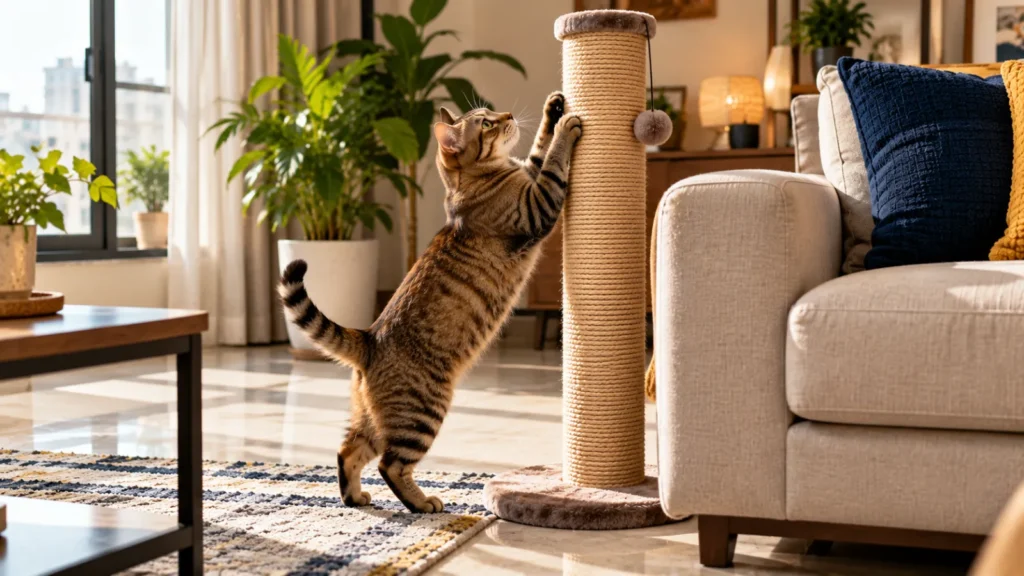
Quick answer: to stop cat scratching furniture, give your cat a tall, sturdy scratching post right next to the sofa they use, make that sofa spot unpleasant with double-sided tape or a throw, and reward every scratch on the post. You can stop cat scratching furniture in 2–4 weeks this way, without declawing.
Quick answer
To stop a cat scratching furniture, give it a tall, sturdy sisal scratching post placed right next to the furniture it scratches, cover the furniture for a few weeks, and reward your cat every time it uses the post. Never punish scratching.
Torn sofa arms, shredded curtains and a ruined mattress corner: if your cat is scratching furniture, you are not alone. It is one of the most common reasons cat parents look for help. The important thing to know is that scratching isn’t bad behaviour. It is a natural, healthy need. You can’t stop your cat scratching, but you can teach them to scratch the right things.
Here is why cats scratch and seven steps to stop a cat scratching furniture without punishment.
Why Cats Scratch
Cats scratch for several good reasons:
Scratching is normal cat behaviour, as the ASPCA’s guide to destructive scratching explains, so the goal is to redirect it, not stop it completely.
- Nail care: scratching removes the old outer layer of the claws
- Stretching: a long scratch stretches the back, shoulders and legs
- Marking territory: cats have scent glands in their paws, so scratching leaves both a visible and a scent mark
- Emotion: cats often scratch when excited, when you come home, or when they feel stressed
Because scratching is also about marking, cats choose spots that matter: near where they sleep, by doors, and on furniture in the middle of the home. That is why the sofa is so popular.
How to Stop Cat Scratching Furniture: 7 Steps
1. Get the right scratching post
Many cats ignore scratching posts because the post is wrong for them. A good post is:
- Tall enough for your cat to stretch fully, around 75–90 cm for most adult cats
- Heavy and stable, so it doesn’t wobble or tip over
- Covered in a texture cats love, such as sisal rope or sisal fabric
Watch how your cat scratches now. If they stretch up the side of the sofa, they want a vertical post. If they scratch the carpet or a rug, add a horizontal cardboard scratcher too. Most homes do best with both.
2. Put scratchers where your cat already scratches
Place the new post right in front of, or next to, the furniture your cat is damaging. Add another near their favourite sleeping spot, since cats love to scratch after waking up. Once your cat is using the post reliably, you can move it a few centimetres at a time to a better spot.
3. Make the furniture less appealing
While your cat learns, make their old favourite spots unattractive:
- Cover them with a throw, plastic sheet or furniture protector
- Stick double-sided tape on the area; most cats dislike the sticky feel
- Place a scratcher in front of the spot so it is blocked
Avoid strong citrus sprays and essential oils. Many oils are toxic to cats.
4. Make the post the best thing in the room
Rub a little catnip or silvervine on the post (not every cat reacts to it). Drag a wand toy up and around the post so your cat claws it during play. Hide treats on the post’s platform. You want your cat to link the post with fun and rewards.
5. Reward every good scratch
Each time you see your cat use the post, praise them softly and give a small treat straight away. Cats learn fast with this kind of positive reinforcement, and timing matters: reward within a second or two.
6. Redirect, don’t punish
If your cat starts scratching the sofa, calmly pick up a toy and lure them to the post, then reward them when they scratch it. Don’t shout, spray water or hit. Punishment makes cats fearful and stressed, and stressed cats often scratch more, just when you aren’t watching.
7. Trim nails and use nail caps if needed
Trimming the sharp tips of your cat’s nails every 2–3 weeks reduces damage while they learn. Soft nail caps are another option if your cat accepts them. A groomer or vet can show you how to trim safely without cutting the quick.
Why You Should Never Declaw a Cat
Declawing isn’t a nail trim. It removes the last bone of each toe. It can cause long-term pain, problems walking, litter box avoidance and biting. It is banned or widely discouraged in many countries, and it is never needed to protect furniture. Training and the right scratchers work.
How Long Does It Take to Stop Cat Scratching Furniture?
Many cats start using a good post within days, especially young cats. Older cats with a long sofa habit may take 3–6 weeks. Be consistent: keep the furniture covered, keep posts in the right places and reward every good scratch until the new habit sticks.
When Scratching Is a Sign of Stress
Sudden, heavy scratching, especially near doors and windows, can mean your cat feels stressed. Common triggers include a new pet, a new baby, moving home, a cat outside the window or loud festival noise. If you notice over-grooming, hiding, or peeing outside the litter box too, look for the cause and talk to your vet. Our tips on indoor cat enrichment can help a bored or stressed cat.
Get Help From a Cat Trainer at Home
Yes, cats can be trained, and scratching furniture is one of the easiest problems to fix with the right plan. An OrigiZnPets cat trainer can visit your home, see where and why your cat scratches, set up the right scratchers and teach you how to reward and redirect. We offer cat training at home across Delhi NCR from ₹611 per session. You can start with a free demo session.
Final Thoughts: Stop Cat Scratching Furniture for Good
Your cat isn’t scratching furniture to annoy you. They are meeting a real need. Give them a tall, sturdy sisal post in the right place, make the sofa less tempting, and reward every good scratch. With patience and no punishment, most cats switch to their posts within a few weeks, and your furniture gets a break.
Remember, the kindest way to stop cat scratching furniture is to redirect, not punish. Most families who follow these steps manage to stop cat scratching furniture within a month.
Frequently Asked Questions
Why does my cat scratch the sofa when they have a post?
Usually the post is too short, too wobbly, the wrong texture or in the wrong place. Try a tall, heavy sisal post placed right next to the sofa.
Does spraying water stop a cat scratching?
It may stop them for a moment, but it teaches your cat to fear you, not to use the post. Redirecting to the post and rewarding works better and lasts longer.
What smells stop cats from scratching furniture?
Avoid using essential oils or strong scents, as many are toxic to cats. Double-sided tape and furniture covers are safer ways to protect furniture.
Can you train an adult cat to stop scratching furniture?
Yes. Adult cats can learn new habits. It may take a few weeks longer than with a kitten, but consistent rewards and the right scratcher work at any age.
How many scratching posts does a cat need?
At least one per cat, plus one in each area where your cat spends a lot of time. In most flats, two or three scratchers work well.
Related reading: Cat Training Basics for Beginners · Litter Box Setup Tips · Cat Behaviour Myths