Diwali Sweets and Pets: 10 Foods Toxic to Dogs and Cats
Can dogs eat kaju katli or rasgulla? Check common mithai, 10 Diwali foods toxic to dogs and cats, warning signs and what to do if your pet eats them.

Quick answer
Foods toxic to dogs and cats during Diwali include chocolate, raisins and kishmish, sugar-free sweets with xylitol, onion and garlic, macadamia nuts and alcohol. Rich, fried sweets can also cause stomach upset. If your pet eats any of these, call your vet straight away.
Diwali is the season of mithai boxes, dry fruit hampers and big family meals. It is also one of the busiest times of year for vets, because pets get into food that isn’t safe for them. A piece of kaju katli or a few raisins may seem harmless, but some festive foods can make dogs and cats seriously ill.
Here is a clear list of foods toxic to dogs and cats that commonly turn up during Diwali, the warning signs to watch for, and what to do if your pet eats something they shouldn’t.
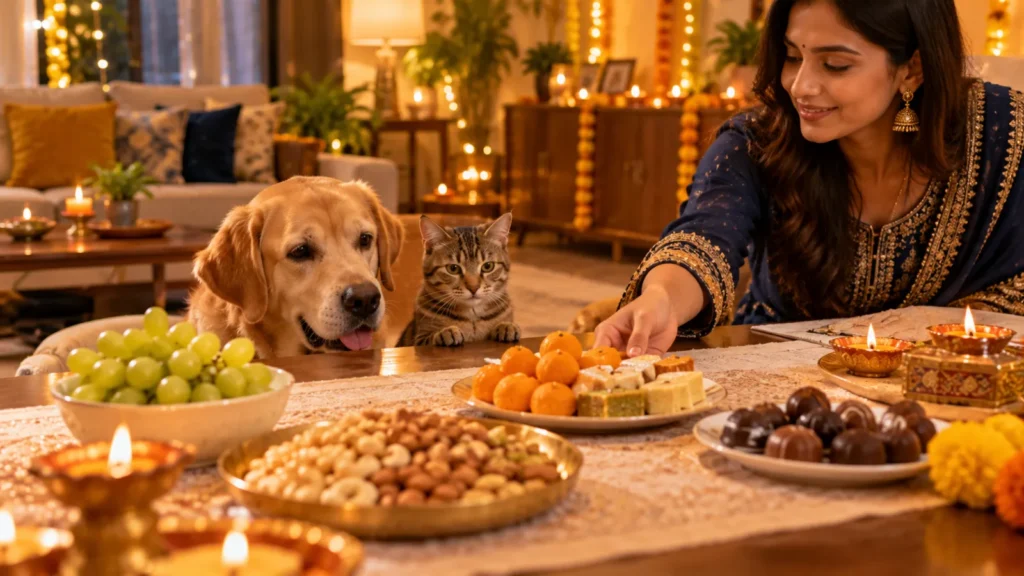
Why Festive Foods Are Toxic to Dogs and Cats
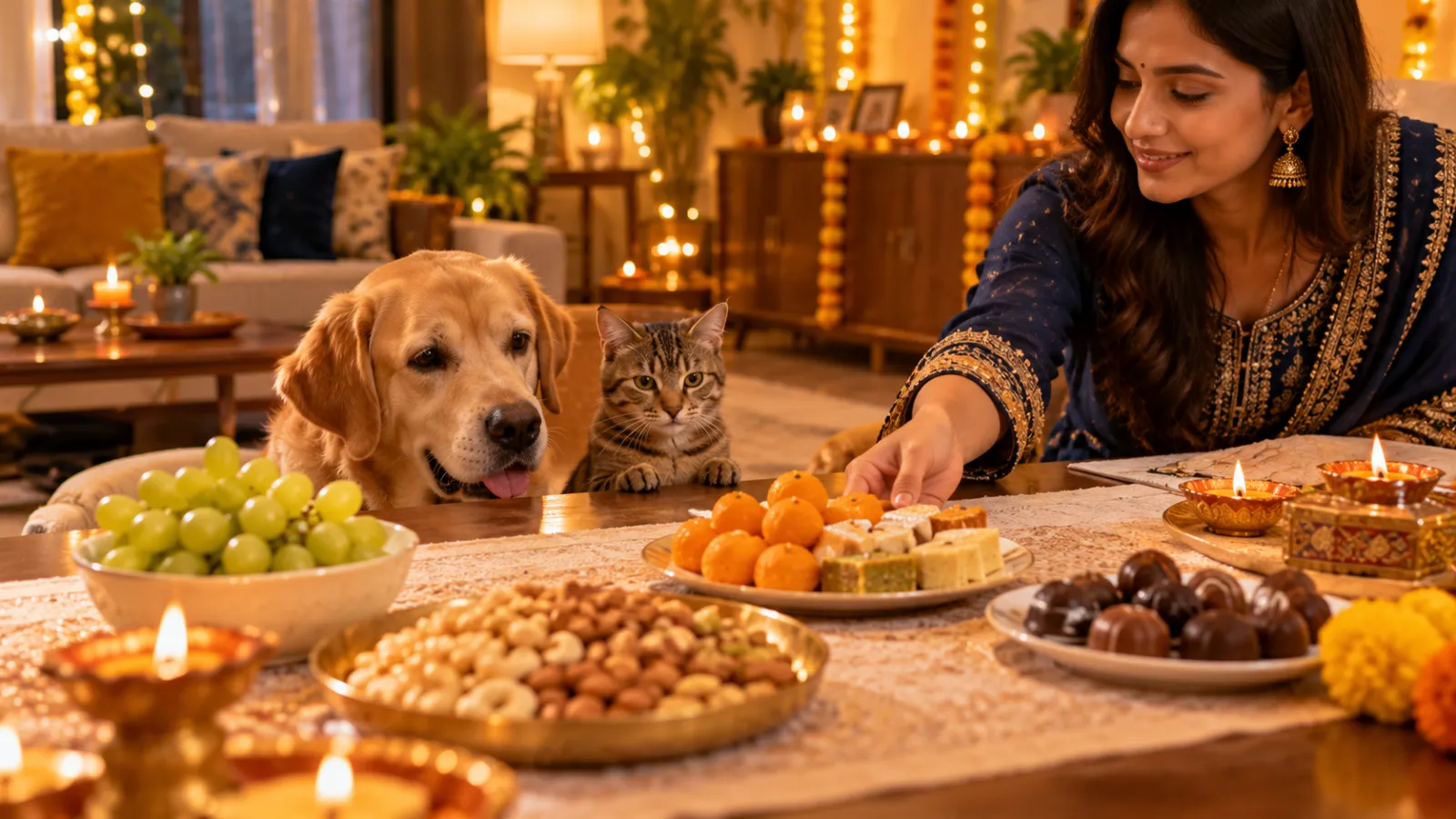
During Diwali there is simply more food around: open sweet boxes on tables, gifts at nose height, guests sharing snacks and leftovers in the bin. Pets digest food very differently from people. Ingredients that are safe for us, like chocolate, raisins, onion and some sugar-free sweeteners, can damage a pet’s heart, kidneys, liver or blood cells. Even safe foods can cause trouble when they are rich, fried or very sugary.
Can Dogs and Cats Eat Indian Sweets? A Quick Check
The short answer is no. Most mithai will not poison a pet in a small amount, but it is packed with sugar and fat, and some sweets hide truly dangerous ingredients. Here is how the common ones compare.
| Sweet | Dogs | Cats | Why to avoid it |
|---|---|---|---|
| Kaju katli | Avoid | Avoid | Very sugary and rich in fat from cashews; sugar-free versions may contain xylitol |
| Rasgulla, rasmalai | Avoid | Avoid | Heavy sugar syrup and milk, which can cause diarrhoea |
| Barfi, peda, kalakand | Avoid | Avoid | Milk, sugar and fat; chocolate barfi is dangerous |
| Gulab jamun, jalebi | Avoid | Avoid | Fried and soaked in sugar syrup |
| Laddoo, soan papdi | Avoid | Avoid | Ghee and sugar; laddoos may contain raisins |
| Halwa, kheer | Avoid | Avoid | Sugar, ghee and milk; often contain kishmish, which is dangerous |
| Anything with chocolate, kishmish or “sugar-free” on the box | Never | Never | Chocolate, raisins and xylitol can cause serious poisoning. Call your vet |
My pet ate one piece of mithai. What now?
First, check the box for chocolate, raisins or a sugar-free sweetener. If any of these are in it, or you are not sure, call your vet now. If it was a small piece of plain mithai, your pet may be fine, but watch for vomiting, diarrhoea, a sore belly, weakness or not eating over the next day, and call your vet if you see any of them. A large amount of rich sweets is also a reason to call, because a high-fat meal can trigger pancreatitis in dogs.
Foods Toxic to Dogs and Cats This Diwali
1. Chocolate and chocolate sweets
Chocolate contains theobromine and caffeine, which pets can’t break down well. Dark chocolate and baking cocoa are the most dangerous. Signs include vomiting, diarrhoea, restlessness, a fast heartbeat, tremors and, in serious cases, seizures. Chocolate gift boxes and chocolate barfi are common Diwali culprits.
For the full list of foods toxic to dogs and cats, see the ASPCA Animal Poison Control list of people foods to avoid.
2. Raisins, grapes and kishmish
Raisins and grapes can cause sudden kidney failure in dogs, and even a small amount can be dangerous for some dogs. Cats are thought to be at risk too. Watch for kishmish in dry fruit boxes, kheer, halwa, panjiri and fruit cake.
3. Sugar-free sweets (xylitol)
Many sugar-free mithai, chewing gums and diabetic sweets contain xylitol (also listed as birch sugar). In dogs, xylitol causes a fast, dangerous drop in blood sugar and can damage the liver. Always check labels on “sugar-free” boxes and keep them well out of reach.
4. Onion and garlic
Onion, garlic, leeks and chives damage red blood cells in dogs and cats, and cats are even more sensitive. This includes powders and cooked food, so pakoras, samosas, chaat, gravies and many namkeens are not safe for pets.
5. Nuts, especially macadamia
Macadamia nuts are toxic to dogs and can cause weakness, wobbliness and fever. Other nuts like cashews and almonds aren’t toxic in the same way, but they are high in fat, often salted, and can be a choking hazard for small dogs and cats.
6. Ghee-rich, fried and very sweet food
Laddoos, jalebis, puris, pakoras and other rich foods can upset your pet’s stomach. In dogs, a sudden high-fat meal can trigger pancreatitis, a painful and sometimes serious condition. Signs include vomiting, a sore belly, a hunched back and not eating.
7. Milk sweets for cats
Many adult cats can’t digest lactose well, so milk-based sweets like rasgulla, rasmalai, kalakand and peda can cause diarrhoea. They are also very high in sugar.
8. Alcohol
Even small amounts of alcohol can be dangerous for pets, causing vomiting, wobbliness, low blood sugar and breathing problems. Never leave drinks where a pet can reach them during parties.
9. Silver vark, foil and wrappers
The edible silver on sweets isn’t the main worry, but foil, plastic trays, ribbons, strings and toothpicks are. Pets often eat them along with food smells, and they can cause choking or a blocked gut. Cats are especially drawn to ribbons and string.
10. Cooked bones and leftovers
Cooked bones from festive meals can splinter and injure the mouth, throat or gut. Leftovers are often spicy, oily and full of onion and garlic. Keep bins closed and out of reach.
Non-Food Diwali Dangers
- Lilies (for cats): every part of the lily, including pollen and vase water, can cause kidney failure in cats. Avoid lilies in your Diwali flowers if you have a cat.
- Diyas and candles: tails, whiskers and paws can get burned, and knocked-over diyas can start fires.
- Rangoli colours: pets walk through rangoli and then lick their paws.
- Firecrackers: noise causes fear, and spent crackers on the street can contain chemicals that pets may chew.
- Incense and essential oils: strong smoke and many essential oils irritate pets’ airways, and some oils are toxic to cats.
Warning Signs Your Pet Ate Something Toxic
- Vomiting or diarrhoea
- Drooling, pawing at the mouth or retching
- Restlessness, panting or a racing heart
- Weakness, wobbling or collapse
- Tremors or seizures
- Not eating, a swollen or painful belly
- Peeing much more or much less than usual
Some poisonings, like raisins or xylitol, can look fine at first and turn serious within hours, so don’t wait for symptoms.
What to Do if Your Pet Eats Something Toxic
- Stay calm and remove the food so your pet can’t eat more.
- Work out what and how much they ate, and when. Keep the wrapper or box.
- Call your vet or the nearest 24-hour pet clinic straight away, even if your pet seems fine.
- Don’t try to make your pet vomit with salt, oil or home remedies unless your vet tells you to. Some methods can cause more harm.
- Take the packaging with you to the clinic.
Save your vet’s number and the address of a 24-hour clinic near you before Diwali, so you aren’t searching at midnight.
Safe Treats You Can Share
Your pet can still join the celebration. Safe options in small amounts include:
- Plain boiled chicken without salt, onion or garlic
- Small pieces of carrot, cucumber or apple (no seeds) for dogs
- Plain cooked pumpkin
- Pet-safe treats made for dogs or cats
Treats should make up no more than about 10% of your pet’s daily food. Ask guests not to feed your pet, and a quick “please don’t share sweets with the dog” at the door saves a lot of trouble.
Teach “Leave It” Before the Festival
A reliable “leave it” can stop your dog grabbing a dropped laddoo or a raisin from the floor. It is one of the most useful safety cues you can teach. Our guide to basic dog commands is a good place to start. If your dog steals food from tables or your cat jumps onto kitchen counters, an OrigiZnPets trainer can help at home with dog training or cat training. The first demo session is free.
Final Thoughts on Foods Toxic to Dogs and Cats
Most Diwali emergencies happen because tempting food is left within reach. Keep sweet boxes closed and high up, check labels for xylitol, keep raisins, chocolate, onion and garlic away from pets, and have your vet’s number ready. A few simple habits let the whole family, pets included, enjoy a safe and happy Diwali.
Want help with this at home? An OrigiZnPets trainer can work on it with your dog in your own space. We offer dog trainer in Greater Noida and dog training in Gurgaon, and cover the rest of Delhi NCR too. Your first visit is free.
Frequently Asked Questions
Can dogs eat Indian sweets?
It is best not to. Most mithai is very high in sugar and ghee, and some contain chocolate, raisins or xylitol, which are toxic to dogs. Give pet-safe treats instead.
Can dogs eat kaju katli?
No, it is best avoided. Kaju katli is not one of the most toxic foods, but it is very sugary and rich and can upset your dog’s stomach or trigger pancreatitis. Sugar-free versions may contain xylitol, which is dangerous. If your dog ate a lot or the box says sugar-free, call your vet.
Can dogs eat rasgulla?
It is best not to. Rasgulla is soaked in sugar syrup and made with milk, which can cause an upset stomach. One small lick is unlikely to cause harm, but do not offer it as a treat.
Can cats eat barfi?
No. Barfi is milk and sugar, and many adult cats cannot digest lactose well, so it can cause diarrhoea. Chocolate barfi is dangerous. Give your cat a pet-safe treat instead.
Can cats eat halwa or kheer?
Avoid both. They are high in sugar and fat, kheer is milk-based, and both may contain raisins, which are thought to be risky for cats too.
Are raisins really dangerous for dogs?
Yes. Raisins and grapes can cause kidney failure in dogs, and there is no known safe amount. If your dog eats any, call your vet straight away.
Can cats eat milk sweets?
Most adult cats can’t digest lactose well, and milk sweets are also very sugary. They often cause diarrhoea, so it is best to avoid them.
What should I do if my dog ate chocolate?
Note the type and amount, keep the wrapper and call your vet immediately. Dark chocolate is the most dangerous. Don’t try to make your dog vomit at home unless your vet advises it.
Related reading: Cat Scared of Firecrackers? · Dog Anxiety During Fireworks · Signs Your Pet Needs a Vet