
Dog Behaviorist Near Me: 6 Proven Tips to Find the Right Expert

Quick answer
Look for a dog behaviorist near me when a problem involves fear, anxiety or aggression rather than simple manners. Choose someone who assesses the cause first, uses reward-based methods, works with your vet when needed and gives you a clear written plan.
Dog Behaviorist Near Me: Finding the Best Professional to Help Improve Your Dog’s Behavior
Dogs are much more than just pets, they are an integral part of our families. However, just like humans, dogs can experience behavioral issues that negatively impact their quality of life, physical health, and relationship with their owners. Some common behavioral issues include excessive barking, aggression, separation anxiety, leash pulling, fear, and destructive behaviors. All of these issues can make daily life difficult for both dogs and their families. If you are experiencing any of these issues, then searching for a “dog behaviorist near me” can be a great first step toward creating a happier and healthier relationship with your dog.
A professional dog behaviorist will help pet parents understand why their dogs act in a certain way and create a plan to address those behaviors. Unlike basic obedience trainers who typically focus on teaching commands such as sit, stay, come, and heel, behavior-focused professionals evaluate the dog’s environment, daily schedule, experiences, triggers, and learning history to determine what may be causing the unwanted behavior.
Regardless of whether you have a young puppy, an energetic adult dog, or an older companion with established habits, the right professional guidance can help you establish better communication, increase confidence, and promote positive behavior.
In this article, we will discuss what a dog behaviorist is, when you should consult one, the types of services available, how to select the best professional in your area, and how ongoing training can improve your dog’s quality of life.
What Is a Dog Behaviorist?
A dog behaviorist is a professional who works with dogs that exhibit behavioral issues. Their primary objective is to understand why a dog is acting in a particular manner and develop a plan to resolve that behavior.
While basic obedience training typically focuses on teaching commands such as sit, stay, come, and heel, behavioral support usually focuses on the emotions and conditions that contribute to a dog’s actions.
For example, a dog that barks at strangers may be fearful, frustrated, territorial, or overstimulated. Simply teaching the dog to stop barking may not address the underlying issue. A behavior-focused professional will observe the situation, identify potential triggers, and help the owner develop safer and more appropriate responses.
A professional may evaluate several factors including:
- The dog’s age, breed, temperament, and past experiences.
- The dog’s daily exercise, mental stimulation, and sleep patterns.
- The dog’s interactions with family members, visitors, and other animals.
- Situations that cause fear, excitement, frustration, or aggression.
- Past training methods used with the dog and the dog’s response to those methods.
- Any possible medical conditions that could be contributing to the behavior.
The ultimate goal is to develop a practical and individualized behavior plan that meets both the dog’s needs and the owner’s lifestyle.
It is important to verify a professional’s credentials and experience since the title “dog behaviorist” does not guarantee a specific level of formal education or certification.
Why Should You Search for a Dog Behaviorist Near Me?
When your dog develops a behavioral issue, obtaining appropriate guidance early can help prevent the issue from becoming more difficult to manage.
Searching for a dog behaviorist near you provides the benefit of having someone who can potentially observe your dog in its normal environment. This is especially helpful when the behavior occurs at home, while walking, around visitors, or in specific neighborhood settings.
Below are some key reasons to consider seeking professional behavioral support.
To Address Excessive Barking
Barking is a natural form of communication for dogs. However, excessive or intense barking can become problematic when it occurs throughout the day or night.
Dogs may bark due to boredom, fear, excitement, territorial responses, frustration, or distress when left alone.
A qualified professional can help identify the circumstances surrounding the barking and recommend appropriate management strategies. These may include modifying the environment, providing enrichment, reinforcing calm behavior, and gradually helping the dog become more comfortable with specific triggers.
2. To Manage Aggressive Behavior
Growling, snapping, lunging, and biting are all indicators of serious behavioral problems that require careful evaluation.
Aggression may be related to fear, pain, resource guarding (valuable items), stressful interactions, or other factors. It should never be automatically assumed that the dog is attempting to dominate its owner.
A behavior professional can help identify triggers, recommend appropriate safety measures, and develop a structured behavior modification plan.
If your dog has bitten someone or is exhibiting increasing levels of aggression, do not attempt to provoke the behavior or test the dog’s limits. Prevent unsafe interactions and seek qualified professional help. A veterinary examination is also essential, especially if the behavior developed suddenly.
3. To Reduce Separation Anxiety
Some dogs become extremely distressed when their owners leave home. They may bark continuously, scratch at doors, damage furniture, pace, drool excessively, or attempt to escape.
These behaviors may indicate separation-related distress rather than disobedience.
A professional can assess when the symptoms occur and recommend an appropriate plan. Depending on the severity of the case, this may include gradual alone-time training, environmental modifications, changes to the dog’s routine, and veterinary support.
Punishment is not an effective solution for anxiety and may actually increase the dog’s distress.
4. To Improve Leash Behavior
Walking should be a pleasant experience for both dogs and their owners. However, persistent pulling on the leash, lunging at other dogs, chasing moving objects, or reacting strongly to people can make walks stressful.
A dog behaviorist or appropriately experienced trainer can help you work on loose-leash walking, attention, impulse control, and calm responses to everyday distractions.
Training should progress slowly starting in environments where your dog can remain relaxed enough to learn.
5. To Build Confidence in Fearful Dogs
Some dogs become fearful of loud noises, unfamiliar people, vehicles, new environments, or interactions with other animals.
Fearful dogs may hide, shake, freeze, bark, growl, or attempt to run away. Forcing them to approach something frightening can worsen the problem.
A behavior professional can help you recognize signs of discomfort and introduce triggers at a distance or intensity that is manageable for the dog. Reward-based training and gradual exposure can help some dogs form more positive associations over time.
Common Dog Behavior Problems That Professional Training Can Address
Dog behavior problems vary from household to household. Some dogs require help in learning basic manners while others require a more specialized behavior modification plan.
Some common problems include:
- Excessive barking at people, animals, or noises.
- Jumping on visitors and family members.
- Pulling on the leash while walking.
- Chewing furniture, shoes, or household items.
- Digging, escaping, or repeatedly attempting to run away.
- Fear of strangers or unfamiliar environments.
- Reactivity toward other dogs.
- Guarding food, toys, resting areas, or other valued items.
- Difficulty settling down or controlling excitement.
- Difficulty with toilet training.
- Distress when left alone.
- Difficulty adjusting to a new home or family.
Not every behavior requires a specialist. Basic manners can be taught through regular dog training while persistent fear, aggression, severe anxiety, and complex behavioral problems may require a qualified behavior consultant or veterinary professional.
The appropriate method depends on the individual dog, the severity of the problem, and any underlying medical conditions.
Dog Trainer vs Dog Behaviorist: What Is the Difference?
Many pet owners use the terms dog trainer and dog behaviorist interchangeably. Although their work may overlap, their typical areas of focus may differ.
Dog Trainer
A dog trainer generally teaches dogs practical skills, obedience commands, and everyday manners.
Training may include:
- Sit, stay, come, and down commands.
- Loose-leash walking.
- Recall and attention.
- Puppy socialization guidance.
- Toilet training routines.
- Polite greetings and household manners.
A trainer with adequate experience in behavior may also help with certain behavioral problems. However, severe aggression or anxiety cases may require a specialist.
Dog Behaviorist or Behavior Consultant
A behavior-focused professional typically analyzes why a behavior occurs and develops a plan to modify it.
Their work may include:
- Identifying behavioral triggers.
- Assessing the dog’s emotional responses.
- Understanding the dog’s environment and learning history.
- Developing a behavior modification plan.
- Educating owners on how to handle difficult situations.
- Monitoring progress and modifying the plan as needed.
Veterinary Behavior Professional
Some behavioral problems are linked to pain, illness, neurological disorders, or extreme anxiety. In these cases, a veterinarian should evaluate the dog and determine if further veterinary behavioral expertise is required.
A veterinary behaviorist is a veterinarian with specialized training in animal behavior. Depending on their qualifications and location, veterinary professionals can assess medical contributors and prescribe medication when necessary.
The best professional is the one whose qualifications, experience, and methods align with your dog’s specific needs.
What Services Can You Expect from a Dog Behaviorist Near Me?
The services provided depend on the professional, the dog’s needs, and the location. Many providers offer individual consultations, home visits, training sessions, and ongoing support for owners.
1. Behavior Assessment
The first step is usually to discuss your dog’s behavior, medical history, routine, environment, and previous training experiences.
The professional may inquire about when the behavior started, how often it occurs, what occurs immediately before it, and how family members respond.
This information helps create an understanding of the problem and determines if additional evaluation is required.
2. Personalized Behavior Modification
Every dog has a unique personality, learning history, and environment. Therefore, a generic approach may not be effective for every behavioral problem.
A personalized plan may include managing triggers, gradual exposure, reward-based learning, changes to the dog’s routine, and exercises designed to promote calm behavior.
3. Home Dog Training
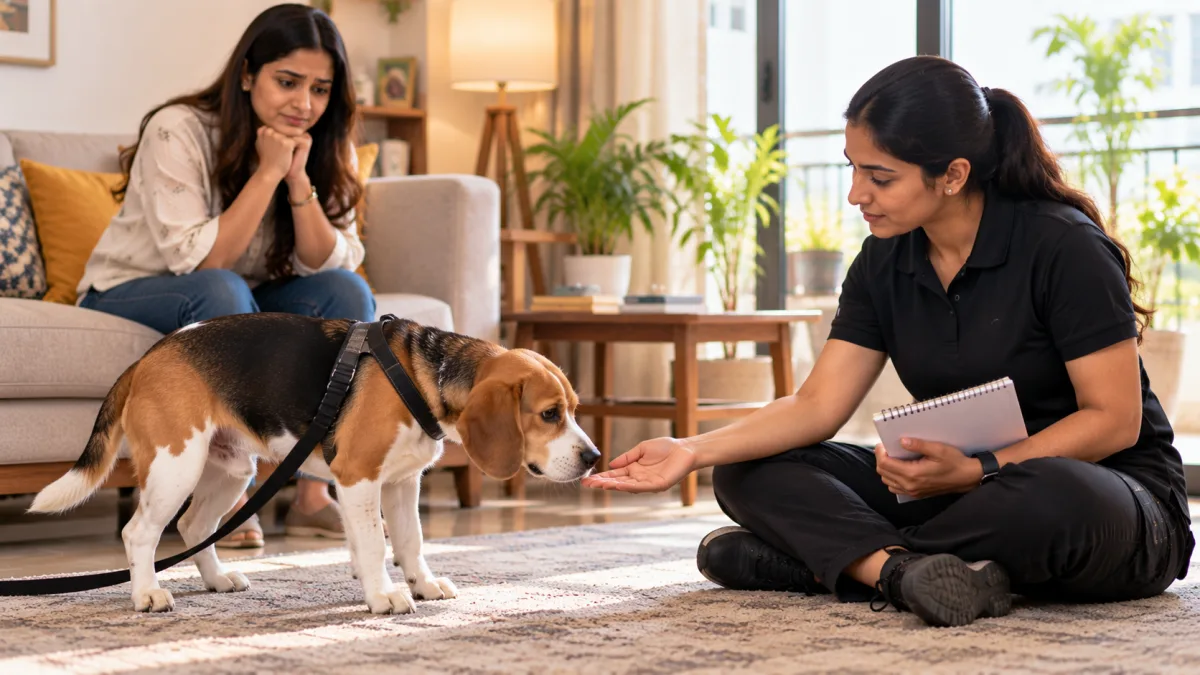
Home sessions can be particularly beneficial when problems occur within the house.
Examples include jumping on guests, barking at the door, chewing furniture, guarding resting areas, or struggling to relax when family members are busy.
A professional can observe the environment and help the household establish consistent routines.
4. Puppy Behavior Guidance
Puppies benefit from early positive learning experiences. Proper guidance can help owners develop good habits before undesirable behaviors become established.
Puppy training may cover socialization, bite inhibition, toilet routines, handling, appropriate play, recall, and relaxation.
Socialization should be safe and gradual. Consult your veterinarian regarding how to balance early learning opportunities with vaccination status and local disease risks.
5. Owner Education
Successful behavior change relies heavily on what occurs between professional sessions.
A competent professional will teach owners how to recognize body language, identify triggers, reinforce desirable behavior, and respond consistently.
The goal is not only to have a dog behave well while the professional is present but to enable the family to maintain progress in their daily lives.
How to Choose the Best Dog Behaviorist Near You
Locating a local professional is only the first step. You must also determine if that individual is suitable for your dog’s needs.
Before making a decision, consider the following factors.
Verify Qualifications and Experience
Inquire about the professional’s education, certifications, hands-on experience, and experience with your dog’s specific problem.
For instance, someone who primarily teaches basic obedience may not be the optimal choice for a dog exhibiting severe fear or a history of biting.
Request relevant case experience and references where applicable.
Look for Reward-Based Methods
Select a professional who can clearly explain how they teach new behaviors and manage undesirable responses.
Reward-based methods use food, toys, praise, play, and other meaningful rewards to reinforce desirable behavior. Management strategies may also be required to prevent unsafe situations.
Be cautious of professionals who rely on intimidation, physical punishment, or promise to eliminate every behavioral problem within a specified number of days.
Read Reviews Carefully
Online reviews can provide insight into other customers’ experiences, communication styles, and training results.
Look for detailed reviews rather than relying solely on star ratings. Check if reviewers mention the same type of behavioral issue your dog is experiencing.
Keep in mind that reviews are only one component of your evaluation and do not guarantee a specific result.
Ask About the Training Plan
Before scheduling an appointment, inquire about how the professional evaluates your dog, how progress is measured, and what level of involvement is required from you.
You should understand the purpose of each exercise, the anticipated timeline, the safety measures involved, and the process for reviewing progress.
Consider Home Visits and Online Consultations
Depending on the provider, you may have the option of home visits, center-based sessions, or online consultations.
Home visits can be advantageous when the behavior occurs in a specific household setting. Online consultations can be useful for discussing routines, reviewing recorded behavior, and providing guidance, however, they may not be appropriate for all severe cases.
Evaluate Communication and Transparency
A competent professional should listen to your concerns, answer questions clearly, explain the limitations of the proposed approach, and recognize when veterinary support or referral is necessary.
Avoid anyone who guarantees a specific outcome without first evaluating your dog and the situation.
How Much Does a Dog Behaviorist Cost?
The cost of a dog behavior consultation varies based on city, professional experience, type of problem, session length, and services included.
At OrigiZnPets, behaviour work starts with a free at-home assessment visit, and our structured Canine Behaviour programme is ₹40,200. See the packages page for what each programme includes.
In India, some providers list basic private training at lower rates than specialized behavioral consultations. Complex cases may require multiple sessions, follow-up support, and coordination with a veterinarian.
Before purchasing a package, request a clear breakdown of:
- Initial evaluation fees.
- Individual session costs.
- Number and duration of sessions.
- Home-visit or travel costs.
- Follow-up consultations.
- Written behavior plans (if provided).
- Any additional veterinary expenses.
Do not choose a professional solely based on price. The quality of the evaluation, safety of the methods used, and suitability of the plan are far more critical than price alone.
What Happens During a Dog Behavior Consultation?
Understanding the process can help you prepare for your first appointment.
Step 1: Initial Discussion
The professional asks about your dog’s age, breed, health status, daily routine, living arrangements, and behavioral history.
Step 2: Behavior Observation
Where safe and feasible, the professional observes the dog’s reactions and identifies situations that may trigger the behavior.
Step 3: Identifying Contributing Factors
The professional considers various explanations including fear, frustration, lack of enrichment, learned responses, environmental stress, or potential medical issues.
Step 4: Developing a Personalized Plan
You receive practical recommendations based on the dog’s needs. These may include management changes, training exercises, environmental modifications, and referral to a veterinarian.
Step 5: Practicing at Home
You consistently implement the plan and monitor relevant changes in your dog’s behavior.
Step 6: Reviewing Progress
The professional assesses what is improving, identifies challenges, and modifies the plan as necessary.
Progress varies from dog to dog. Some everyday skills may improve relatively quickly while long-standing fear, anxiety, or aggression may require ongoing management and professional support.
Tips to Improve Your Dog’s Behavior at Home
Professional guidance becomes more effective when the household maintains a consistent routine.
Establish a Predictable Daily Schedule
Providing regular opportunities for exercise, bathroom breaks, meals, rest, and interaction can help dogs feel more secure.
Adjust the schedule according to your dog’s age, breed, health status, and individual energy level.
Provide Physical and Mental Enrichment
Appropriate walks, sniffing activities, food puzzles, safe toys, and brief training exercises help satisfy a dog’s physical and mental needs.
Do not assume that every high-energy dog simply requires more intense exercise. Some dogs also require help in learning how to relax.
Reinforce Desirable Behavior
When your dog calmly greets someone, walks beside you, or relaxes on a mat, reinforce the behavior when appropriate.
Consistent reinforcement helps your dog understand which actions result in positive outcomes.
Avoid Punishing Fear
A frightened dog requires support, distance from overwhelming triggers, and a carefully structured approach.
Punishing growling or other warning signs may suppress visible communication without addressing the underlying discomfort.
Keep Training Sessions Brief and Consistent
Several brief sessions may be easier for a dog to process than one lengthy session.
Practice in quiet environments first then gradually introduce distractions as your dog gains confidence.
Seek Veterinary Advice When Necessary
Sudden behavioral changes, unusual irritability, confusion, sensitivity to touch, or a new unwillingness to move may be linked to a health issue.
Schedule a veterinary examination rather than assuming that every change is a training issue.
Dog Behaviour Help Near Me in Delhi NCR
If you are searching for a dog behaviorist near me in Delhi NCR, OrigiZnPets trainers work on behaviour problems such as barking, leash reactivity, separation anxiety and fear at home in dog training in Noida, dog training in Greater Noida, dog training in Gurgaon, dog training in Ghaziabad, dog training in Faridabad, dog training in South Delhi, dog training in East Delhi, dog training in West Delhi and dog training in North Delhi. For serious aggression or sudden behaviour changes, we also recommend a vet check, and we will tell you honestly if your dog needs a veterinary behaviour specialist.
OrigiZnPets trainers come to your home across Delhi NCR. The first visit is a free demo session where the trainer assesses your dog and shows you where to start, with no card required. Single sessions start at ₹799, and structured programmes such as Core Training (₹8,699) are listed on our packages page. Every trainer is background-checked and uses reward-based methods only.
The animal behaviourist field covers the science behind how dogs learn and why problem behaviours develop.
Frequently Asked Questions About Dog Behaviorists
1. When should I contact a dog behaviorist?
Consider seeking professional help when your dog’s behavior is persistent, causes distress, interferes with daily activities, or poses safety concerns. Fear, severe anxiety, extreme fear, and separation-related distress warrant special attention.
2. Can a dog behaviorist help an aggressive dog?
A qualified and experienced professional may evaluate aggression triggers and develop a safety-oriented behavior modification plan. The approach depends on the dog’s history, the severity of the behavior exhibited, and the circumstances surrounding it. Veterinary evaluation may also be required.
3. Can older dogs learn better behavior?
Yes. Dogs can continue to learn throughout their lives. Older dogs may require a plan that accounts for their health status, mobility limitations, past experiences, and established habits.
4. How long does dog behavior training take?
There is no universal timeline. The duration depends on the behavior exhibited, its severity level, the dog’s learning history, environmental factors, and the consistency of the training plan implemented.
5. Is a dog trainer sufficient or do I need a behaviorist?
A trainer may be suitable for basic obedience and everyday manners. A professional with specialized experience in behavior is generally a better fit for persistent fear, reactivity, anxiety, or aggression. Severe cases may require veterinary involvement.
6. Can I consult a dog behaviorist online?
Yes, some professionals offer online consultations. These can help with gathering history information, modifying routines, educating owners, and demonstrating certain training exercises. However, online consultations have limitations, especially when a dog poses an immediate safety risk.
What should I prepare before the first consultation?
Gather details regarding your dog’s age, medical history, daily schedule, behavioral concerns exhibited, triggers identified (if any), and past training methods used (if any). If safe to do so, you may also record a short video demonstrating the behavior exhibited. Never intentionally provoke a dog to obtain a video recording.
Conclusion: Finding the Right Dog Behaviorist Near Me
Searching for a dog behaviorist near me is a positive step toward understanding your dog’s needs and developing a stronger bond with your companion.
Whether your dog struggles with excessive barking, leash reactivity, fear, separation anxiety, destructive habits, or aggression, the right professional can help you identify contributing factors and develop an appropriate plan.
Begin by assessing your dog’s specific needs, verifying the professional’s experience, inquiring about training methods used, and establishing realistic expectations. Choose someone who prioritizes your dog’s welfare, communicates clearly, and recognizes when veterinary support is necessary.
Remember that improving behavior is a process. Patience, consistency, appropriate management, and professional guidance can help many dogs develop better habits and feel more comfortable in their daily lives.
Your dog does not need to be perfect. With proper support, you can strive toward a safer, calmer, and more rewarding life together.
Want expert help at home? Book a trainer for a single session from ₹799, or start with a free demo session at your home, no card required.
Related reading: Aggressive Dog Training · Dog Separation Anxiety · Leash Reactivity in Dogs