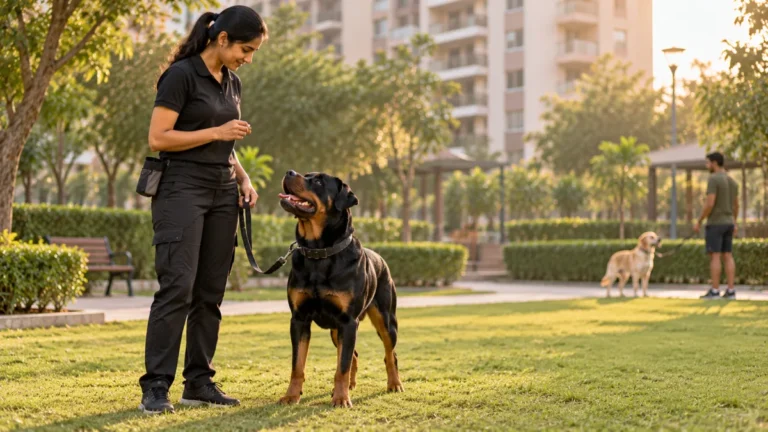
Aggressive Dog Training: Causes, Warning Signs and What to Do


Quick answer
Aggressive dog training starts with finding the cause: fear, pain, guarding food or toys, frustration on the leash or protecting the home. Get a vet check first, keep everyone safe by managing situations that trigger your dog, and then use gradual, reward-based training to change how your dog feels about those triggers. Never punish growling. For bites or serious aggression, work with a professional trainer or behaviourist.
Few things are more stressful for a dog owner than a dog who growls, snaps, lunges or bites. You may be worried about your family, your neighbours or what the society committee will say. The good news is that most aggression in dogs has an understandable cause, and with the right approach, most dogs improve a great deal.
This guide explains why dogs become aggressive, the warning signs to watch for, what to do (and what not to do), and when you need professional help.
Why Are Some Dogs Aggressive?
Aggression is a way of communicating. It almost always means “I’m uncomfortable, back off.” The most common causes are:
Fear
The most common cause by far. A dog who feels trapped or threatened by a stranger, another dog or a loud noise may bark, growl or snap to make the scary thing go away. Rescue and Indie dogs with a hard past are often fearful rather than “dominant”.
Pain or illness
Ear infections, joint pain, dental problems, skin conditions and many other medical issues can make a gentle dog snap, especially when touched. Sudden aggression in a dog who was always friendly is a reason to see the vet first.
Resource guarding
Some dogs guard food, bones, toys, their bed or even a person. Warning signs include freezing, eating faster, growling or showing teeth when someone comes close.
Leash reactivity and frustration
Many dogs who lunge and bark at other dogs on walks are friendly off-leash. The leash stops them greeting or escaping, and the frustration or fear boils over. Read our guide to leash reactivity in dogs.
Territorial and protective behaviour
Barking and lunging at the door, gate or window when visitors, delivery people or guards come by. This is common in Delhi NCR homes with constant foot traffic. Our guide on how to stop dog barking helps with the barking side of this.
Lack of socialisation
Puppies who didn’t meet a variety of people, dogs and places between 3 and 14 weeks of age are more likely to find new things frightening as adults.
Warning Signs Before a Bite
Dogs rarely bite “out of nowhere”. They usually give a ladder of signals first:
- Yawning, lip licking or turning the head away
- Showing the whites of the eyes (“whale eye”)
- Stiff body, freezing or a slow, high wag
- Ears pinned back, tail tucked
- Growling, lifting the lip, showing teeth
- Air snapping
If you see these, calmly give your dog space. Learning to read these signals is one of the most important parts of aggressive dog training.
What to Do: A Step-by-Step Approach
1. Rule out pain
Book a vet check, especially if the aggression is new or happens when your dog is touched.
2. Keep everyone safe
Management comes first. Use baby gates, closed doors or a crate so your dog isn’t put in situations they can’t cope with yet. Walk at quieter times, keep extra distance from other dogs, and feed a resource guarder alone. If there’s any bite risk, start teaching your dog to wear a basket muzzle comfortably, using treats.
3. Find the triggers
Write down every incident: what happened just before, where it was, who was there and how close. Patterns appear quickly, and they tell you what to work on.
4. Change how your dog feels
The core of aggressive dog training is desensitisation and counter-conditioning. Show your dog the trigger at a distance where they notice it but stay calm, then give a high-value treat. Repeat many times, getting closer only very slowly. Over weeks, your dog learns that the scary thing predicts good things.
5. Teach alternative behaviours
Cues like “look at me”, “touch” (nose to hand) and a U-turn on walks give your dog something to do instead of lunging. Strong obedience training makes this much easier.
6. Lower overall stress
Enough exercise, sniffing walks, chew toys, puzzle feeders and good sleep all reduce how easily a dog tips over into aggression.
What Not to Do
- Don’t punish growling. A growl is a warning. Punish it and your dog may learn to bite without warning.
- Don’t use shock, prong or choke collars. Pain and fear make aggression worse over time.
- Don’t “alpha roll” or pin your dog down. This is dangerous and based on outdated ideas about dominance.
- Don’t force interactions. Making a scared dog “say hello” teaches them that growling doesn’t work, so they escalate.
- Don’t leave children alone with a dog who has shown aggression, even for a moment.
Aggression in Puppies
Most puppy biting is normal play and teething, not aggression. Puppies bite hands, feet and clothes while they learn bite inhibition. Redirect to toys, take short breaks when play gets too rough, and make sure your puppy gets enough sleep. Our guide on how to stop puppy biting covers this in detail. Real warning signs in a puppy are stiff freezing over food, growling when handled, or biting that’s getting harder rather than softer as they grow.
When to Get Professional Help
Get help from a qualified trainer or a dog behaviourist straight away if:
- Your dog has bitten and broken skin
- The aggression is towards family members or children
- It’s getting worse or happening more often
- You feel scared of your dog
Some dogs also benefit from a vet’s advice on anxiety medication alongside training. OrigiZnPets trainers work one-on-one at your home across Noida, Gurgaon and Delhi NCR, using reward-based methods only. They see your dog’s triggers where they actually happen and build a safe plan for the whole family. Start with a free demo session, or read more about our dog training at home.
Frequently Asked Questions
Can an aggressive dog be trained?
Yes, most aggressive dogs improve significantly with the right training. The aim is to reduce the dog’s fear or stress and teach better ways to cope. Some dogs will always need some management, such as avoiding certain situations.
How long does aggressive dog training take?
It depends on the cause and how long the behaviour has been going on. Many owners see progress within a few weeks, but lasting change usually takes a few months of consistent work.
Why has my dog suddenly become aggressive?
Sudden aggression is often caused by pain or illness, so start with a vet check. Other causes include a frightening experience, a change at home, or a dog reaching social maturity at 1 to 3 years old.
Should I punish my dog for growling?
No. Growling is a warning that your dog is uncomfortable. Punishing it removes the warning but not the feeling, which makes a bite without warning more likely. Instead, give space and work on the cause.
What is the difference between a dog trainer and a dog behaviourist?
Trainers teach skills and manage everyday behaviour problems. Behaviourists focus on more complex emotional issues like serious aggression and anxiety. Many experienced trainers handle mild to moderate aggression, and work with a vet or behaviourist for severe cases.
Related reading: Leash Reactivity in Dogs · Dog Separation Anxiety · How to Stop Puppy Biting · Dog Obedience Training