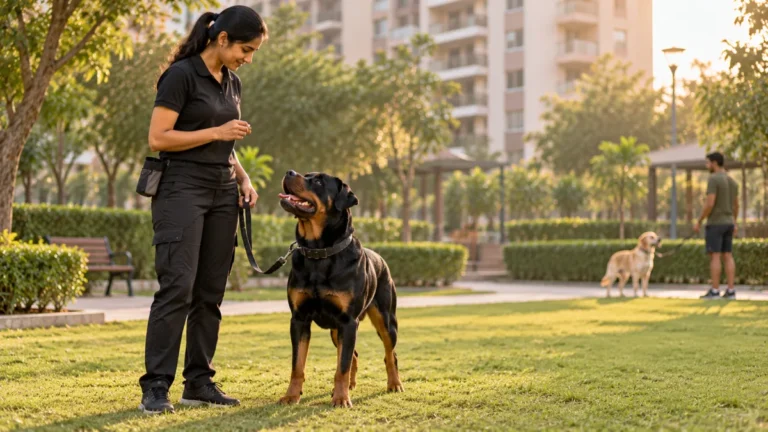
Dog Obedience Training: 7 Commands and a 6-Week Plan

Quick answer
Dog obedience training teaches your dog to respond reliably to a few core cues: name, sit, down, stay, come, leave it and walking on a loose leash. Start with short 5 to 10 minute sessions in a quiet room, reward the right behaviour straight away with food or play, then slowly add distractions and new places. Most dogs learn the basics in 4 to 8 weeks with daily practice.
An obedient dog isn’t a robot that does tricks on command. It’s a dog who understands what you’re asking, wants to do it, and can still listen when there’s a street dog, a delivery person or a lift full of neighbours nearby. That kind of obedience makes everyday life calmer and safer for your dog and for everyone around them.
This guide explains what dog obedience training covers, the seven cues every dog should know, a simple week-by-week plan, and when it’s worth getting a trainer. If you’re starting with a young puppy, our puppy training schedule by age is a good companion to this guide.
What Is Dog Obedience Training?
Obedience training is teaching your dog a shared language: a small set of cues that mean the same thing every time, and the habit of responding to them. Good obedience training today is based on positive reinforcement. You reward the behaviour you want, so your dog chooses to repeat it. Shouting, leash jerks and hitting may stop a behaviour for a moment, but they damage trust and often create fear or aggression.
Obedience is also the foundation for fixing most problem behaviours. A dog who knows a solid “sit” can’t jump on guests at the same time, and a dog with a reliable “come” can be called away from a fight or a busy road.
The 7 Core Obedience Commands
1. Name and attention
Before anything else, your dog needs to look at you when you say their name. Say the name once, and the moment they look, mark it with “yes” and give a treat. This is the cue that makes every other cue possible.
2. Sit
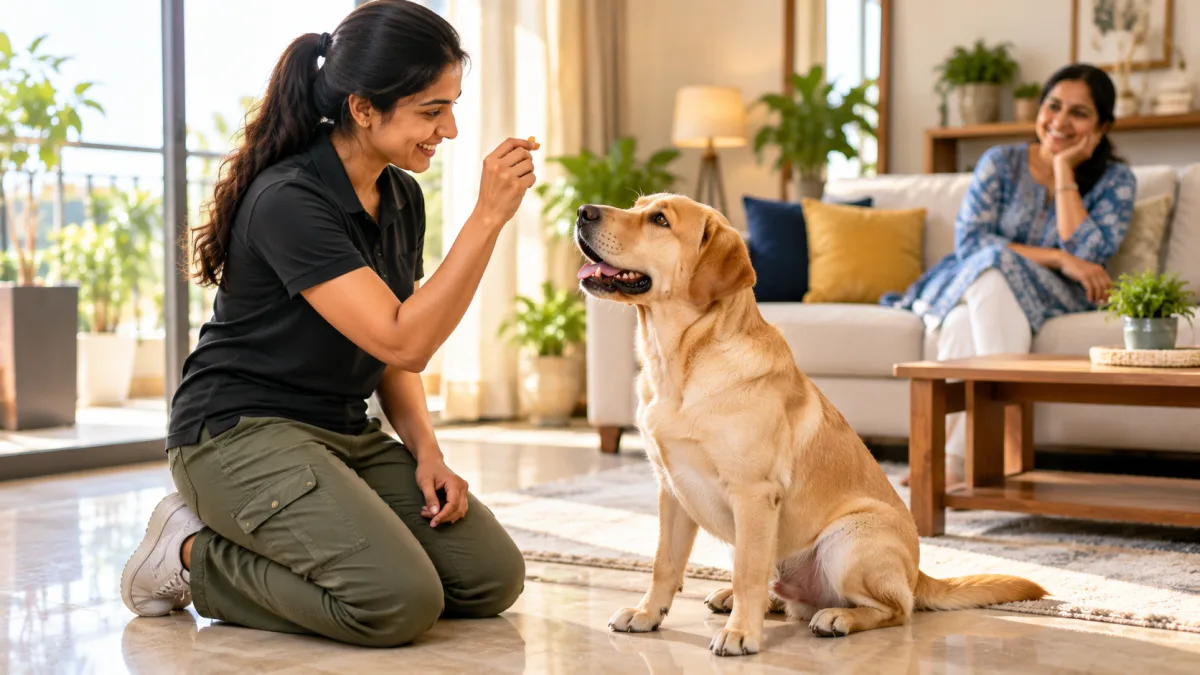
Hold a treat at your dog’s nose and slowly move it up and back. As the head goes up, the bottom goes down. Mark and reward the instant they sit. After a few days, start saying “sit” just before you move your hand. “Sit” is useful for greetings, crossing roads and waiting at the door.
3. Down
From a sit, lower a treat from the nose straight to the floor between the paws, then slowly out along the ground. Reward as soon as the elbows touch the floor. “Down” helps your dog settle at home, at a café or at the vet.
4. Stay
Ask for a sit or down, say “stay”, wait one second, then reward. Build up the three Ds slowly, one at a time: duration (how long), distance (how far you move) and distraction (what’s going on around). Always go back to your dog to reward, and release with a word like “okay”.
5. Come (recall)
Recall is the most important safety cue. Start indoors: say “come” in a happy voice, move backwards, and give a big reward when your dog reaches you. Never call your dog to you for something unpleasant like a bath or ending a game, and never punish them when they arrive, however long they took.
6. Leave it
Hold a treat in a closed fist. Let your dog sniff and lick. The moment they back off, mark and reward with a different treat from your other hand. Over time, practise with items on the floor. “Leave it” stops your dog picking up food scraps, bones and rubbish on Indian streets.
7. Loose-leash walking
Pulling on the leash is the most common complaint we hear. Stop walking whenever the leash goes tight, and reward your dog for being next to you. Change direction often so they learn to follow you. Our guide to leash training covers this step by step.
For more detail on each cue, read our guide to basic dog commands.
A Simple 6-Week Obedience Training Plan
| Week | Focus | Where to practise |
|---|---|---|
| 1 | Name, sit, and rewarding calm behaviour | A quiet room at home |
| 2 | Down, short stays, recall across the room | Different rooms at home |
| 3 | Leave it, longer stays, leash walking indoors | Home and balcony or terrace |
| 4 | Loose-leash walking, sit at doors and lifts | Corridor, lift lobby, quiet road |
| 5 | All cues with mild distractions | Society park at quiet times |
| 6 | All cues with real-life distractions | Busier walks, guests at home |
Practise two or three short sessions a day rather than one long one. End every session on a success, while your dog still wants more.
Tips That Make Obedience Training Work
- Reward fast. Your dog connects the reward with whatever they were doing in the last second or two.
- Use small, soft treats. Tiny pieces of boiled chicken or paneer work well and don’t fill your dog up too quickly.
- Say each cue once. Repeating “sit, sit, sit” teaches your dog that the first two don’t matter.
- Get the whole family on board. Everyone at home, including house help, should use the same words and rules.
- Train before meals, not after. A slightly hungry dog is a more motivated learner.
- Burn energy first. A short walk or play session before training helps high-energy dogs focus.
Common Obedience Training Mistakes
- Moving too fast. If your dog gets it wrong twice in a row, make it easier.
- Only training at home. Dogs don’t generalise well. A sit in the living room isn’t yet a sit in the park.
- Punishing mistakes. It makes dogs anxious and less willing to try. Reward what you want instead.
- Stopping rewards too early. Fade treats slowly, and keep rewarding the hard stuff, like recall, for life.
Obedience Training Classes vs Training at Home
Group obedience classes are sociable, but they’re held in one place with lots of other dogs, and your dog’s real problems, like barking at the doorbell or pulling towards the society gate, happen somewhere else. One-on-one dog obedience training at home works on those exact situations, with the whole family learning together. Read more about our dog training at home programs.
When to Get a Professional Trainer
Many dogs learn the basics with patient owners. It’s worth calling a trainer if:
- You’ve practised for a few weeks and progress has stalled
- Your dog is very strong, very fast or very distracted outdoors
- There’s growling, snapping or lunging (see our guide to aggressive dog training)
- Different family members are getting different results
OrigiZnPets trainers visit homes across Noida, Gurgaon and Delhi NCR, and the first visit is a free demo session where the trainer assesses your dog and shows you where to start.
Looking for a trainer? Our checklist on how to choose a dog trainer explains what to ask before you book.
Frequently Asked Questions
What age should obedience training start?
Puppies can start simple obedience training from 8 weeks old, as soon as they come home. Older dogs can learn at any age; they may just need a little more patience.
How long does dog obedience training take?
Most dogs learn the basic cues in 4 to 8 weeks with short daily practice. Making them reliable around strong distractions takes a few months of practice in real life.
How many times a day should I train my dog?
Two or three sessions of 5 to 10 minutes a day work better than one long session. You can also fit training into daily life, like asking for a sit before meals and walks.
Is positive reinforcement enough for a stubborn dog?
Yes. “Stubborn” usually means the reward isn’t valuable enough, the task is too hard or there are too many distractions. Use better treats, make it easier and practise somewhere quieter.
What are the basic obedience commands for dogs?
The core set is name, sit, down, stay, come, leave it and loose-leash walking. With these, most everyday situations become much easier to manage.
Related reading: Dog Training Guide: 6 Steps to a Happy, Well-Behaved Dog · Basic Dog Commands · Puppy Training Schedule · House Training a Puppy · How to Stop Puppy Biting