

Pug Health Issues: 5 Warning Signs Every Owner Should Know
Pug health issues every owner should recognise early: 5 warning signs tied to this breed's brachycephalic build, and what actually helps.

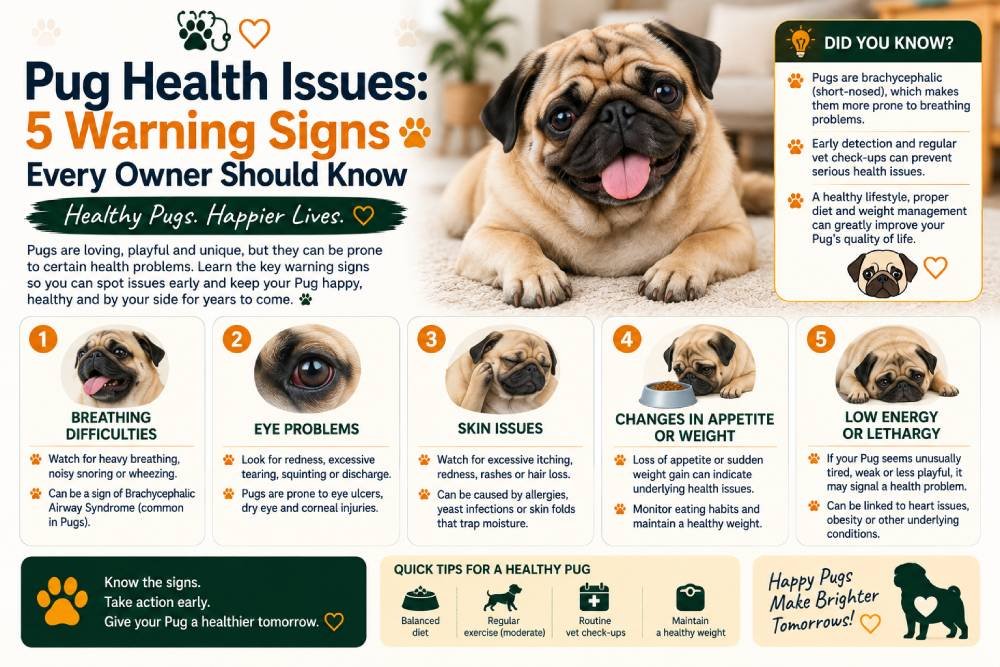
Pug health issues are largely tied to one root cause: this breed’s short, flat face, which looks appealing but comes with real structural airway challenges most first-time owners underestimate. Understanding this connection changes how you read almost every symptom a Pug shows.
Five warning signs tied to common pug health issues
- Loud snoring or noisy breathing at rest, which owners often assume is just “normal Pug sounds” but can indicate a narrowed airway needing veterinary attention.
- Struggling to catch their breath after mild exercise, even a short walk — this breed’s airway anatomy makes breathing genuinely harder work than in longer-muzzled dogs.
- Reluctance to exercise, especially in heat, since overheating happens faster in this breed due to inefficient panting, and it’s worth treating any sudden drop in willingness to walk as a signal rather than simple laziness.
- Frequent regurgitation or vomiting after meals, linked to a tendency toward swallowing air during eating and gastrointestinal issues associated with their airway structure, and worth mentioning to a vet if it happens regularly rather than occasionally.
- Visible eye irritation or excessive tearing, since their prominent eyes are more exposed to injury and debris than in breeds with a longer muzzle.
What sounds like a Pug being “just a Pug” is often a sign worth a vet’s attention — this breed’s normal baseline already includes some struggle that owners of other breeds would find alarming.
What’s actually happening with pug health issues around breathing
Brachycephalic Obstructive Airway Syndrome, or BOAS, affects the vast majority of Pugs to some degree. According to UC Davis School of Veterinary Medicine’s guidance on brachycephalic breeds, their head shape makes it genuinely harder to pant enough to cool off in hot, humid weather, especially during exercise — which is exactly the climate Delhi NCR offers for a large part of the year, making heat-conscious routine planning a genuine necessity rather than an extra precaution.
Weight management matters more for pugs than most breeds
Excess weight worsens nearly every brachycephalic-related issue, since additional body mass increases the respiratory effort already required by their airway structure. Careful portion control isn’t just a general health tip for this breed — it directly affects how well they breathe.
What a Pug-appropriate exercise routine looks like
Short, frequent walks during cooler hours, with close attention to breathing effort throughout, work far better for this breed than one longer daily walk. Stopping the moment breathing becomes laboured, rather than pushing through to finish a planned route, is the safest default.
Our training and walking services plan Pug-appropriate walk length and timing around this breed’s actual airway limitations. Book a free demo to build a safe routine for your Pug.
When breathing sounds cross from “normal” to “concerning”
Every Pug has some baseline noisiness, which makes it genuinely hard for new owners to know when something’s changed. A sudden increase in effort, a bluish tinge to the gums or tongue, or breathing that doesn’t settle within a few minutes of rest are all signs that need a vet visit immediately rather than a wait-and-see approach. Trust a sudden change over a comparison to what’s “always been normal” for this breed generally.
Skin fold care, a lesser-known pug health issue
The facial wrinkles that give Pugs their appearance also trap moisture and debris, making skin infections in these folds a common and preventable issue. Regular cleaning with a vet-approved wipe, and making sure folds are fully dry afterward, prevents most of these infections before they start, and it’s worth building into the same routine as the daily eye check. Owners who skip this often only discover the problem once an odor or redness has already developed.