

Dog Vomiting: When Is It Normal and When Should You See a Vet?

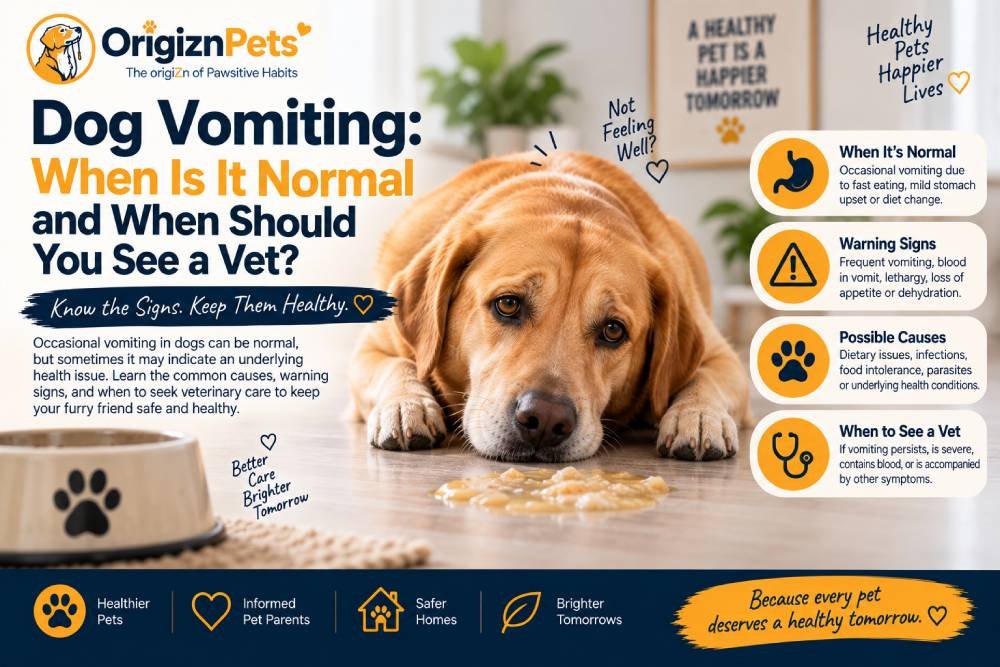
Dog vomiting can be worrying for any pet parent. When your dog suddenly throws up, it is natural to wonder whether they simply ate something unusual or whether there could be a more serious reason behind it.
Vomiting can happen for many different reasons. A single episode in an otherwise healthy and active dog may not always indicate a serious problem. However, repeated vomiting, vomiting accompanied by other symptoms, or a noticeable change in your dog’s behaviour should never be ignored.
In this guide, we will discuss common dog vomiting causes, what pet parents should observe at home, and the warning signs that mean it may be time to contact a veterinarian.
Why Is My Dog Vomiting?
If you are asking, why is my dog vomiting, there can be several possible explanations. Vomiting is a symptom rather than a specific disease, which means the underlying cause can range from a temporary stomach upset to a condition requiring veterinary treatment.
Dogs may vomit after eating something that does not agree with them, eating too quickly, changing their food suddenly, or consuming something they should not have eaten. Vomiting can also occur with infections, parasites, toxins, foreign objects, gastrointestinal problems, pancreatitis, and other medical conditions.
Because there are so many possible reasons, it is important to consider how often your dog is vomiting and whether any other symptoms are present.
Common Dog Vomiting Causes
There are many dog vomiting causes, and the seriousness can vary depending on your dog’s age, health, symptoms, and circumstances.
Some possible causes include:
- Eating spoiled or unsuitable food
- Eating garbage or table scraps
- Sudden changes in diet
- Eating too quickly
- Dietary intolerance
- Intestinal parasites
- Viral or bacterial infections
- Ingestion of toxic substances
- Swallowing a foreign object
- Pancreatitis
- Gastrointestinal problems
- Some liver or kidney conditions
These causes can produce similar symptoms, which is why persistent vomiting should be assessed by a veterinarian instead of being diagnosed based only on what the vomit looks like.
Dog Vomiting After Eating
Dog vomiting after eating can happen for several reasons. Some dogs eat their food very quickly, while others may react to a sudden dietary change or something unsuitable that they consumed.
Pay attention to what happens before and after your dog vomits. Think about what they ate recently, how quickly they ate, and whether the food appeared undigested.
If vomiting happens repeatedly after meals, your dog refuses food, appears uncomfortable, becomes unusually tired, or develops other symptoms, contact your veterinarian.
Vomiting or Regurgitation?
It is useful to understand the difference between vomiting and regurgitation. Vomiting usually involves active abdominal effort, while regurgitation is generally more passive and can happen shortly after eating or drinking.
If your dog repeatedly brings food back up without the usual signs of vomiting, tell your veterinarian. This distinction can provide useful information when determining what may be causing the problem.
You can learn more about vomiting and regurgitation in dogs from this
veterinary guide to vomiting in dogs
.
Dog Vomiting and Diarrhea
Dog vomiting and diarrhea occurring together can be more concerning than an isolated episode of vomiting.
Both vomiting and diarrhea can result in fluid loss. If your dog is repeatedly vomiting, has frequent diarrhea, or cannot keep water down, dehydration can become a concern.
Watch your dog closely for changes such as:
- Unusual tiredness or weakness
- Loss of appetite
- Repeated vomiting
- Frequent diarrhea
- Difficulty keeping water down
- Signs of abdominal discomfort
- Blood in vomit or stool
If vomiting and diarrhea continue or your dog appears unwell, contact your veterinarian for appropriate advice.
What Does Dog Vomit Look Like?
Although examining vomit may not be pleasant, its appearance can provide useful information for your veterinarian. You may notice food, foam, bile, grass, blood, worms, or pieces of a foreign object.
The appearance alone cannot tell you exactly what is wrong, but taking a photograph or describing what you observed can help your veterinarian understand the situation.
Yellow or Green Vomit
Yellow or green material may contain bile. This can sometimes occur when the stomach is empty, but bile-containing vomit can also occur with gastrointestinal problems.
If your dog repeatedly vomits yellow or green material, particularly when other symptoms are present, speak with your veterinarian.
Blood in Vomit
Blood in vomit should be taken seriously. It may appear bright red or look darker and resemble coffee grounds.
If you notice blood in your dog’s vomit, contact a veterinarian promptly for professional assessment.
Foreign Material in Vomit
If you find pieces of toys, plastic, cloth, bones, or other foreign material in your dog’s vomit, contact your veterinarian.
Dogs can swallow objects that may become lodged in the digestive tract. Even if part of an object has been vomited up, do not assume that the entire object has passed safely.
Puppy Vomiting: Should You Be Concerned?
Puppy vomiting deserves particular attention because puppies can become unwell quickly when they are repeatedly vomiting or experiencing other symptoms.
If a puppy vomits once but remains alert, active, and otherwise normal, monitor them closely and contact your veterinarian if you are concerned.
However, repeated vomiting, weakness, loss of appetite, diarrhea, dehydration, or unusual behaviour should prompt veterinary advice.
Young puppies can be vulnerable to infections and fluid loss, so pet parents should avoid assuming that repeated vomiting is simply a minor stomach problem.
Dog Vomiting at Night
Dog vomiting at night can have several possible causes. Some dogs may vomit when their stomach is empty, while vomiting during the night can also occur because of dietary issues or other gastrointestinal problems.
The timing of vomiting alone cannot determine the underlying cause. Pay attention to how often it happens and whether your dog also experiences changes in appetite, stool, energy levels, weight, or behaviour.
If your dog repeatedly vomits during the night or these episodes are becoming more frequent, contact your veterinarian for advice.
When Is Dog Vomiting an Emergency?
Not every episode of dog vomiting requires emergency treatment. However, certain warning signs should receive prompt veterinary attention.
Contact a veterinarian promptly if your dog has:
- Frequent or severe vomiting
- Blood in the vomit
- Repeated vomiting with diarrhea
- Severe weakness or lethargy
- Loss of appetite with other concerning symptoms
- Difficulty keeping water down
- Signs of dehydration
- Significant abdominal pain
- A swollen or bloated abdomen
- Repeated attempts to vomit without producing anything
- Possible exposure to a toxic substance
- Possible ingestion of a foreign object
- Difficulty standing or walking
Repeated unsuccessful attempts to vomit, especially when accompanied by abdominal swelling or significant restlessness, can be an emergency. In such situations, seek immediate veterinary attention.
Can Dog Vomiting Cause Dehydration?
Repeated vomiting can cause the loss of fluids and electrolytes. The risk can become greater if your dog is also experiencing diarrhea or is unable to drink and keep water down.
Some possible signs of dehydration include:
- Low energy
- Dry or sticky gums
- Reduced appetite
- Weakness
- Thick saliva
- Unusual tiredness
If you suspect that your dog is becoming dehydrated, contact your veterinarian rather than attempting to manage severe dehydration at home.
What Should You Do If Your Dog Vomits?
If your dog vomits once and otherwise appears completely normal, stay calm and observe them closely for additional symptoms.
Try to keep track of:
- When the vomiting happened
- How many times your dog vomited
- What the vomit looked like
- What your dog ate recently
- Whether your dog can keep water down
- Whether diarrhea is present
- Changes in energy or behaviour
This information can be useful if you need to speak with your veterinarian.
Avoid giving your dog human medication unless a veterinarian specifically instructs you to do so. Some medicines that are suitable for people may not be safe for dogs.
Should You Change Your Dog’s Food?
Sometimes vomiting can occur after a sudden change in diet. If you recently changed your dog’s food, make a note of when the change happened and whether the vomiting started afterward.
However, don’t assume that food is always the cause. Vomiting can have many different underlying causes, so repeated symptoms should be discussed with a veterinarian.
If you are also reviewing your dog’s daily nutrition, you can read our guide to
the best dog food for Indian dogs
for general information about choosing an appropriate diet.
What Information Should You Give Your Veterinarian?
If you need veterinary care for dog vomiting, providing detailed information can help your veterinarian understand the situation.
Try to tell your veterinarian:
- Your dog’s age
- Your dog’s approximate weight
- When the vomiting started
- How many times your dog has vomited
- What the vomit looked like
- What your dog ate recently
- Whether your dog may have swallowed something unusual
- Whether diarrhea is also present
- Whether your dog is eating and drinking normally
- Any medications or supplements your dog receives
- Any existing health conditions
If possible, take a photograph of the vomit. This may help your veterinarian understand what you observed.
How Do Veterinarians Find the Cause?
The tests recommended for a vomiting dog depend on the symptoms, medical history, physical examination, and severity of the problem.
Depending on the situation, a veterinarian may recommend blood tests, urine testing, X-rays, ultrasound, or other diagnostic tests.
These investigations can help veterinarians look for possible gastrointestinal problems, infections, parasites, foreign objects, pancreatitis, or other medical conditions.
When to See a Vet for Dog Vomiting
Knowing when to see a vet for dog vomiting is important for every pet parent. If vomiting is repeated, severe, accompanied by other concerning symptoms, or your dog simply does not seem like themselves, professional veterinary advice is appropriate.
You should be particularly cautious with puppies, senior dogs, dogs with existing medical conditions, and dogs that may have swallowed a foreign object or toxic substance.
When you are unsure about the seriousness of your dog’s symptoms, contacting a veterinarian can help you determine the safest next step.
How Can Pet Parents Reduce the Risk of Digestive Problems?
Not every episode of vomiting can be prevented, but some everyday habits can support better digestive health and safer pet care.
- Keep your dog’s diet consistent unless a change is necessary.
- Introduce new food gradually.
- Prevent access to garbage and potentially harmful substances.
- Keep small toys and unsafe objects away from dogs that chew or swallow things.
- Avoid giving foods that are known to be unsafe for dogs.
- Maintain an appropriate feeding routine.
- Keep up with regular veterinary care.
Good nutrition and responsible pet care can help, but they cannot eliminate every possible cause of vomiting.
Final Thoughts
Dog vomiting can have many different causes, ranging from a temporary stomach upset to a medical condition that requires veterinary treatment.
A single episode in an otherwise healthy dog may not always indicate a serious problem, but repeated vomiting or vomiting accompanied by diarrhea, weakness, blood, abdominal pain, dehydration, or other warning signs should not be ignored.
If you are wondering when to see a vet for dog vomiting, remember that your dog’s overall condition matters just as much as the vomiting itself. When in doubt, contacting your veterinarian is the safest way to determine what your dog needs.
At OrigiznPets, we believe that informed pet parents can recognise important changes in their dog’s health and seek professional help when needed. Regular veterinary care, appropriate nutrition, exercise, grooming, training, and attentive observation all contribute to responsible pet care.
Helpful Resources
For additional veterinary information, you can read this
VCA guide to vomiting in dogs
.
For information about intestinal blockages and swallowed objects, visit this
guide to intestinal blockage in dogs
.