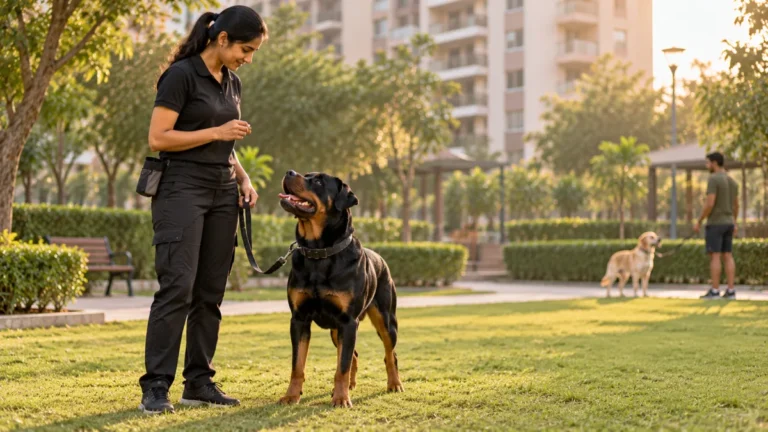
Dog Obedience Commands: 7 Essential Cues and a Simple Daily Routine


Quick answer
The essential dog obedience commands are sit, stay, come, heel or loose-leash walking, leave it, drop it and down. Teach each one in short, reward-based sessions at home first, then practise with more distractions until your dog responds anywhere.
Why Dog Obedience Commands Matter
Dog obedience training is a critical component of being a responsible pet owner. It will teach your dog how to behave appropriately in your home, in public places, and around other people and animals. A well-trained dog is typically much easier to manage, more confident in various settings, and better equipped to handle everyday situations. Obedience training can help develop good habits and strengthen the relationship between you and your pet, regardless of whether you have a puppy or an adult dog.
Many dog owners believe that training is only required when a dog exhibits behavioural issues. However, obedience training is far more than simply correcting undesirable behaviour. It teaches dogs essential commands, improves communication, provides mental stimulation, and helps them understand what is expected of them.
From learning basic obedience commands such as sit, stay, come, and heel to developing good leash manners and reliable recall, dog obedience training lays the foundation for a well-adjusted companion. With patience, consistency, and positive reinforcement, dogs of all breeds, ages, and temperaments can learn valuable life skills.
In this comprehensive guide, we will discuss the importance of dog obedience training, the best age to begin, essential commands, effective training techniques, common mistakes, and the benefits of professional dog training services.
What Is Dog Obedience Training?
Dog obedience training is the process of teaching dogs to respond to verbal cues, hand signals, and everyday instructions. The primary goal is to help dogs develop good manners and respond reliably to their owners in different situations.
Obedience training can encompass basic obedience commands, leash training, impulse control, socialization, and advanced behavioural skills. It also teaches dogs how to remain calm in the presence of distractions and respond appropriately to unfamiliar environments.
For instance, a dog that understands the “stay” command can remain in a safe position while its owner opens the front door. A dog that responds to “come” can return to its handler when called, thereby reducing the risk of potentially dangerous situations.
Obedience training is not about scaring, dominating, or punishing a dog. Instead, effective training is based on clear communication, appropriate rewards, repetition, and establishing trust between the dog and its owner.
Why Is Dog Obedience Training Important?
Dog obedience training provides numerous advantages for both dogs and their families. It creates a safer home environment while making everyday activities easier and more enjoyable.
Improves Behaviour at Home
Dogs may develop undesirable habits such as jumping on guests, excessive barking, chewing furniture, pulling household items, or begging for food. Proper training allows owners to teach alternative behaviours and establish consistent household rules.
For example, teaching a dog to sit when greeting visitors can help reduce jumping. Providing suitable chew toys and rewarding appropriate chewing can also help protect furniture and other household belongings.
Strengthens the Bond Between Dogs and Owners
Training provides an opportunity for owners and dogs to interact positively. Short, enjoyable sessions encourage dogs to pay attention to their handlers and help owners understand their pets’ needs.
When dogs receive consistent guidance and rewards, they can learn to trust their owners and feel more comfortable following instructions.
Enhances Safety
Safety is one of the most compelling reasons to invest in dog obedience training. Obedience commands such as “come,” “stay,” “leave it,” and “drop it” can help owners manage potentially dangerous situations.
A reliable recall may help prevent a dog from approaching a busy road or running toward an unfamiliar animal. However, no command is entirely reliable in every situation, so dogs should always be on a leash or within secure boundaries whenever appropriate.
Encourages Better Social Behaviour
Dogs regularly encounter people, other dogs, vehicles, noises, and unfamiliar environments. Training can help them learn to remain calm and respond appropriately in these situations.
Controlled exposure to new experiences, combined with rewards and sufficient distance from stressful triggers, can help dogs build confidence. Socialization should always be positive and should never involve forcing a fearful dog into uncomfortable interactions.
Provides Mental Stimulation
Dogs require mental enrichment as well as physical exercise. Learning new commands, solving simple problems, and practicing familiar skills provide them with opportunities to use their brains.
Regular training sessions can help keep dogs engaged and provide a constructive outlet for their energy. This is particularly beneficial for intelligent, active breeds that thrive on structured activities.
What Is the Best Age to Start Dog Obedience Training?
Dog obedience training can start as soon as a puppy arrives home, provided the exercises are appropriate for its age and physical capabilities. For many puppies, this occurs at approximately eight weeks of age.
Early training should focus on fundamental skills such as responding to their name, following a treat, sitting, coming when called, becoming accustomed to a collar or harness, and developing appropriate toilet habits.
Puppies also benefit from positive socialization during their early developmental phase. Owners should consult their veterinarian regarding safe exposure to other dogs and public environments based on vaccination status and local disease risks.
Adult dogs can also learn obedience skills. Even if a dog has never received formal training, it is possible to teach new commands and improve everyday behaviour through gradual, consistent practice.
Senior dogs may also benefit from training; however, sessions should be modified to accommodate their mobility, hearing, vision, energy levels, and health requirements.
The most crucial factors are not simply age or breed but the dog’s individual needs, learning history, environment, and the consistency of its training.
Essential Dog Obedience Commands Every Dog Should Learn
Basic obedience commands serve as the foundation of good behaviour. Owners should teach each command incrementally and practice it in various environments once the dog understands it in a quiet environment.
Sit Command
The “sit” command instructs a dog to place its hindquarters on the ground. It is useful when greeting visitors, waiting before meals, or preparing for a walk.
To teach this command, hold a small treat near your dog’s nose and slowly elevate it upward and slightly backward. As the dog follows the treat, it may naturally sit. Immediately reward the behaviour and introduce the verbal cue “sit” as the dog begins to understand the action.
Practice several short repetitions and avoid forcing the dog’s body into position.
Stay Command
The “stay” command instructs a dog to remain in one position until released. It can be useful near doors, during grooming, or while waiting in a safe location.
Ask your dog to sit or lie down, give the cue “stay,” and initially wait only a second or two. Reward the dog for remaining in position. Gradually increase the duration and distance, altering only one variable at a time.
If the dog gets up, make the exercise easier and try again without scolding.
- Come Command
The “come” command, also referred to as recall, encourages a dog to return to its owner when called.
Begin indoors or in a secure, low-distraction area. Say the dog’s name followed by “come” in a cheerful voice. When the dog approaches, reward it with a treat, praise, or a favorite toy.
As the dog improves, practice in different secure environments and gradually introduce distractions. A long training line can provide additional control outdoors. Avoid calling your dog to punish it, and never assume that recall is reliable enough to warrant off-leash access near traffic or other hazards.
Heel and Loose-Leash Walking
Leash training helps dogs walk comfortably without constantly pulling their owners. The “heel” command typically refers to walking close to the handler, while loose-leash walking permits a more relaxed position as long as the leash remains slack.
Begin in a quiet location and reward your dog for remaining near you. If the dog pulls, calmly stop or change direction when safe, then reward it when the leash becomes loose.
Consistent practice makes walks more manageable and helps dogs learn to pay attention to their handlers.
Leave It
The “leave it” command instructs a dog to move away from an object or refrain from picking something up.
Begin with a low-value object that is safely out of reach. Reward your dog for redirecting its attention away from the object and toward you. Gradually practice with different objects and distractions.
This command can be particularly useful when a dog encounters food scraps, garbage, or other potentially harmful items during a walk. However, it should not replace supervision or careful management around dangerous substances.
Drop It
The “drop it” command encourages a dog to release an object from its mouth.
Begin with a suitable toy and offer a treat or another desirable toy as an exchange. When your dog releases the original toy, mark the behaviour with praise and provide the reward.
Practicing this skill helps owners manage play safely and may prevent conflicts over objects. Avoid chasing the dog or forcibly grabbing items unless an immediate safety concern necessitates intervention.
Down Command
The “down” command instructs a dog to lie down. It can help encourage calm behaviour in appropriate situations.
Guide your dog from a sitting position by moving a treat toward the floor and slightly forward. Reward the dog when its elbows and body touch the ground.
Keep the exercise comfortable, particularly for puppies and dogs with joint pain or mobility problems.
How to Teach Dog Obedience Commands Effectively
The appropriate training method can make learning more enjoyable and improve communication between dogs and owners.
Positive Reinforcement
Positive reinforcement involves rewarding a dog for performing a desired behaviour. Rewards may include treats, toys, praise, play, or access to something the dog enjoys.
For example, if your dog sits calmly before receiving its food bowl, reward that behaviour by placing the bowl down. Over time, the dog can learn that sitting calmly is an effective method for obtaining what it desires.
Rewards should be meaningful to the individual dog, and their timing should be as immediate as possible after the desired action.
Consistency in Commands
Consistency is vital for successful obedience training. If one family member uses “down” to mean lie down while another uses the same word to mean get off the sofa, the dog may become confused.
Agree on simple cues and household rules. Everyone involved in the dog’s care should follow the same training approach whenever possible.
Short and Regular Sessions
Dogs often learn more effectively through brief, focused sessions than through long, repetitive exercises.
For many dogs, sessions lasting approximately five to ten minutes are a useful starting point. Some dogs may benefit from even shorter sessions, depending on their age, attention span, and temperament.
Several short sessions throughout the day can help reinforce learning without causing frustration or fatigue.
Gradual Introduction of Distractions
A dog that responds to “sit” in a quiet room may struggle to respond in a busy park. This is normal because different environments introduce new distractions.
Start with easy exercises and gradually increase the challenge. Practice first at home, then in a quiet outdoor area, and eventually in busier environments when the dog is ready.
Reduce the difficulty if your dog becomes distracted, anxious, or unable to respond.
Patience and Positive Communication
Every dog learns at a different pace. Some dogs understand basic obedience commands quickly, while others require more repetition or a different reward.
Avoid shouting, hitting, intimidation, or punishment-based techniques. These methods can increase fear and stress and may damage trust. If a dog struggles repeatedly, reassess the environment, reward, timing, and difficulty of the exercise.
Common Mistakes When Teaching Dog Obedience Commands
Even well-intentioned owners can make mistakes that impede their dog’s progress.
Expecting immediate results: Training requires practice. Allow your dog sufficient time to understand each command before increasing the difficulty.
Using inconsistent cues: Repeatedly changing words or gestures can make learning more difficult. Use clear, consistent signals.
Training for too long: Long sessions can lead to boredom and frustration. Keep training short and engaging.
Punishing mistakes: Punishment may suppress behaviour without teaching the dog what to do instead. Reward an appropriate alternative and adjust the situation to prevent repeated mistakes.
Ignoring unwanted behaviour patterns: Barking, jumping, pulling, or destructive behaviour may be influenced by fear, excitement, frustration, insufficient enrichment, or health problems. Understanding the underlying cause is crucial.
Expecting perfect obedience everywhere: Dogs need to practice skills in different environments. A command learned at home may require additional reinforcement outdoors.
Neglecting daily practice: Occasional training is less effective than regular, consistent reinforcement. Incorporate simple commands into daily routines.
How Long Does Dog Obedience Training Take?
The time required to train a dog depends on several variables, including age, temperament, previous experiences, the complexity of the skill, and the consistency of practice.
Some dogs may begin responding to simple cues within a few sessions. Reliable performance around distractions typically takes weeks or months of ongoing training.
Basic obedience programs generally focus on skills such as sitting, staying, recall, leash manners, and impulse control. Advanced training may require additional time and more specialized instruction.
It is important to understand that training is an ongoing process rather than a one-time activity. Even after learning a command, dogs benefit from regular practice to maintain their skills.
Owners should establish realistic goals, monitor progress, and celebrate small improvements instead of expecting perfection immediately.
Should You Choose Professional Dog Obedience Training?
Professional dog obedience training can be advantageous when owners require structured guidance, wish to teach multiple commands, or are experiencing specific behavioural challenges.
A qualified trainer can assess the dog’s behaviour, demonstrate effective techniques, and help owners develop a training plan tailored to their pet.
Professional training may be particularly beneficial for dogs that pull excessively on the leash, jump on visitors, struggle with impulse control, or have difficulty responding in the presence of distractions.
When selecting a trainer, choose someone who uses reward-based methods, clearly explains the training process, and involves the owner in practical exercises. Inquire about the trainer’s qualifications, experience, approach to behavioural problems, and methods for measuring progress.
For dogs exhibiting severe aggression, extreme fear, or behaviour that poses a risk of injury, consult a veterinarian and seek help from a suitably qualified behaviour professional. Some problems may have medical causes or require specialized behavioural support.
Professional training should not be viewed as a substitute for the owner’s involvement. Dogs require consistent practice at home to apply their learning to daily life.
Dog Obedience Training at Home: A Simple Daily Routine
A practical home routine can help owners establish consistency without complicating training.
Morning Spend five minutes practicing your dog’s name response, sit, and stay before breakfast or a walk.
During the day Reinforce calm behaviour, appropriate greetings, and loose-leash walking during daily activities.
Afternoon Practice recall or leave-it exercises in a secure area with minimal distractions.
Evening Spend a few minutes reviewing familiar commands and conclude with an enjoyable game or enrichment activity.
This routine can be modified to accommodate your dog’s age, energy level, health, and schedule. Puppies may require more frequent toilet breaks and very short learning sessions, while older dogs may prefer gentler exercises.
Remember that training should be enjoyable. If your dog becomes tired, frustrated, or uncomfortable, take a break and resume the exercise later.
Benefits of Dog Obedience Training for Different Breeds
Dogs vary in size, temperament, energy levels, and learning preferences. Consequently, training should be tailored to the individual dog rather than based solely on breed.
Active breeds may benefit from additional mental challenges and structured activities. Easily distracted dogs may require quieter training environments and higher-value rewards. Small dogs require the same thoughtful training and clear boundaries as large dogs.
Rescue dogs and adult dogs with unknown histories may require additional time to establish trust and adjust to a new home. Training should proceed at a comfortable pace, with particular attention paid to signs of fear or stress.
Regardless of breed, every dog can benefit from learning appropriate household manners, safe walking skills, and basic communication cues.
Keeping Dog Obedience Commands Reliable for Life
Once a dog learns its basic obedience commands, owners should continue practicing them regularly. Use familiar cues during walks, mealtimes, play, grooming, and other daily activities.
Reward good behaviour unpredictably over time while continuing to provide reinforcement that motivates the dog. Periodically revisit easier training exercises to maintain confidence and accuracy.
It is also important to recognize that behaviour can change due to stress, aging, environmental changes, or health problems. If a previously reliable dog suddenly stops responding or exhibits unusual behaviour, consult a veterinarian where appropriate rather than assuming it is simply being disobedient.
Training success should be evaluated not only by how quickly a dog follows commands but also by its confidence, comfort, ability to cope with daily situations, and relationship with its owner.
Dog obedience training is one of the most valuable investments a pet owner can make in a dog’s long-term well-being. It enhances communication, promotes good manners, ensures safety, and strengthens the bond between dogs and their families.
By teaching essential obedience commands such as sit, stay, come, heel, leave it, and drop it, owners can help their dogs in successfully navigating daily situations. Consistent practice, positive reinforcement, patience, and realistic expectations are the cornerstones of effective training.
Whether you are raising a young puppy, helping an adult dog in learning new skills, or addressing specific behavioural challenges, it is never too late to begin establishing better habits.
For owners seeking additional guidance, professional dog obedience training can provide personalized instruction and a structured learning plan. With the appropriate approach and regular practice, you can help your dog become a more confident, responsive, and well-mannered companion.
A well-trained dog is not merely a dog that follows commands. It is a dog that has learned how to live safely and comfortably alongside its family, resulting in a happier experience for everyone.
Want expert help at home? Book a trainer for a single session from ₹799, or start with a free demo session at your home, no card required.
Help With Dog Obedience Commands in Delhi NCR
If your dog knows the dog obedience commands at home but ignores them outside, a trainer can help close the gap. OrigiZnPets trains in dog training in Noida, dog training in Greater Noida, dog training in Gurgaon, dog training in Ghaziabad, dog training in Faridabad, dog training in South Delhi, dog training in East Delhi, dog training in West Delhi and dog training in North Delhi.
OrigiZnPets trainers come to your home across Delhi NCR. The first visit is a free demo session where the trainer assesses your dog and shows you where to start, with no card required. Single sessions start at ₹799, and structured programmes such as Core Training (₹8,699) are listed on our packages page. Every trainer is background-checked and uses reward-based methods only.
These cues are the foundation of most modern, reward-based dog training programmes.
Related reading: Dog Obedience Training: 6-Week Plan · Basic Dog Commands · Leash Training