

Dog Leash Training: 7 Tips to Stop Leash Pulling

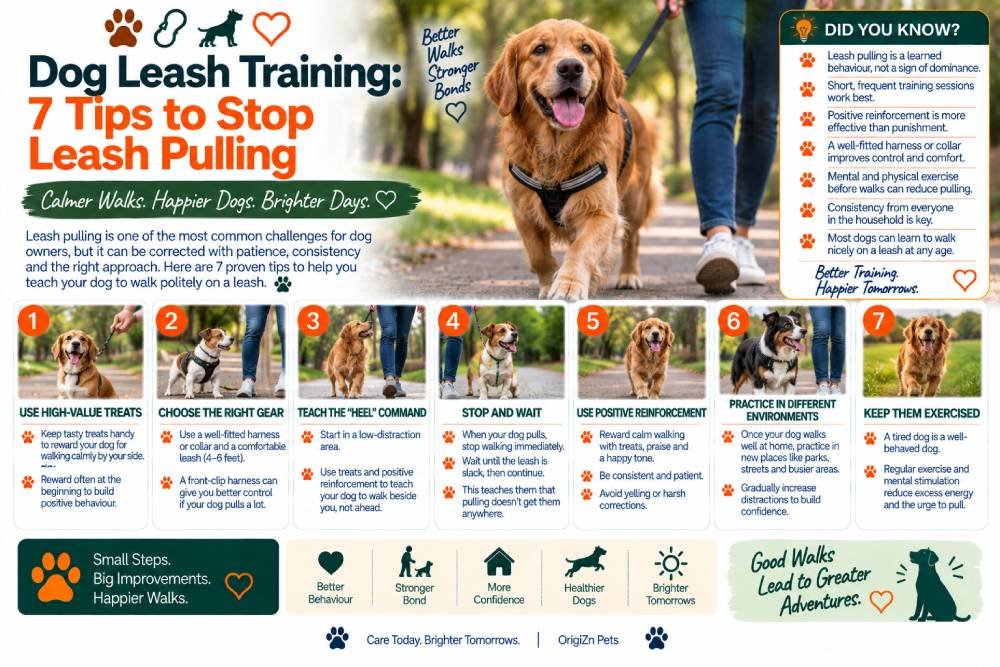
Dog Leash Training: 7 Tips to Stop Leash Pulling
Dog leash training is an important part of helping your dog enjoy calm and manageable daily walks. If your dog constantly pulls, rushes toward distractions or struggles to walk beside you, even a short walk can become difficult.
The good news is that leash manners can be improved with patience, consistency and positive reinforcement. You do not need to expect your dog to walk perfectly from the first session. The goal is to gradually teach your dog that staying near you and keeping the leash loose is rewarding.
Why Does a Dog Pull on the Leash?
A dog pulling on leash is not necessarily being stubborn. Dogs experience the outside world differently from humans. New smells, other dogs, people, vehicles and sounds can all be exciting distractions.
Some dogs pull because they want to reach something interesting. Others have simply learned that pulling gets them where they want to go.
Understanding why your dog pulls can help you choose a more practical training approach.
1. Start Dog Leash Training in a Calm Environment
One of the easiest ways to begin leash training for dogs is to start somewhere with fewer distractions.
Instead of immediately practising near a busy road or crowded park, choose a relatively quiet area. Give your dog time to understand what you expect before introducing more difficult distractions.
Walk a few steps with your dog. If the leash remains loose and your dog stays near you, reward the behaviour.
Gradually increase the distance between rewards as your dog becomes more comfortable.
2. Teach Loose Leash Walking
Loose leash walking means your dog can walk with a relaxed leash rather than constantly pulling toward something.
Start by rewarding your dog whenever they walk beside you without putting tension on the leash.
If your dog starts pulling, pause and give them an opportunity to return their attention to you. Once the leash becomes loose again, continue walking when it is safe to do so.
With regular practice, your dog can begin to understand that calm walking allows the walk to continue.
3. Reward Calm Behaviour
Positive reinforcement can make dog walking training easier for many dogs. Instead of focusing only on unwanted behaviour, pay attention to the behaviour you want your dog to repeat.
You can reward your dog with:
- Small treats
- Praise
- A favourite toy
- Permission to explore
The reward should be something your dog finds motivating.
For example, if your dog notices another dog but remains calm and looks back at you, reward that behaviour. Over time, these small moments can become useful parts of everyday leash training.
4. Practise Around Everyday Distractions
Once your dog is comfortable in a quiet environment, gradually introduce distractions.
Depending on your dog’s behaviour, these may include:
- Other dogs
- People
- Children
- Vehicles
- Bicycles
- New smells
- Busy walking areas
Do not introduce too many distractions at once. If your dog becomes overwhelmed, move to a quieter environment and make the exercise easier.
5. Keep Training Sessions Short
Long training sessions can become tiring for both you and your dog. Short and regular practice can be easier to maintain.
For example, you can dedicate the first five minutes of your normal walk to dog leash training.
After that, allow your dog some time to explore and enjoy the walk. You can then practise again later.
This approach allows training to become part of your dog’s normal routine rather than feeling like a separate activity every day.
6. Make Daily Walks Part of the Training
Your normal walk is an excellent opportunity for dog walking training. You can practise attention, waiting, calm greetings and loose leash walking during everyday outings.
For pet parents looking for dog walking in Noida, regular walks can also help dogs become familiar with the sights, sounds and smells around their neighbourhood.
Instead of trying to control every movement, give your dog appropriate opportunities to sniff and explore while continuing to reinforce calm walking behaviour.
7. Be Consistent With Your Rules
Consistency is one of the most important parts of leash training for dogs.
If your dog is allowed to pull sometimes but expected to walk calmly at other times, they may receive mixed signals.
Everyone who regularly walks your dog should follow the same basic approach.
Use consistent commands, reward desirable behaviour and avoid unintentionally rewarding pulling whenever possible.
Common Leash Training Mistakes
Some common mistakes can make it harder for a dog to develop good walking habits.
- Starting training in an environment with too many distractions
- Expecting perfect walking immediately
- Using inconsistent rules between family members
- Only correcting unwanted behaviour instead of rewarding good behaviour
- Making every walk a long training session
- Ignoring the dog’s individual energy and exercise needs
Keeping training simple and gradually increasing difficulty can make the process easier to manage.
Dog Leash Training for Dogs Living in Noida
Dogs living in Noida may encounter a variety of everyday situations during walks, including apartment entrances, lifts, residential society areas, other pets, pedestrians and traffic.
These situations can become useful opportunities for practising calm walking and attention.
Good leash manners can make it easier for your dog to move through shared spaces while giving you greater control during everyday walks.
If you are looking for structured dog training in Noida, professional guidance can help you identify specific walking challenges and build a training routine around your dog’s individual behaviour.
When Should You Consider Professional Training?
Some dogs need more support than others. If your dog pulls strongly, becomes highly reactive around other dogs or is difficult to manage during walks, professional guidance may be useful.
A trainer can observe your dog’s behaviour and help you understand the situations that trigger pulling or excitement.
For pet parents looking for pet training in Noida, home-based training can also help connect everyday behaviour with practical training exercises.
How Long Does Leash Training Take?
There is no fixed timeline for dog leash training. Some dogs respond quickly to consistent practice, while others need more time.
Your dog’s age, previous experiences, temperament, environment and level of distraction can all influence progress.
Rather than expecting an immediate change, focus on small improvements. A few extra steps with a loose leash today can become longer periods of calm walking with continued practice.
Final Thoughts
Successful dog leash training is built through patience, consistency and positive reinforcement. Start in a calm environment, reward loose leash walking and gradually introduce more challenging distractions.
Remember that daily walks are not only opportunities for exercise. They can also become practical training sessions where your dog learns how to respond calmly to the world around them.
If you need professional support with your dog’s walking or behaviour, explore pet training in Noida from OrigiZnPets.
Frequently Asked Questions
Why does my dog keep pulling on the leash?
Dogs may pull because they are excited, curious, distracted or trying to reach something interesting. Pulling can also become a learned habit when it consistently helps them move toward something they want.
What is loose leash walking?
Loose leash walking means your dog walks without continuously creating tension on the leash. The dog does not have to stay perfectly beside you at every moment.
How can I start leash training for my dog?
Start in a relatively calm environment and reward your dog for walking near you with a relaxed leash. Gradually increase distractions as your dog becomes more comfortable.
Can professional dog training help with leash pulling?
Professional training can help identify why your dog is pulling and provide practical exercises based on their individual behaviour and environment.
Can I practise leash training during normal walks?
Yes. Short periods of training can easily be included during regular walks. Practising consistently during everyday outings can help turn good walking behaviour into a routine.
Is leash training suitable for puppies?
Age-appropriate leash training can be introduced gradually to puppies. Keep sessions short and positive while considering the puppy’s developmental stage and individual needs.
Helpful Resource
For additional information about dog training and walking behaviour, you can also explore the American Kennel Club dog training resources.