
Dog Separation Anxiety: 7 Signs and Proven Ways to Help

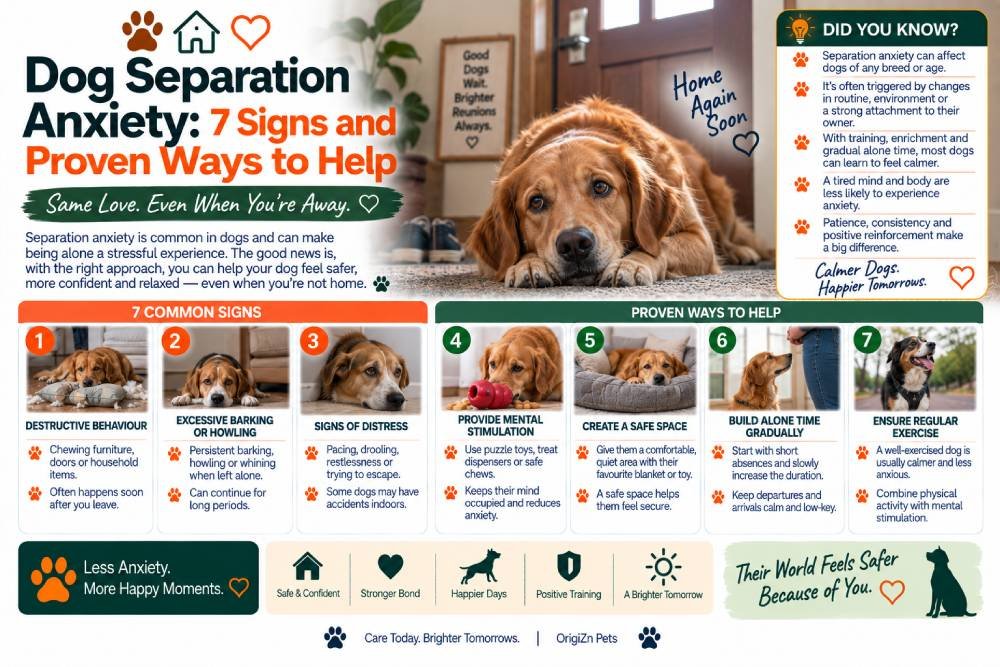
Dog separation anxiety can be difficult for both dogs and their families. A dog that becomes distressed when left alone may bark, whine, pace, scratch doors, destroy objects, or even have accidents indoors. These behaviours are not usually signs of stubbornness or revenge. They can be signs that the dog is struggling to cope with being separated from their family.
Understanding the difference between normal frustration and genuine dog separation anxiety is the first step toward helping your pet. With patience, gradual training, environmental changes, and professional guidance when needed, many dogs can learn to feel more comfortable when alone.
What Is Dog Separation Anxiety?
Dog separation anxiety is a state of distress that occurs when a dog is separated from a person or people they are strongly attached to. The reaction can begin before the owner even leaves, such as when the dog notices keys, shoes, or other departure routines.
Some dogs show mild signs, while others become extremely distressed. The severity can vary depending on the dog’s temperament, previous experiences, routine, and environment.
7 Signs of Dog Separation Anxiety
- Excessive barking or whining: Vocalising soon after being left alone can indicate distress rather than ordinary attention-seeking.
- Destructive behaviour: Scratching doors, chewing furniture, or damaging objects near exits may happen when a dog is trying to cope with anxiety.
- Pacing and restlessness: Repeated walking around the house, inability to settle, or constant movement can be signs of stress.
- Escape attempts: Some anxious dogs try to get through doors, windows, gates, or other barriers to reach their family.
- Toileting indoors: A previously house-trained dog that suddenly has accidents only when left alone may need further investigation.
- Excessive drooling or panting: Physical signs of stress can sometimes appear alongside behavioural changes.
- Extreme excitement when you return: An unusually intense reaction every time you come home can be another clue that your dog finds separation difficult.
Why Does Separation Anxiety Happen?
There is no single reason why a dog develops separation anxiety. Changes in routine, moving house, changes in family circumstances, long periods alone, or previous stressful experiences may contribute to separation-related problems.
Some dogs also struggle when their daily routine suddenly changes. For example, a dog that has spent several weeks with family members at home may find it difficult when everyone suddenly returns to work or school.
How to Help a Dog With Separation Anxiety
1. Create a predictable daily routine
Dogs generally benefit from predictable routines. Try to keep feeding, walking, play, training, and rest periods reasonably consistent. A stable routine can make changes easier for your dog to understand.
2. Practise short periods of separation
Do not immediately expect an anxious dog to remain alone for several hours. Begin with very short periods that your dog can handle calmly and gradually increase the duration.
3. Make alone time rewarding
Give your dog a safe activity during planned periods of separation. Food puzzles, appropriate chew items, or other enrichment can provide mental stimulation while your dog learns that being alone does not always mean something negative is happening.
4. Avoid dramatic departures and arrivals
Try to keep leaving and returning home calm and predictable. Excessively emotional goodbyes can make departures feel more significant to an already anxious dog.
5. Teach independence inside the home
Independence training does not mean ignoring your dog. Instead, encourage your dog to relax on a bed or mat while you move around the home. Reward calm behaviour when your dog chooses to settle independently.
6. Give your dog enough physical and mental activity
A suitable combination of walks, training, play, sniffing, and enrichment can help meet your dog’s daily needs. For more ideas, explore our dog training tips.
7. Get professional help when the problem is severe
If your dog is injuring themselves, attempting to escape, destroying doors or windows, refusing food when alone, or becoming increasingly distressed, speak with a qualified veterinary professional or experienced behaviour professional.
What Not to Do With Separation Anxiety
Punishing your dog after returning home is unlikely to solve dog separation anxiety. Your dog may not connect the punishment with the behaviour that occurred earlier, and additional stress can make the problem harder to manage.
It is also important not to suddenly increase alone time beyond what your dog can currently tolerate. Progress should be gradual and based on your dog’s individual response.
When Should You Get Professional Help?
Professional help is especially important when anxiety is severe, persistent, or getting worse. A veterinary professional can help rule out medical problems and advise whether additional behavioural support is appropriate.
Final Thoughts
Dog separation anxiety is a genuine behavioural concern, not simply a sign that your dog is being difficult. Look for patterns, make alone time gradual and predictable, provide appropriate enrichment, and seek professional support when necessary. With the right approach, many dogs can become more comfortable and confident when spending time away from their family.