
Traveling With Your Dog by Car: 6 Proven Safety Steps
Traveling with dogs by car in India: 6 proven safety steps covering restraint, heat risk, and making long drives comfortable for your dog.

Traveling with dogs by car sounds straightforward until the first unrestrained dog lunges toward a window at a passing motorcycle, or a short errand stop in the sun turns into a genuine emergency. Most car-travel risks for dogs are preventable with a handful of consistent habits.
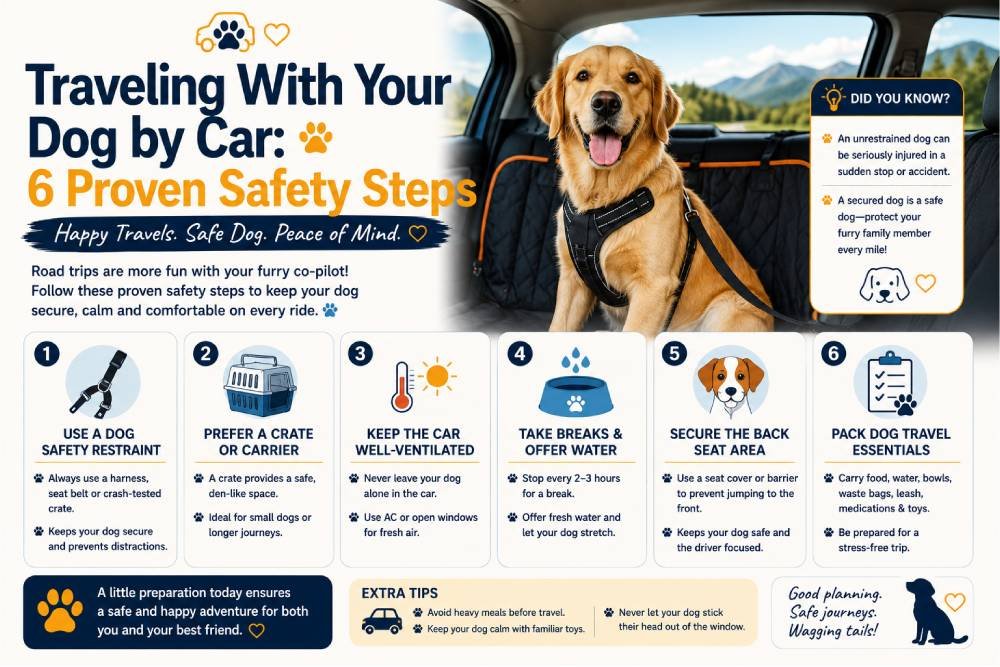
Six proven steps for traveling with dogs by car
- Use a proper restraint — a crash-tested harness or a secured crate — every trip, not just longer ones. An unrestrained dog is a projectile risk in any sudden stop, to themselves and to passengers.
- Never leave a dog alone in a parked car, even briefly, even with windows cracked. Car interiors heat dramatically faster than outside temperature suggests, even on a mild day.
- Feed a light meal, not a full one, before travel if your dog is prone to motion sickness, and avoid feeding immediately before a long drive.
- Take breaks every two hours on longer trips for water, a bathroom stop, and a chance to stretch and decompress, especially for a dog that isn’t used to extended confinement.
- Introduce car travel gradually for a dog that’s anxious about it — short, calm trips building up to longer ones, rather than a first experience being a long, stressful journey.
- Keep the car cool before your dog gets in, running the air conditioning for a few minutes first rather than loading a dog into a car that’s been sitting in the sun.
The single most dangerous moment in traveling with dogs by car isn’t the drive itself — it’s the “just a few minutes” stop with the dog left inside.
Why heat risk in cars is worse than most owners expect
The University of Georgia College of Veterinary Medicine’s guidance on summer pet safety highlights that car interiors can reach dangerous temperatures within minutes, even in relatively mild outdoor conditions — a risk that applies year-round in much of India, not just during peak summer months.
Managing motion sickness and travel anxiety
Signs of motion sickness — excessive drooling, restlessness, vomiting — often improve with shorter, more frequent trips that build tolerance gradually. A dog that’s never traveled by car benefits from short practice drives around the block before a longer journey is attempted, ideally paired with something positive at the destination each time.
What to pack for any trip longer than an hour
Water, a collapsible bowl, waste bags, any regular medication, and a familiar blanket or toy all make a longer trip smoother. Having your dog’s ID tag and microchip information current matters more during travel than at any other time, given the higher chance of an unexpected escape in an unfamiliar location.
Our training and walking services can help build car-travel tolerance gradually for an anxious dog before a big trip. Book a free demo to work on this with a trainer.
Restraint options worth comparing
A crash-tested harness that clips into a seatbelt works well for most dogs and allows some movement, while a secured crate offers more containment but needs enough space to fit safely in the vehicle. Neither option is inherently better — the right choice depends on your dog’s size, temperament, and how they respond to confinement versus a harness.
Preparing for the unexpected
A basic pet first-aid kit, your regular vet’s contact information, and the location of an emergency vet along your route are worth having before any trip longer than a couple of hours. Most trips go smoothly, but having this ready removes one more source of stress if something does come up, and it takes only a few minutes to put together before you leave. It also helps you respond quickly to minor injuries, discomfort, or unexpected travel emergencies.