
How to Stop a Dog From Pulling on the Leash
Learn how to stop a dog from pulling on the leash with three fixes trainers actually use — no stronger arm or harsher collar required.

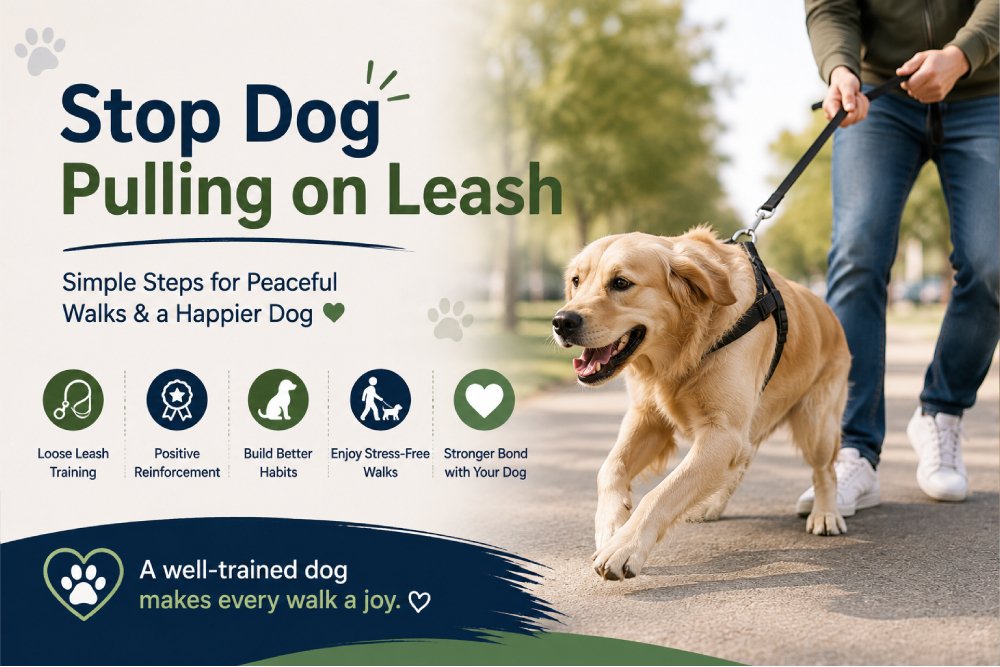
If you’ve searched how to stop a dog from pulling on the leash, you’ve probably already tried a stronger grip or a stricter tone — and probably found neither one sticks. That’s because pulling gets blamed on the dog — too strong, too excited, too stubborn — when in practice it’s almost always one of three habits, and none of them need a stronger arm to fix.
Why the usual advice on how to stop a dog from pulling on the leash doesn’t work
A dog pulls because pulling has always worked: it gets them where they want to go, faster. The leash isn’t teaching “don’t pull” — it’s accidentally rewarding it, every single walk. Fixing that means changing what the leash reinforces, not how hard you hold it.
Three fixes that actually work, in order
- Stop on tension, every time. The moment the leash goes tight, stop walking completely. Only move again once there’s slack. This is the single highest-leverage step in learning how to stop a dog from pulling on the leash, and it works within a week if you’re consistent.
- Change direction instead of dragging. Rather than pulling back, turn and walk the other way when your dog surges ahead. It teaches attention to you, not resistance to the leash.
- Reward position, not just outcome. Mark and reward the moments your dog is already near your side — not just when you’ve corrected a pull. You want them choosing that spot, not being placed there.
A tight leash that never loosens isn’t stubbornness. It’s a habit nobody’s interrupted yet.
What doesn’t help
Constant tension on the leash actually reinforces pulling — a dog leans into steady pressure the way a sled dog does. Sharp corrections can stop one pull but rarely fix the habit, and the American Veterinary Society of Animal Behavior’s position statement on humane dog training notes there is no evidence that aversive methods are necessary for training or behaviour modification, and that reward-based methods carry the least welfare risk.
When to bring in a trainer
If it’s not improving after two consistent weeks, that’s usually a sign the trigger is excitement or fear rather than habit — worth a session with a trainer who can watch it happen in real time rather than troubleshoot from a description of it.
Our training and walking services cover leash work at home, in the exact street and doorway routine where the pulling actually happens. Book a free demo and a trainer will walk through this with you in person.