
Indian Pariah Dog (Indie) Care: 5 Proven Training Steps
Indie dog care done right: 5 proven training steps for India's native breed, built on genuine adaptability rather than imported assumptions.

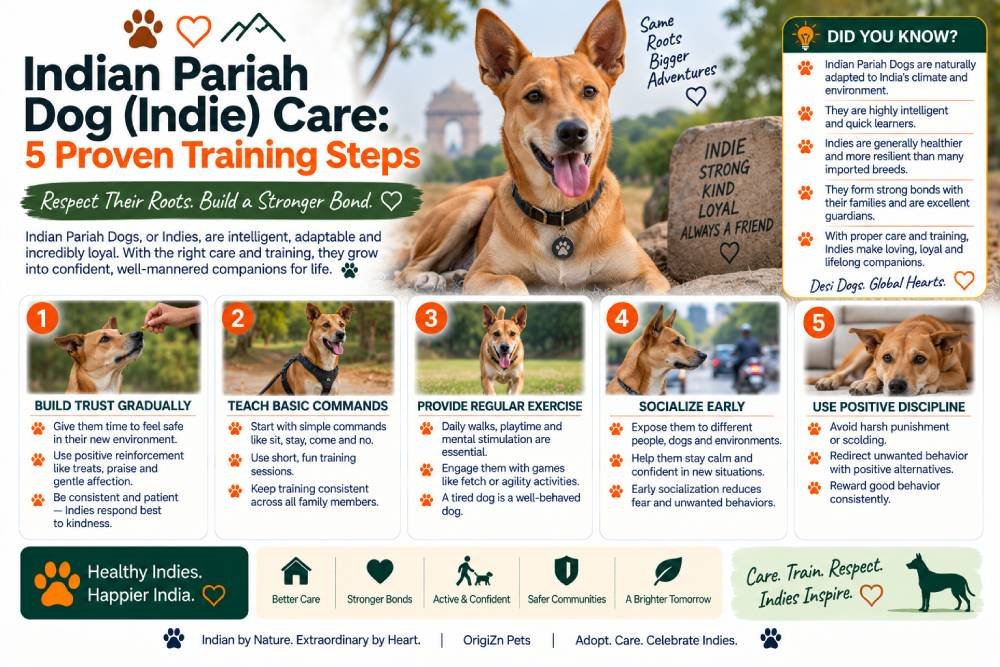
Indie dog care is different from caring for many imported breeds, but that does not mean Indie dogs need less attention. Indian Indie dogs, often referred to as Indian Pariah Dogs, are naturally adaptable to India’s climate and can make intelligent, loyal and healthy companions when their physical, behavioural and social needs are properly supported.
Whether you have adopted an adult Indie dog from the street, brought home an Indie puppy, or are already living with one, the right routine can make a major difference. From reward-based training and socialisation to nutrition, exercise and preventive healthcare, these seven practical steps can help your dog settle into home life and thrive.
7 Proven Indie Dog Care Tips for a Healthy, Happy Dog
1. Build trust before expecting perfect behaviour
One of the most important parts of Indie dog care is understanding your dog’s previous experience. An Indie dog adopted from the street may have learned to avoid unfamiliar people, protect food or react quickly to sudden movements. These behaviours are not necessarily signs of a difficult temperament. They may simply reflect what the dog needed to do to stay safe.
Give a newly adopted dog time to understand that its new home is safe. Keep the first few days predictable, avoid overwhelming introductions and reward calm behaviour. Let your dog approach new people at its own pace rather than forcing interaction.
Trust is the foundation for everything that follows, including leash walking, recall, handling and obedience training.
2. Use reward-based training from the beginning
Indie dogs can learn basic manners, obedience and household routines just like other dogs. The most useful approach is to make the desired behaviour easy to understand and reward it consistently.
Start with simple skills such as name recognition, sit, stay, come, leave it and loose-leash walking. Use treats, toys, praise or play as rewards depending on what motivates your dog.
The American Veterinary Society of Animal Behavior recommends reward-based methods for dog training and advises against aversive training techniques. Their position statement explains that reward-based learning can support both effective training and animal welfare. Read the AVSAB humane dog training position statement.
Keep training sessions short and repeat them regularly. Five to ten minutes of focused practice can be more useful than one long session in which your dog becomes tired or frustrated.
3. Give your Indie dog daily exercise and mental stimulation
Good Indie dog care is not only about food and veterinary visits. Daily physical activity and mental stimulation are also important for a balanced dog.
Most healthy adult dogs benefit from regular walks, play and opportunities to explore their surroundings. The exact amount of exercise should depend on your dog’s age, health, fitness and individual energy level.
Mix normal walks with activities such as scent games, food puzzles, basic obedience practice and supervised play. These activities give your dog something constructive to do and can help reduce boredom-related behaviours.
For dogs living in hot parts of India, schedule demanding outdoor activity during cooler parts of the day and always provide access to fresh drinking water and shade.
4. Socialise your Indie dog carefully
Socialisation does not mean making your dog greet every person or every dog it sees. Good socialisation means helping your dog experience people, dogs, traffic, sounds, surfaces and new environments without becoming overwhelmed.
This is particularly important when an adult Indie dog has a street background. Some dogs may be confident outdoors but uncomfortable with certain situations inside a home, while others may need time before they feel comfortable around unfamiliar dogs.
Start at a distance where your dog can remain calm. Reward relaxed behaviour and gradually increase exposure. If your dog becomes frightened, highly reactive or aggressive, reduce the intensity instead of forcing the interaction.
5. Feed a balanced diet and maintain a healthy weight
Nutrition is another important part of Indie dog care. A healthy diet should match your dog’s age, size, activity level and individual health needs.
Choose a complete and balanced commercial dog food or work with your veterinarian to create an appropriate feeding plan. Puppies, adult dogs and senior dogs do not necessarily have the same nutritional requirements.
Avoid making human food the main part of your dog’s diet, and be particularly careful with foods that can be toxic to dogs. Treats should also be accounted for when managing daily calorie intake.
Regularly monitor your dog’s body condition rather than judging health only by weight. If you notice sudden weight gain, weight loss, changes in appetite, vomiting or persistent digestive problems, speak with your veterinarian.
6. Don’t skip preventive healthcare
Indian Indie dogs are often considered hardy and adaptable, but that does not make them immune to disease. Preventive veterinary care remains an essential part of responsible Indie dog care.
Keep vaccinations and deworming up to date according to your veterinarian’s recommendations. Regular veterinary examinations can also help identify dental problems, skin conditions, parasites, injuries and other health concerns before they become more serious.
Spaying or neutering, parasite prevention and dental care should also be discussed with your veterinarian based on your dog’s age, lifestyle and health.
One advantage of the Indie dog’s diverse genetic background may be a lower risk of some inherited problems associated with particular closed breeding lines, but this should never be interpreted as meaning that Indie dogs do not need veterinary care.
7. Create a predictable routine at home
A consistent routine can make life easier for both you and your dog. Try to keep feeding, walks, training, rest and toilet breaks reasonably predictable.
Give your dog a comfortable sleeping area where it can rest without being constantly disturbed. Make sure potentially dangerous items such as medicines, cleaning products, toxic foods and small objects are kept out of reach.
For a recently adopted Indie dog, consistency can be especially valuable. When the rules, daily schedule and expectations remain predictable, your dog has fewer things to figure out at once.
Indie Dog Training: What Should You Teach First?
If you have recently adopted an Indie dog, start with skills that make everyday life safer and easier. Teach your dog to respond to its name, come when called, walk calmly on a leash, wait before going through doors and settle on a mat or bed.
Do not expect a rescue dog to master everything immediately. Training progress depends on the dog’s previous experiences, environment, motivation and individual temperament.
Reward-based training is especially useful when building confidence because the dog learns that making the right choice produces something positive. Avoid trying to force obedience through fear or physical punishment.
Indie Puppy Care vs Adult Indie Dog Care
Indie puppy care and adult Indie dog care have some important differences. Puppies need age-appropriate nutrition, veterinary guidance, safe socialisation, toilet training and plenty of sleep. They also need opportunities to learn how to behave around people and within the home.
An adult rescue may already have strong habits from its previous environment. Instead of assuming that these habits are permanent, identify what triggers them and teach an alternative behaviour through gradual training and positive reinforcement.
Patience is particularly important during the first few weeks after adoption. A dog may behave differently once it becomes comfortable and starts understanding its new surroundings.
Common Indie Dog Care Mistakes to Avoid
- Expecting an adopted dog to trust everyone immediately.
- Using physical punishment when training becomes difficult.
- Giving too much food or too many treats because the dog looks hungry.
- Skipping vaccinations or parasite prevention because Indie dogs are considered hardy.
- Forcing fearful dogs into interactions with people or other dogs.
- Providing exercise only through walks while ignoring mental stimulation.
- Changing household rules frequently and confusing the dog.
Are Indie Dogs Easy to Train?
Yes, many Indie dogs can become highly trainable companions, but there is no single personality shared by every Indie dog. A puppy raised in a home from an early age may have very different needs from an adult rescue that spent years navigating the streets.
The key is to work with the individual dog rather than relying on assumptions about the breed. Use clear communication, consistent routines and rewards for behaviours you want to see repeated.
Frequently Asked Questions About Indie Dog Care
Are Indie dogs good for first-time dog owners?
Indie dogs can be a good choice for first-time owners, especially when the owner is prepared to learn about training, nutrition, exercise and preventive healthcare. Adult rescue dogs may require additional patience while they adjust to a new environment.
How much exercise does an Indie dog need?
Exercise needs vary according to age, health, fitness and temperament. A healthy adult may benefit from daily walks and play, while puppies, seniors and dogs with medical conditions may need different routines. Your veterinarian can help you determine an appropriate exercise plan.
Are Indie dogs suitable for apartment living?
Many Indie dogs can adapt to apartment living when they receive sufficient exercise, enrichment, training and regular opportunities to toilet outdoors. The dog’s individual energy level and behaviour matter more than simply the size of the home.
How do I train an adopted Indie dog?
Begin by building trust and establishing a predictable routine. Teach basic behaviours using rewards, keep sessions short and gradually expose the dog to new situations. If fear, aggression or severe reactivity is involved, seek help from a qualified veterinarian or behaviour professional.
Final Thoughts on Indie Dog Care
The best Indie dog care combines patience, preventive healthcare, appropriate nutrition, daily enrichment and reward-based training. The fact that Indie dogs have adapted to India’s environment is a strength, but every dog is still an individual with its own history, personality and needs.
If you have adopted an Indie dog, don’t rush the process. Build trust first, create a predictable routine and reward the behaviours you want to see more often. With consistent care and the right guidance, an Indie dog can become a confident, well-mannered and deeply bonded family companion.
At OrigiZnPets, our dog training and walking services support dogs at different stages, including puppies and adopted Indie dogs. If you want personalised guidance for your dog’s behaviour and routine, book a free demo and discuss your dog’s specific needs with our team.