

Labrador Retriever Care: 6 Essential Grooming and Exercise Tips
Labrador care tips built for India: 6 essential steps covering exercise needs, shedding, weight control and heat safety for this breed.

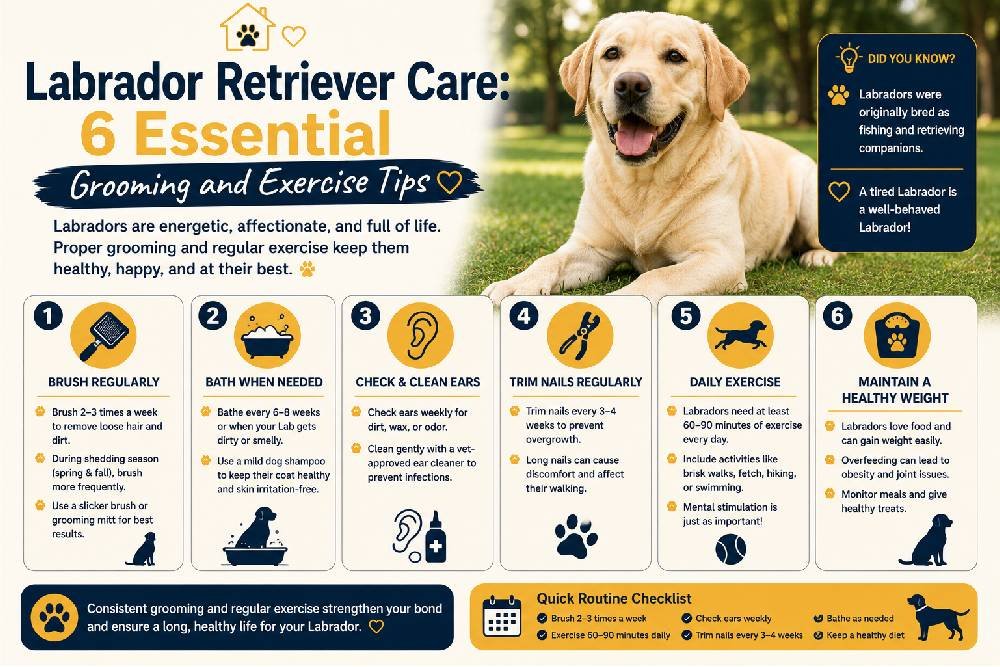
Labrador care tips India that work in a cooler climate often underweight two things that matter most in India: this breed’s tendency toward weight gain, and how much daily exercise they actually need to stay both physically and mentally settled indoors.
Six essential labrador care tips
- Measure food, don’t eyeball it. Labradors have a well-documented tendency to overeat, and a measuring cup prevents the slow weight creep that shortens their working joints’ lifespan.
- Plan for real daily exercise, not just a short walk. This is a working retriever breed, and under-exercised Labradors commonly develop destructive chewing or excessive barking simply from pent-up energy.
- Brush weekly, more during shedding season. Their short coat sheds constantly, and Labradors have two heavier shedding periods a year that catch new owners off guard.
- Start structured obedience early. Their strength and enthusiasm as adults make early leash and recall training far easier than correcting habits later.
- Watch pavement heat closely on walks. Short-coated but still large-bodied, Labradors overheat faster than their coat length might suggest during Delhi’s summer.
- Rotate mental enrichment, not just physical exercise. Puzzle feeders and scent games tire this breed out in ways a walk alone doesn’t.
A tired Labrador is a well-behaved Labrador — most behaviour complaints about this breed trace back to unmet exercise needs, not stubbornness.
Labrador care tips India: Why weight management deserves its own line item in any labrador care tips list
Labradors carry a genetic variant linked to increased appetite that’s been documented in a notable share of the breed, meaning many Labradors are biologically driven to overeat regardless of training. Portion control has to be deliberate rather than assumed.
The American Kennel Club’s Labrador Retriever breed profile notes their working retriever background and consistently high-energy temperament — context that explains why this breed struggles more than most when exercise is inconsistent.
What Indian apartment life changes for this breed
Labradors adapt reasonably well to apartment living if their exercise needs are genuinely met, but a Labrador confined most of the day with only a short walk tends to develop the destructive habits owners often mistake for a “difficult” temperament rather than an unmet need.
Health issues worth monitoring
Hip and elbow dysplasia, along with obesity-related joint stress, are the most common long-term issues for this breed — both are significantly more manageable with early, consistent weight and exercise management rather than addressed only once symptoms appear. Regular vet checkups that specifically track weight trends over time catch this earlier than relying on visual judgment alone.
Our training and walking services build Labrador-specific exercise routines that account for both their physical needs and their tendency toward weight gain. Book a free demo to get started.
Choosing the right routine for your specific Labrador
Working-line Labradors tend to have noticeably higher energy than show-line dogs of the same breed, so a routine that suits one may under-exercise the other. Watching your own dog’s actual energy level after a walk — settled and calm versus still restless — tells you more about what they need than any generic breed guideline alone.
A note on the breed’s famous appetite
Labradors are notorious for eating almost anything offered, which makes them prone to accidental ingestion of things that aren’t food at all — a habit worth actively managing on walks, since this breed will investigate food waste and discarded items with far less hesitation than more cautious breeds. A solid “leave it” cue, trained early, does more to prevent emergency vet visits for this breed than almost any other single piece of training, and it’s worth practicing in low-distraction settings before relying on it near actual temptations or unfamiliar objects outdoors.