

Dehydration in Dogs: 5 Essential Warning Signs to Know
Dehydration in dogs is easy to miss until it's serious. These 5 essential warning signs help you catch it early, especially in hot weather.

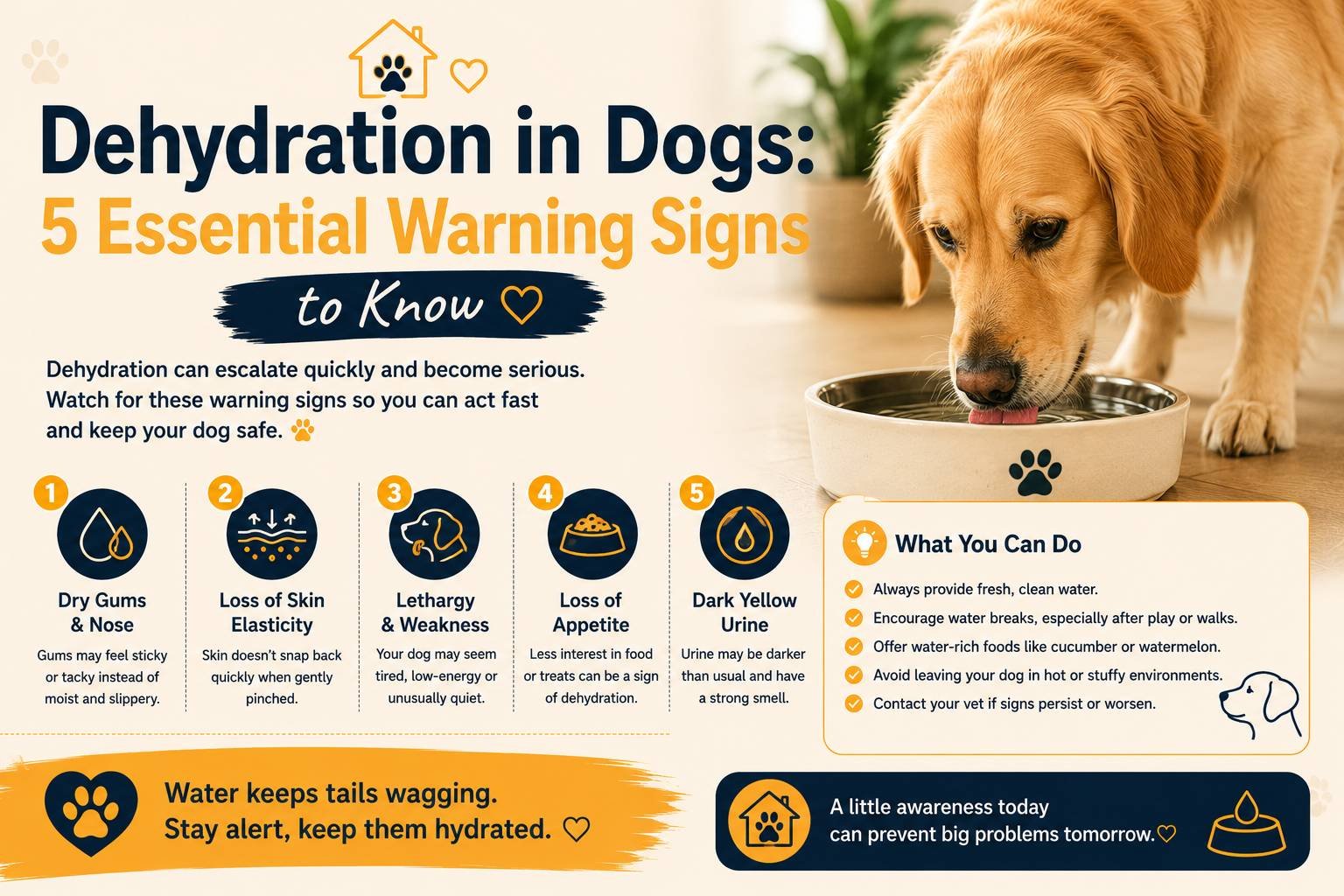
Dehydration in dogs builds quietly. Unlike an obvious injury, the early signs are easy to dismiss as a dog just being a little tired or a little less playful than usual — which is exactly why it’s worth knowing the specific signs rather than relying on general impressions.
Five essential warning signs of dehydration in dogs
- Dry or tacky gums. Healthy gums should feel wet and slick; dry, sticky gums are one of the earliest reliable signs of dehydration in dogs.
- Reduced skin elasticity. Gently lift the skin between the shoulder blades — it should snap back immediately. Skin that stays “tented” for a moment signals fluid loss.
- Lethargy that doesn’t match the day. A dog that’s noticeably less energetic than usual, especially after heat exposure or reduced water intake, warrants a closer look.
- Loss of appetite alongside reduced water intake. The combination matters more than either sign alone.
- Sunken eyes, which typically appear only once dehydration has progressed past the mild stage and should prompt an immediate vet call.
By the time a dog looks visibly unwell from dehydration, fluid loss has usually been building for longer than it appears.
Why dehydration in dogs is a bigger monsoon and summer risk than people expect
Dogs cool themselves primarily through panting, which increases fluid loss during hot weather far more than most owners account for. Add reduced water intake during travel or a change in routine, and dehydration in dogs can develop faster than the equivalent risk in a person doing the same activity.
The skin-pinch test, done properly
Gently pinch and lift the skin over the shoulders, then release. In a well-hydrated dog, it snaps back within about a second. A slower return suggests mild to moderate dehydration and is worth acting on immediately with water access and a cooler environment, with a vet call if it doesn’t resolve quickly.
Cornell’s Riney Canine Health Center notes, in its guidance on vomiting in dogs, that unresolved vomiting can cause electrolyte imbalances that lead directly to dehydration — a reminder that dehydration in dogs is often a downstream symptom of another issue, not always a standalone problem from heat or reduced drinking alone.
Prevention beats correction
Fresh water available at all times, an extra bowl during longer outings, and shade during the hottest parts of the day prevent most cases before they start. A dog that drinks noticeably less than usual for more than a day, even without other symptoms, is worth watching closely.
Our training and walking services build hydration breaks into every walk, especially through warmer months. Book a free demo to see how our walkers handle this in practice.
Dogs at higher risk of dehydration
Puppies, senior dogs, and breeds with flat faces (which pant less efficiently) all lose fluid balance faster than a healthy adult dog of an average breed. Dogs recovering from vomiting or diarrhea are also at elevated risk, since they’re losing fluid faster than usual while often drinking less.
What to do if you suspect mild dehydration
Offer small, frequent amounts of water rather than letting a thirsty dog gulp a large volume at once, which can trigger vomiting and undo the rehydration attempt. Move to a cool, shaded space, and call your vet if the skin-pinch test or gum check doesn’t improve within thirty minutes.
A simple habit that prevents most cases
Carrying water on any walk longer than twenty minutes, and checking the bowl at home isn’t just refilled but actually being used, catches the earliest stage of dehydration in dogs before any of the five warning signs above even appear during warm or active days outside.